
Ingredients
Tripe
- 1 kgdressed beef tripe
- 2 tablespoonsvinegar
- coarse salt, for scrubbing
- 2onions, halved
- 2bay leaves
- 1 tablespoonpeppercorns
- 2carrots
- salt
To coat
- 100 gplain flour
- 3eggs, beaten
- 200 gfine breadcrumbs
- salt and black pepper
To fry
- 150 mloil
- 50 gbutter
Tomato sauce
- 800 gchopped tomatoes
- 2onions, chopped
- 4garlic cloves, crushed
- 3 tablespoonsoil
- 1 teaspoonpaprika
- 1/2 teaspoonchilli flakes
- 1 teaspoonsugar
- 2bay leaves
- salt and black pepper
To serve
- boiled potatoes
- or bread
- a green salad
Directions
- Wash hands, boards and knives after handling it. Keep it away from ready-to-eat food. Cook it thoroughly, which this recipe does. Rinse it thoroughly under cold water. Rub it all over with coarse salt. Rinse it again in several changes of water. Cover it with cold water and vinegar. Let it soak there for a full hour. Rinse it thoroughly afterwards.
- Put the tripe into a large deep pot. Cover it well with cold water. Bring the pot up to a full boil. Let it boil hard for ten minutes. Tip the whole pot out into the sink. Rinse both the tripe and the pot. It also takes much of the smell.
- Return the tripe to a clean pot. Cover it with fresh cold water. Add the halved onions and carrots. Add the bay leaves and peppercorns. Add plenty of salt to the water. Bring the pot up to a full boil. Cooking it out takes several hours. Cover it and simmer it gently. Give it at least two full hours. Top up with boiling water if needed. Judging when it is done takes a test.
- Cook it on rather than stopping early. Lift the tripe out of the broth. Let it cool right down on a board. Cut the cooled tripe into strips. Make them about two centimetres wide.
- Cut them a hand’s length long. Pat every single strip completely dry. Heat the oil in a wide heavy pan. Add the chopped onions to the pan. Cook them for a good ten minutes. Add the crushed garlic to them. Add the paprika and the chilli flakes. Cook them for one minute only. Add the chopped tomatoes to the pan. Add the bay leaves and the sugar. Season it with salt and black pepper.
- Let it simmer for about thirty minutes. Stir it now and then as it goes. It should thicken considerably. Adjust the chilli to your own taste. Put the flour in one shallow dish. Beat the eggs in a second dish. Put the breadcrumbs in a third. Season the flour with salt and pepper. Coating them is done in order.
- Dredge a strip in the seasoned flour. Shake off all of the excess flour. Dip it fully in the beaten egg. Press it into the breadcrumbs. Press the crumbs on firmly all over. Set the coated strips on a tray. Chill the coated strips for twenty minutes. That helps the coating set and hold. Heat the oil in a wide heavy pan. Add the butter into the pan as well. Get it properly hot before frying.
- Lay the strips in without crowding. Fry them for about three minutes. Turn them over once with tongs. Fry the other side for three minutes. Judging them takes a careful look. Lift them out onto a wire cooling rack. A rack keeps the coating crisp.
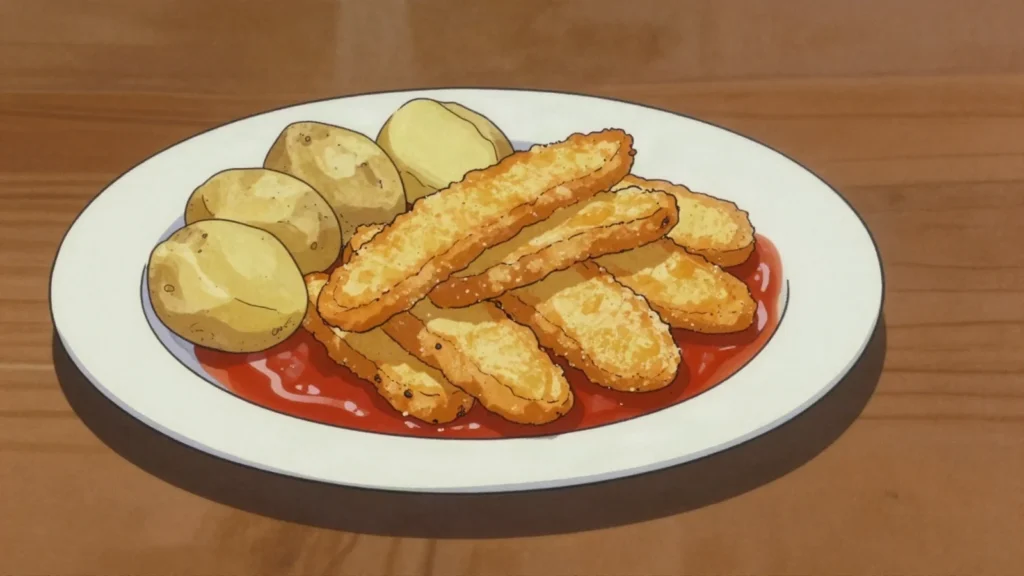
- Let all the excess oil drip away. Serving it is always done piping hot. Spoon the tomato sauce onto warm plates. Set the fried strips over the top. Sauce under keeps the coating crisp. Serve it sauce under unless you prefer otherwise. Serve boiled potatoes alongside. It keeps two days refrigerated.
Technique
- Tripe needs two to three hours of simmering because it is dense connective tissue that only softens with long cooking; properly cooked it is soft and gelatinous with no rubbery bounce at all, and any springiness means it needs longer. Undercooked tripe is genuinely rubbery.
- A hard ten-minute blanch that is tipped out entirely comes before the real boiling, since the first water carries off impurities and much of the smell; buy tripe already dressed, meaning cleaned, scalded and bleached, unless you know what you are doing with the undressed kind.
- Most tripe dishes stew it, but here the boiled tripe is cut into strips, breaded and fried, which is what makes the dish distinctive; serve the sauce underneath rather than over, since sauce on top softens the coating immediately.
Substitutions
- Honeycomb and blanket tripe both work, honeycomb being the more prized.
- Bread stands in for boiled potatoes alongside.
Variations
- The chilli level varies, and the sauce is gently spiced rather than hot.
- Some cooks stew the tripe in the sauce instead of breading it.
- A green salad is served alongside to cut the richness.
History
An old Luxembourg City dish from thrifty butchery, once a favourite of the capital’s taverns and still cooked in traditional restaurants.
Frequently asked questions
What is Kuddelfleck?
Kuddelfleck is a main from Luxembourg: breaded tripe fried and served in a spiced tomato sauce. An old Luxembourg City dish from thrifty butchery, once a favourite of the capital’s taverns and still cooked in traditional restaurants.
How long does Kuddelfleck take to make?
Kuddelfleck takes 45 minutes plus long boiling of preparation and 3 hours of cooking. The recipe makes serves 4. It is rated hard to make.
What can I substitute in Kuddelfleck?
Yes, within limits. Honeycomb and blanket tripe both work, honeycomb being the more prized. Bread stands in for boiled potatoes alongside.
What is the most important thing to get right in Kuddelfleck?
Put the tripe into a large deep pot. Cover it well with cold water. Bring the pot up to a full boil. Let it boil hard for ten minutes. Tip the whole pot out into the sink. Rinse both the tripe and the pot. It also takes much of the smell.