
Ingredients
Rice shell
- 500 gshort grain rice
- 1.2 litreswater
- a good pinch of saffron
- steeped in warm water
- 1 teaspoonground turmeric
- 2 teaspoonssalt
- 3 tablespoonscornflour
- or potato starch
Filling
- 400 gminced lamb
- or minced beef
- 2onions, finely chopped
- 60 gblanched almonds, chopped
- 50 graisins, optional
- 2 teaspoonsbaharat
- 1 teaspoonground cinnamon
- 3 tablespoonsoil
- a handful of parsley
- salt and black pepper
To fry
- oil, for deep frying
To serve
- lemon wedges
- amba or mango pickle
- a sharp salad
- torshi, pickled vegetables
Directions
- Rinse the rice until the water runs clear. Put it in a pot with the water. Add the salt and the turmeric. Add the steeped saffron and its water. Bring the pot up to a full boil. The rice must be overcooked deliberately.
- Cook it deliberately soft on purpose. Cooking it takes about twenty-five minutes. Cover the pot and let it cook on. Give it a good twenty-five minutes. Add more water if it dries out. It should be soft and quite wet. Let the rice cool enough to handle.
- Tip it all out into a large bowl. Add all of the cornflour into it. Knead it hard with wet cold hands. Work it until it becomes a smooth paste. The grains should break down entirely. Add more starch if it is too loose. Cover the dough over and chill it. Give it about thirty minutes to firm.
- Heat the oil in a wide heavy pan. Add the chopped onions to the pan. Cook them for a good ten minutes. Add the minced meat to the pan. Fry it until it is well browned. Add the baharat and the cinnamon. Season it with salt and black pepper.
- Add the chopped almonds to it. Add the raisins if using them. Add the chopped parsley at the end. Spread the filling on a wide plate. Let it cool down completely there. Warm filling softens the rice dough. Wet both your hands in cold water. Take a piece of dough the size of an egg.
- Roll it into a smooth even ball. Turn the ball around your thumb slowly. Press the walls out as it turns. Keep the walls even all the way round. The shell should be about half a centimetre. Spoon cold filling into the hollow. Fill it about two thirds full. Do not overfill it at any point. Bring the edges up and pinch them shut. Smooth the join with wet fingers.
- Check every one before frying them. Roll each one into a smooth oval. Set them all out on a lined tray. Chill them for thirty minutes. Cold shells hold together far better. Pour the oil into a deep heavy pot. Fill it no more than half full.
- Heat it to about one hundred and eighty degrees. It should sizzle and rise steadily. Keep a lid nearby to smother a flare-up. Never put water on an oil fire at all.
- Keep children well away from the pot. Frying them takes care and batches. Turn them gently with a slotted spoon. Give them another two or three minutes. Lift them out onto a wire rack. A rack keeps the shells crisp underneath. Let all the excess oil drip away. Serving them is always done hot.
- Pile them all onto a serving plate. Serve amba or mango pickle alongside. Add a sharp salad on the table. They keep two days refrigerated. Fry them from frozen with three minutes more.
Technique
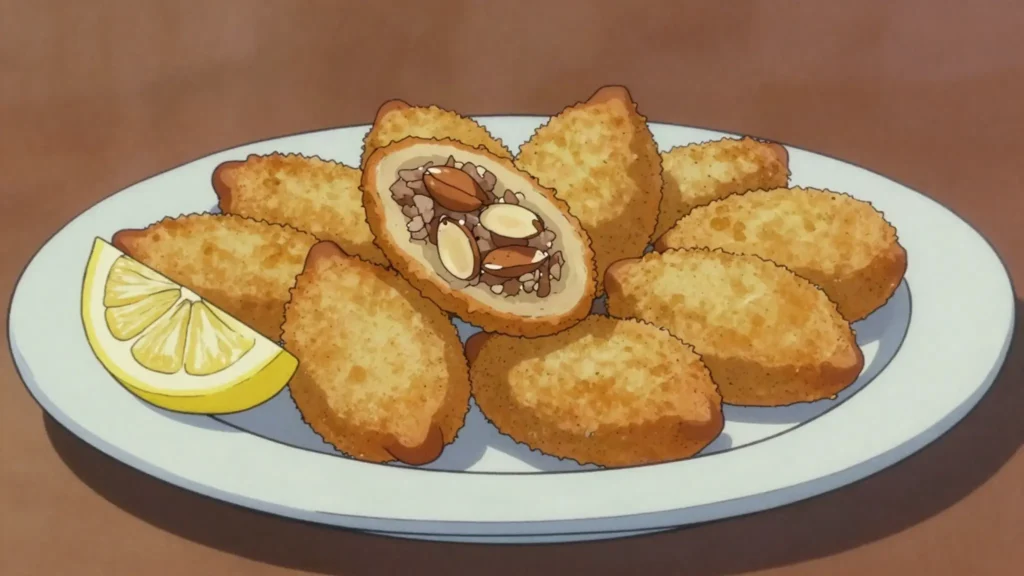
- Most kubba uses a bulgur shell, but this one uses cooked rice bound with cornflour or potato starch, which is what sets it apart; a bulgur shell is nutty and slightly coarse where a rice shell is smooth and fries to a thin brittle crust that crackles when bitten.
- The rice is deliberately overcooked until soft and sticky rather than fluffy, since that stickiness is what makes it bind; perfectly cooked separate rice will not work, and short grain is essential because long grain stays separate.
- The shell must stay around half a centimetre thick, since rice dough is more fragile than bulgur and tears in the oil if made as thin; any crack lets hot oil into the shell and the croquette bursts in the fryer, which is genuinely dangerous.
Substitutions
- Minced beef works as well as lamb in the filling.
- Potato starch and cornflour both bind the rice dough equally well.
Variations
- Raisins are added to the filling in some households and left out in others.
- They are shaped as smooth ovals or flattened into discs, both are made.
- Kubbat Mosul uses a flat bulgur disc instead of a rice shell.
History
Named after Aleppo but a Baghdad speciality, made with saffron-tinted rice dough rather than bulgur.
Frequently asked questions
What is Kubbat Halab?
Kubbat Halab is a snack from Iraq: rice-shell croquettes filled with minced meat and almonds, deep fried golden. Named after Aleppo but a Baghdad speciality, made with saffron-tinted rice dough rather than bulgur.
How long does Kubbat Halab take to make?
Kubbat Halab takes 1 hour 30 minutes of preparation and 30 minutes of cooking. The recipe makes about 16 croquettes. It is rated hard to make.
What can I substitute in Kubbat Halab?
Yes, within limits. Minced beef works as well as lamb in the filling. Potato starch and cornflour both bind the rice dough equally well.
What is the most important thing to get right in Kubbat Halab?
Rinse the rice until the water runs clear. Put it in a pot with the water. Add the salt and the turmeric. Add the steeped saffron and its water. Bring the pot up to a full boil. The rice must be overcooked deliberately.