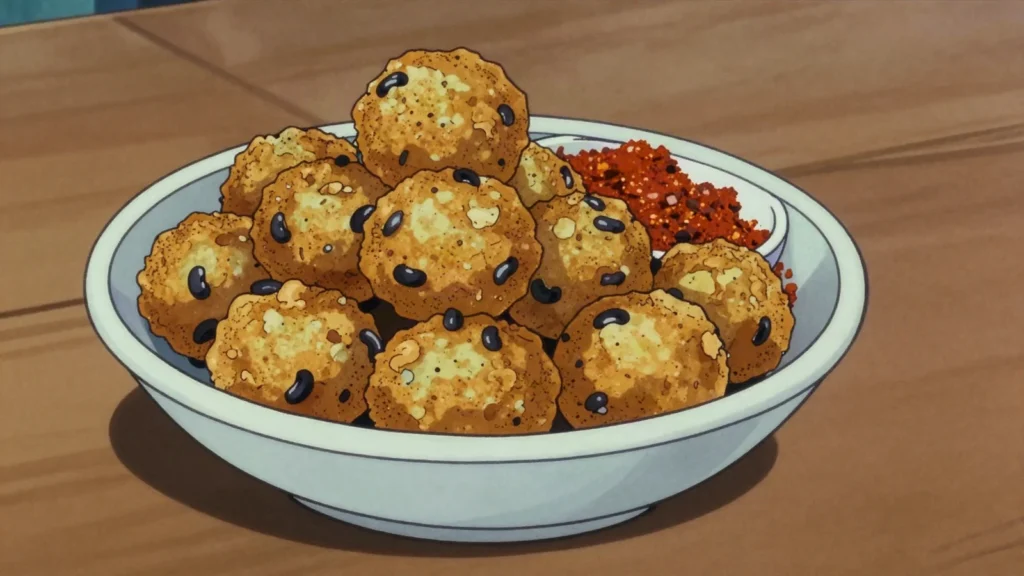

Ingredients
Beans
- 500 gdried black-eyed peas
- soaked overnight
- water, for peeling
The batter
- 1onion, roughly chopped
- 2scotch bonnet chillies
- or to taste
- 2 teaspoonssalt
- 1stock cube, optional
- a little cold water
To fry
- oil, for deep frying
- groundnut oil or palm oil
To serve
- yaji or dry chilli powder
- a fresh chilli sauce
- sweet millet porridge
- at dawn from a street stall
Directions
- Put the dried peas in a large bowl. Cover them with plenty of cold water. Leave them overnight to swell. Rub handfuls of the soaked peas together. Work them between your palms firmly. Add plenty of water to the bowl. Pour them off along with the water.
- Repeat that until no skins remain. Do not grind them at this stage. Pick out any skins left behind. Remove the small black eyes as well. They show up as dark specks otherwise. Put the peeled peas in a food processor. Add the chopped onion and the chillies. Grind them to a smooth thick paste. Add as little water as you possibly can. A wet paste will not hold air at all.
- Work it until it is completely smooth. There should be no grainy texture left. Tip the paste into a large bowl. Beat it hard with a wooden spoon. Work it for a good five minutes. Drop a small piece into cold water. It should float to the surface. Add the salt to the whipped paste. Crumble in the stock cube if using it.
- Beat it in only briefly at the end. Salt added early draws water from the paste. Add it just before you start frying. Heating the oil takes attention. Pour the oil into a deep heavy pot. Fill it no more than half full.
- Heat it to about one hundred and seventy degrees. It should rise and puff straight away. Keep a lid nearby to smother a flare-up. Never put water on an oil fire at all. Keep children well away from the pot. Frying them takes care and batches.
- Take a spoonful of the whipped batter. Slide it into the hot oil gently. Use a second spoon to push it off. Do not crowd the pot at any point. Turn them over with a slotted spoon. Give them another two or three minutes. Break the first one open to check. The inside should be light and open. Lift them out onto a wire rack. A rack keeps them crisp underneath.
- Let all the excess oil drip away. Serving them is done immediately and hot. Pile them into a bowl or a paper cone. Serve dry chilli powder alongside. They must be eaten hot from the oil.
Technique
- There is no raising agent at all, no yeast and no baking powder; the lift comes entirely from air beaten into the ground paste, which expands in the hot oil. Beating for a good five minutes until the paste lightens and grows in volume is the whole skill, and a small piece dropped into cold water should float.
- The skins must all come off, since they are fibrous, do not break down, and interrupt the smooth paste that holds the air; rubbing the soaked peas between the palms loosens them, and they float off with plenty of water. A brief pulse in a processor saves much of the rubbing.
- Add as little water as you possibly can when grinding, since a wet paste will not hold air and spreads out into flat greasy fritters; it should be thick enough to hold its shape on a spoon.
Substitutions
- Any hot chilli stands in for scotch bonnet, adjusted to taste.
- Groundnut oil and palm oil are both used for frying.
Variations
- Akara in Nigeria and acarajé in Brazil are the same fritter under other names.
- Some cooks add a little ground crayfish or dried pepper to the batter.
- They are eaten with sweet millet porridge, with yaji, or with chilli sauce.
History
Black-eyed peas are soaked, peeled, ground and whipped before being spooned into hot oil; the same fritter is akara on the West African coast.
Frequently asked questions
What is Kossai?
Kossai is a street food from Niger: puffy black-eyed-pea fritters fried at dawn, eaten with chili. Black-eyed peas are soaked, peeled, ground and whipped before being spooned into hot oil; the same fritter is akara on the West African coast.
How long does Kossai take to make?
Kossai takes 30 minutes plus soaking of preparation and 25 minutes of cooking. The recipe makes about 30 fritters. It is rated medium to make.
What can I substitute in Kossai?
Yes, within limits. Any hot chilli stands in for scotch bonnet, adjusted to taste. Groundnut oil and palm oil are both used for frying.
What is the most important thing to get right in Kossai?
Repeat that until no skins remain. Do not grind them at this stage. Pick out any skins left behind. Remove the small black eyes as well. They show up as dark specks otherwise. Put the peeled peas in a food processor. Add the chopped onion and the chillies. Grind them to a smooth thick paste. Add as little water as you possibly can. A wet paste will not hold air at all.