
Ingredients
Dough
- 500 gplain flour
- 100 gsugar
- 1 tspsalt
- 1 tspgrated nutmeg
- 60 gbutter or margarine, melted
- 1egg
- about 180 ml warm water or milk
To fry
- oil, for deep frying
Syrup
- 400 gsugar
- 250 mlwater
- 1 tbsplemon juice
- a strip of lemon peel
- a little grated nutmeg
To serve
- cold, from a market tray, with tea
Directions
- Use as little liquid as will bring it together. Work the melted butter thoroughly through the flour before the liquid goes in. Grate it fresh, since pre-ground nutmeg loses most of its aroma within weeks. Knead for eight to ten minutes until the dough is smooth and elastic.
- Knead it properly, since the dough needs to stretch into ropes without tearing. Cover it and rest it for an hour, which relaxes the gluten so it rolls without springing back. Now shaping them, which takes a little practice.
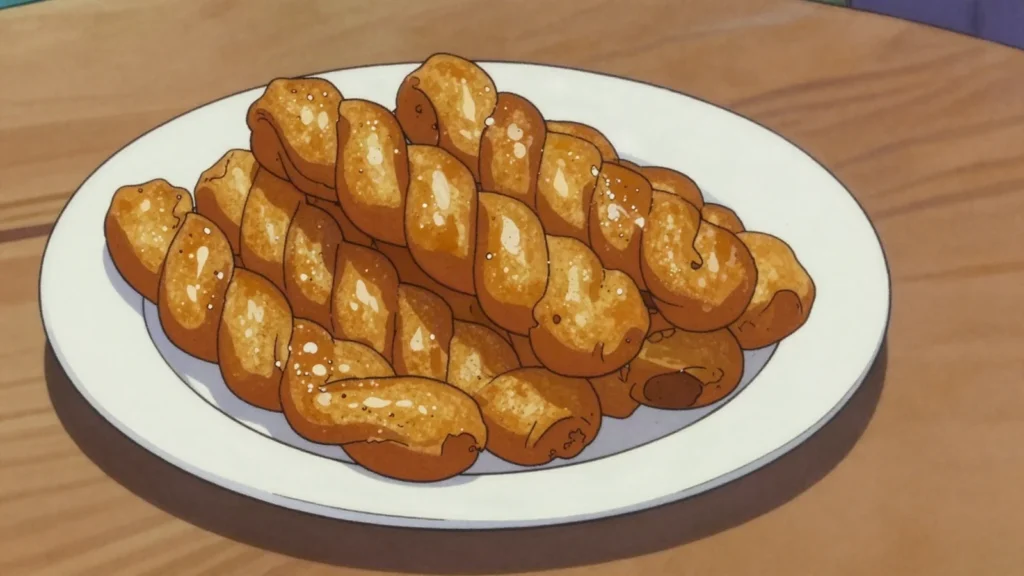
- Divide the dough into pieces and roll each into a long thin rope, about thirty centimetres. Roll them evenly, since a rope thicker in one place stays raw there while the thin end burns. Twist them firmly and pinch the ends together so they hold. Set them on a floured tray as you work. Heat the oil to about 160°C, which is moderate rather than fierce.
- Fry them at a moderate temperature for a long time, which is what gives the dry crisp interior these need. Hot oil colours the outside within a minute while the inside stays raw and doughy. Fry them in batches for six to eight minutes, turning them, until deep golden and hard. Give them the full time and judge them by feel: they should be firm and rigid rather than at all flexible.
- Lift them out and drain them on a rack. Boil the sugar, water, lemon juice and peel for eight to ten minutes until slightly thickened. The lemon juice prevents the sugar crystallising as it cools.
- Drop the hot alkaki into the warm syrup and leave them for two or three minutes, turning them once. Do not leave them soaking for long, since they go from pleasantly saturated to collapsing quite quickly.
- Lift them out with a slotted spoon and set them on a rack to drain. They improve considerably after a few hours, as the syrup works through and the outside sets to a faint crackle.
Technique
- The dough must be stiff enough to twist and hold its shape.
- Fry at a moderate temperature and for long enough that the inside dries out.
- Hot alkaki go into warm syrup, so the syrup is drawn inward.
Substitutions
- Margarine in place of butter, which is what most households use.
- Honey thinned with water in place of sugar syrup.
Variations
- Coiled rather than twisted, which is also traditional.
- Made with a little ginger alongside the nutmeg.
- Rolled in sugar rather than soaked in syrup.
History
A Hausa sweet fried in batches for Ramadan, weddings and naming ceremonies and sold in market stalls.
Frequently asked questions
What is Alkaki?
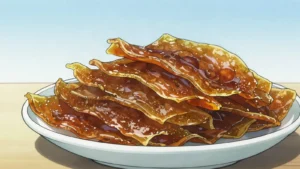
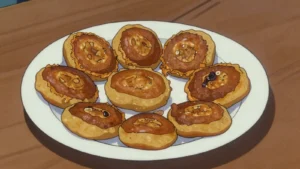
Alkaki is a snack from Niger: twisted ropes of fried wheat dough soaked in sugar syrup. A Hausa sweet fried in batches for Ramadan, weddings and naming ceremonies and sold in market stalls.
How long does Alkaki take to make?
Alkaki takes 40 min plus 1 hr resting of preparation and 40 min of cooking. The recipe makes about 20. It is rated medium to make.
What can I substitute in Alkaki?
Yes, within limits. Margarine in place of butter, which is what most households use. Honey thinned with water in place of sugar syrup.
What is the most important thing to get right in Alkaki?
Divide the dough into pieces and roll each into a long thin rope, about thirty centimetres. Roll them evenly, since a rope thicker in one place stays raw there while the thin end burns. Twist them firmly and pinch the ends together so they hold. Set them on a floured tray as you work. Heat the oil to about 160°C, which is moderate rather than fierce.