
Ingredients
Meat
- 2 kgbeef topside or silverside, one piece, all fat, sinew and silverskin removed
Labu (peanut paste marinade)
- 300 gkuli-kuli (defatted roasted peanut cake), ground to a powder, or 300 g roasted peanuts ground and pressed of their oil
- 2 tbspground ginger
- 2 tbspground chilli (or more, to taste)
- 1 tbspground cloves
- 1 tbsponion powder, or 2 onions blitzed and sieved
- 1 tbspgarlic powder
- 1 tbspground black pepper
- 1 tbspsalt
- 1 tbspsugar or 2 tbsp honey
- 1 tspground grains of selim or dried yaji spice mix
- 600–700 mlwarm water
Finishing
- 2 tbspgroundnut oil, for brushing
- Charcoal or a wood fire, burned to low embers
Equipment
- Drying racks or clean mats
- Fine mosquito netting, to keep flies off
- 1very sharp long knife
Directions
- Freeze the beef for 45 minutes to firm it, then slice it with the grain into sheets 1–2 mm thick and as wide as you can manage. Kilishi is defined by these paper-thin sheets; thick slices never dry properly and stay chewy.
- Lay the sheets flat and separate on the racks, cover with netting and dry them in strong sun for 4–8 hours, turning once, until they are stiff, dark and leathery but not brittle. In the Sahel this is a single hot afternoon.
- Meanwhile make the labu: whisk the ground kuli-kuli with all the spices, salt and sugar, adding the warm water gradually until you have a thin, pourable slurry about the consistency of single cream.
- Let the labu stand 30 minutes so the peanut flour hydrates fully and the spices bloom; taste it, and remember it should be aggressively salty and hot because it will be diluted across the meat.
- Dip each dried sheet into the labu and hold it under for no more than 10–20 minutes total for the batch. Longer and the meat absorbs so much water that it will not dry again cleanly.
- Lift the sheets out, let the excess drip off, and lay them back on the racks. They should be evenly coated in a beige-orange film with no thick pooled patches.
- Dry again in the sun for 3–5 hours, or overnight in a dehydrator at 60°C (140°F), until the coating has set hard and the sheets are rigid and crack rather than bend.
- Fan a charcoal fire down to low embers with no flame, and grill the sheets 20–30 cm above the heat for 2–4 minutes a side, brushing lightly with groundnut oil, until they smell strongly toasted and darken at the edges.
- Watch closely at this stage: the peanut coating burns in seconds and a scorched batch tastes bitter all the way through.
- Cool completely on a rack. Properly made kilishi snaps when bent, is dry to the touch and keeps for several months in an airtight tin at room temperature; any softness means residual moisture and it should be dried further.
Technique
- The peanut cake is defatted on purpose. Kuli-kuli has had most of its oil pressed out, which is why kilishi keeps for months where a fatty coating would go rancid within weeks. Removing every scrap of fat from the beef serves the same purpose.
- Water activity, not time, decides safety. The meat must be dried to the point where it is rigid and cracks; leathery or bendy sheets still hold enough moisture for bacteria and mould.
- Fly control is the real hygiene issue with open sun drying. Mosquito netting over the racks is standard practice in the Sahel and should not be skipped.
- Kilishi is a Hausa speciality of Niger and northern Nigeria, sold in bundles by roadside sellers and given as a travelling gift; the heat level of the labu is the main thing that varies between makers.
Substitutions
- No sun: a dehydrator at 60°C (140°F) for 6–8 hours for the first drying and 4–5 hours for the second gives a reliable result, or a fan oven at its lowest setting with the door wedged open.
- No kuli-kuli: use 300 g unsweetened peanut butter thinned with hot water, then blotted; the result is closer to suya than to true kilishi and will not keep as long.
- Beef can be replaced by lean lamb or goat, both traditional in some households, though beef topside gives the largest clean sheets.
Variations
- Kilishi from Zinder and Maradi, drier and hotter than the Nigerian versions.
- Suya, the related grilled skewer rubbed with the same peanut and spice yaji but eaten fresh off the fire.
- Sweet kilishi, made with extra honey in the labu, popular as a gift.
History
Northern Cameroon shares this cured beef with the Hausa lands; slabs travel well and are sold in bus stations.
Frequently asked questions
What is Kilishi?
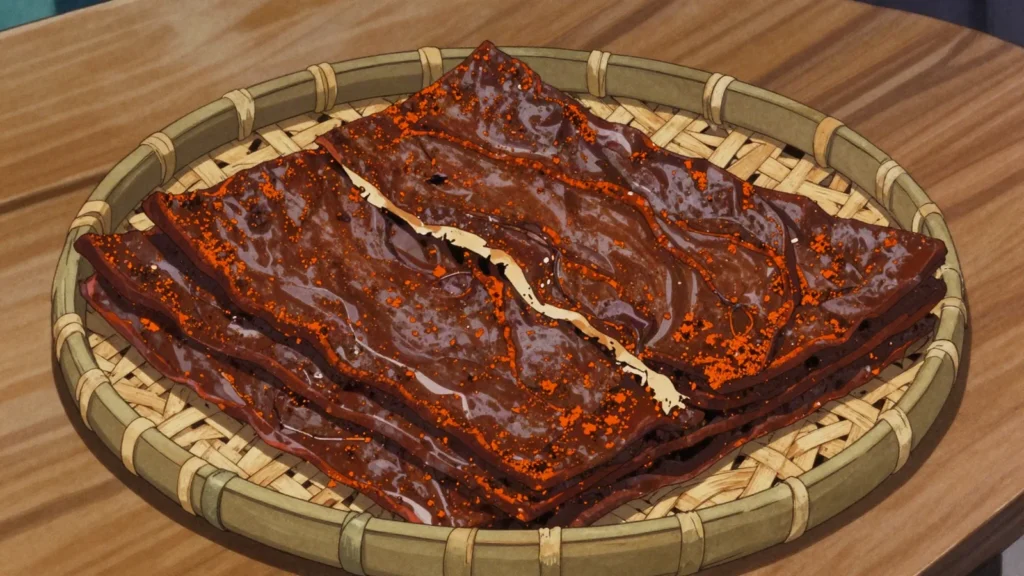
Kilishi is a charcuterie & cured from Cameroon: beef sliced paper thin, sun-dried, coated in spiced groundnut paste and dried again. Northern Cameroon shares this cured beef with the Hausa lands; slabs travel well and are sold in bus stations.
How long does Kilishi take to make?
Kilishi takes 1 hr 30 min of preparation and 2 days drying of cooking. The recipe makes about 400 g dried kilishi from 2 kg of beef. It is rated hard to make.
What can I substitute in Kilishi?
Yes, within limits. No sun: a dehydrator at 60°C (140°F) for 6–8 hours for the first drying and 4–5 hours for the second gives a reliable result, or a fan oven at its lowest setting with the door wedged open. No kuli-kuli: use 300 g unsweetened peanut butter thinned with hot water, then blotted; the result is closer to suya than to true kilishi and will not keep as long. Beef can be replaced by lean lamb or goat, both traditional in some households, though beef topside gives the largest clean sheets.
What is the most important thing to get right in Kilishi?
Freeze the beef for 45 minutes to firm it, then slice it with the grain into sheets 1–2 mm thick and as wide as you can manage. Kilishi is defined by these paper-thin sheets; thick slices never dry properly and stay chewy.