
Ingredients
Meatballs
- 1 kglean beef, finely minced twice or pounded
- 1large onion, grated and squeezed of its juice (keep the juice)
- 1egg
- 80 gshort-grain rice, rinsed, or 60 g fine bulgur
- 100 mlice-cold water or soda water
- 2 tspsalt
- 1 tspblack pepper
- ½ tspground cinnamon
- ½ tsppaprika
Optional filling
- 60 gdried apricots or prunes, finely chopped
- 40 gwalnuts, chopped
- 20 gbutter, chilled and cut into small cubes
Broth
- 2 litreslight beef broth or water
- 1onion, halved
- 1carrot
- 2 tbsptomato paste, optional
- salt to taste
To serve
- chopped coriander and tarragon
- lemon wedges
- lavash
Directions
- Mince the meat twice through a fine plate, or better, pound it in a heavy bowl with a wooden mallet for 15 minutes; pounding, not mincing, is what gives kololak its characteristic springy, almost bouncing texture.
- Work in the salt and beat the mass for 5 to 10 minutes, adding the ice water and onion juice a spoon at a time, until it is pale, sticky and smooth and slaps against the side of the bowl.
- Mix in the egg, the rice or bulgur and the spices, and beat again for 2 minutes. Rest the mixture in the fridge for 30 minutes; it must be cold and firm to shape.
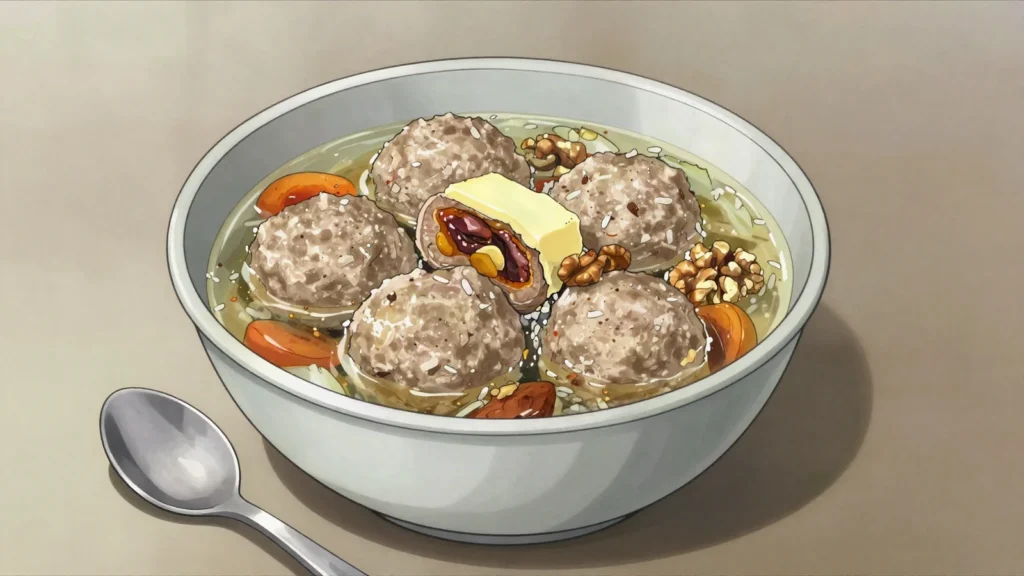
- Wet your hands and form balls the size of a small orange, about 120 g each. For the filled version, flatten a portion in the palm, place a little chopped fruit, walnut and a cube of cold butter in the centre, and close the meat around it, sealing carefully so nothing escapes.
- Bring the broth to a bare simmer with the onion and carrot, and season it lightly. It must be at a tremble, around 85 to 90°C (195°F), never boiling, or the balls will break up.
- Lower the kololak in one at a time and poach uncovered for 40 to 50 minutes, turning them once halfway. They will float when they are close to done.
- Test one: it should be firm and springy to the touch, cooked to the centre, and the rice inside completely tender.
- Lift them out with a slotted spoon into deep bowls, strain the broth over, scatter with coriander and tarragon, and serve hot with lavash and a lemon wedge.
Technique
- Kololak means little ball, and it covers a family of dishes rather than one recipe: the Echmiadzin version is very large and delicate, Sisian kololak is filled with dried fruit and butter, and there are broth versions and fried versions.
- The beating is the technique. Salt plus prolonged working dissolves the muscle protein and makes the mixture bind without much filler, which is why kololak holds together in simmering broth with only a little rice.
- Everything must stay cold. If the mixture warms above about 12°C (55°F) the fat smears and the balls turn crumbly and grey.
- A hard boil will destroy a batch in a minute. Keep the surface barely moving throughout.
Substitutions
- No mallet: pulse the twice-minced meat in a food processor with the ice water and salt in short bursts until it turns pale and tacky, stopping before it heats up.
- Lamb or a mixture of lamb and beef is used in some regions and needs the same treatment.
Variations
- Sisiani kololak hides apricots, walnuts and butter in the centre so it runs when cut.
- A soup version, kololakov apur, uses smaller balls in a broth thickened with matsun and herbs.
History
The meat is beaten for hours to a paste; the Ejmiatsin version is bound with egg and rice and served in its broth.
Frequently asked questions
What is Kololak?
Kololak is a soup & stew from Armenia: large pounded meatballs poached in broth, sometimes filled with dried fruit. The meat is beaten for hours to a paste; the Ejmiatsin version is bound with egg and rice and served in its broth.
How long does Kololak take to make?
Kololak takes 1 hr of preparation and 1 hr of cooking. The recipe makes 6 servings. It is rated hard to make.
What can I substitute in Kololak?
Yes, within limits. No mallet: pulse the twice-minced meat in a food processor with the ice water and salt in short bursts until it turns pale and tacky, stopping before it heats up. Lamb or a mixture of lamb and beef is used in some regions and needs the same treatment.
What is the most important thing to get right in Kololak?
Mix in the egg, the rice or bulgur and the spices, and beat again for 2 minutes. Rest the mixture in the fridge for 30 minutes; it must be cold and firm to shape.