
Ingredients
Cake
- 150 gbutter, melted
- 250 gcaster sugar
- 2eggs
- 120 gplain flour
- 50 gcocoa powder
- 1 tspvanilla
- a pinch of salt
To finish
- icing sugar
To serve
- whipped cream
- fresh berries
Directions
- Melt the butter and let it cool slightly.
- Whisk the sugar and eggs together briefly, for under a minute. Do not whip air into the eggs. Stir in the melted butter and vanilla.
- Sift the flour, cocoa and salt over and fold them in until just combined. That is what keeps the middle wet.
- Pour into a lined 20 cm tin and level the top.
- Bake at 175°C (345°F) for 18 to 22 minutes only. The whole skill is knowing when to stop, and it is earlier than instinct allows.
- Take it out and let it cool completely in the tin. It firms up considerably as it cools, so judge it cold rather than hot.
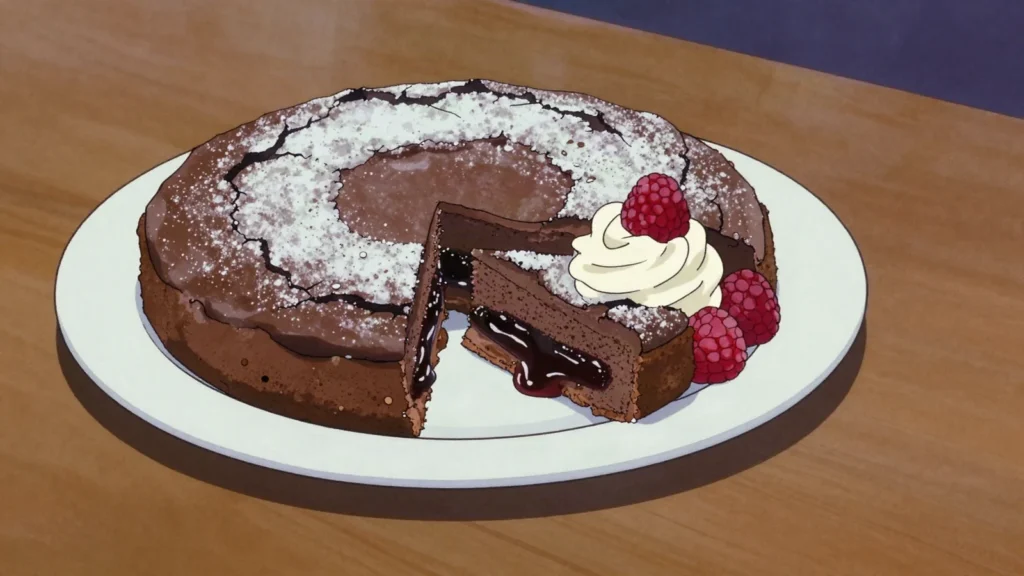
- Dust heavily with icing sugar and serve at room temperature or chilled with whipped cream. It is fika food above all, made in five minutes and eaten with coffee across Sweden.
Technique
- Oven variation matters enormously here, so the first one you make is a calibration exercise.
- It is better on the second day, when the centre has set to a fudge.
- Vanilla sugar is what Swedes actually use, and it is sold everywhere there.
Substitutions
- Dark chocolate melted with the butter, for a richer cake.
- Any neutral oil in place of some of the butter.
Variations
- With a spoonful of strong coffee in the batter.
- With flaked salt on top.
- Baked in a large tray as squares, for a crowd.
History
A dense, deliberately underbaked chocolate cake, its name meaning literally sticky cake, intentionally baked for a shorter time than a standard cake so the center remains soft, fudgy and slightly wet rather than fully set, a texture considered a defining, sought-after feature of the dessert rather than a sign of improper baking. Its specific date of invention is not well documented, though it developed as a distinctly Swedish take on chocolate cake, likely sometime in the 1900s, valued partly for its simplicity, requiring no elaborate technique or equipment to achieve its rich texture. Kladdkaka remains an extremely common homemade dessert across Swedish households, closely associated with fika, the Swedish tradition of taking a coffee-and-cake break during the day.
Frequently asked questions
What is Kladdkaka?
Kladdkaka is a dessert from Sweden: dense underbaked chocolate cake, sticky in the middle, served with cream. A dense, deliberately underbaked chocolate cake, its name meaning literally sticky cake, intentionally baked for a shorter time than a standard cake so the center remains soft, fudgy and slightly wet rather than fully set, a texture considered a defining, sought-after feature of the dessert rather than a sign of improper baking. Its specific date of invention is not well documented, though it developed as a distinctly Swedish take on chocolate cake, likely sometime in the 1900s, valued partly for its simplicity, requiring no elaborate technique or equipment to achieve its rich texture. Kladdkaka remains an extremely common homemade dessert across Swedish households, closely associated with fika, the Swedish tradition of taking a coffee-and-cake break during the day.
How long does Kladdkaka take to make?
Kladdkaka takes 15 min of preparation and 20 min of cooking. The recipe makes 1 cake. It is rated easy to make.
What can I substitute in Kladdkaka?
Yes, within limits. Dark chocolate melted with the butter, for a richer cake. Any neutral oil in place of some of the butter.
What is the most important thing to get right in Kladdkaka?
Whisk the sugar and eggs together briefly, for under a minute. Do not whip air into the eggs. Stir in the melted butter and vanilla.