
Ingredients
What to buy
- Rodenbach Classic
- or Rodenbach Grand Cru, which is more aged
- or Duchesse de Bourgogne, which is sweeter
- or Verhaeghe Vichtenaar, Bockor Cuvée des Jacobins
- see the note on why no method is given
To serve
- at 10 to 12 degrees
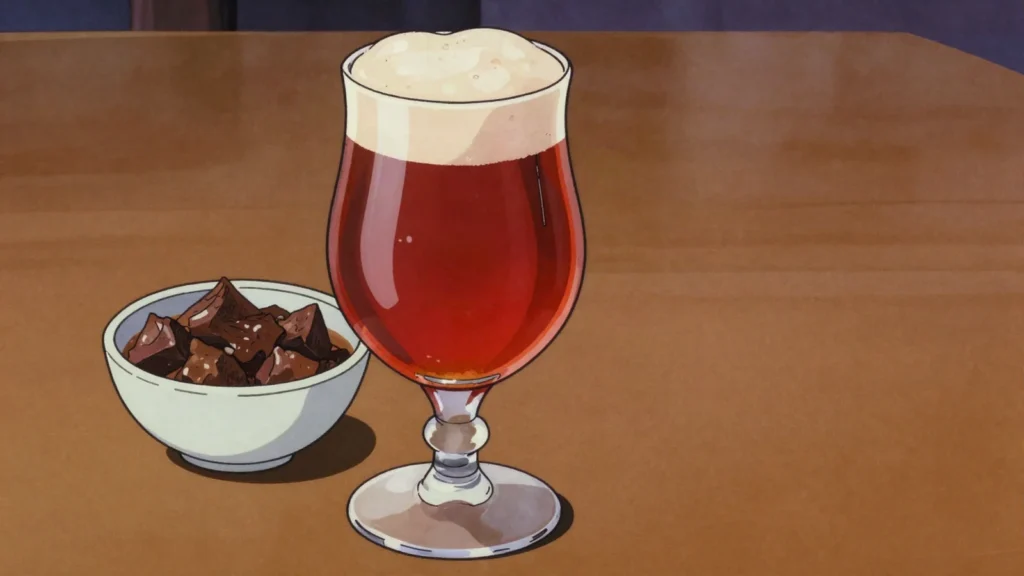
- in a goblet or a wine glass
- poured to show the red-brown colour
To eat with
- beef stew
- duck
- aged cheese
- pâté
- beetroot and salads
- dark chocolate
Directions
- Flemish red ale is sour red-brown beer aged in oak.
- Young and old beer are blended together.
- It is made in West Flanders and it tastes closer to wine than to beer.
- Now to an honest statement, which comes first.
- This entry gives no method for making it.
- The atlas states that plainly.
- Now to the reason. It is aged for up to two years in enormous oak vessels.
- The atlas states that plainly.
- Now to what those are. They are called foeders.
- They are large upright oak vats.
- Some hold many thousands of litres.
- The atlas records that plainly.
- Now to why they matter. The culture lives in the wood.
- Each foeder carries its own population.
- The beer takes its character from the vessel.
- The atlas states that plainly.
- Now to the honest conclusion. A foeder is a piece of a building, not a piece of equipment.
- It cannot be reproduced in a kitchen.
- The atlas states that plainly.
- Now to the second reason. Like gueuze, this beer is blended.
- The atlas states that plainly.
- Now to what that means. Young beer and beer aged two years are combined.
- The blender decides the proportions.
- That judgement is the product.
- The atlas records that plainly.
- Now to what the atlas gives instead.
- It records what the beer is and how it is made.
- It records how to choose it and drink it.
- The atlas states that plainly.
- Now to a crucial distinction people get wrong.
- Flemish red is not lambic. The atlas states that firmly.
- Now to why that matters. Lambic is spontaneously fermented from the air.
- Flemish red is fermented with pitched yeast and then soured in wood.
- They are different processes with different results.
- The atlas states that plainly.
- Now to a note about that. Both are sour beers.
- Both are Belgian. That is where the similarity ends.
- The atlas states that plainly.
- Now to a second distinction. Flemish red and oud bruin are related but different.
- The atlas states that plainly.
- Now to the difference. Flemish red comes from West Flanders and is oak aged.
- Oud bruin comes from East Flanders and is less oak-driven.
- Liefmans is the best-known oud bruin.
- The atlas records that plainly.
- Now to an honest note. The line between the two is argued over.
- Some writers treat them as one category.
- The atlas records that the disagreement exists.
- Now to the history. Eugène Rodenbach studied cask ageing in England in the eighteen seventies.
- He brought the blending method back to West Flanders.
- The atlas records that plainly.
- Now to a note about that. English porter brewers blended aged and fresh beer.
- That practice is what was carried over.
- The atlas records that plainly.
- Now to Roeselare. The Rodenbach brewery at Roeselare holds hundreds of foeders.
- Some are well over a century old.
- The atlas records that plainly.
- Now to a note about maintaining them.
- The brewery keeps its own coopers.
- Repairing a foeder is a specialist trade.
- The atlas records that plainly.
- Now to the souring. Lactobacillus produces lactic acid.
- Acetobacter produces acetic acid.
- The atlas records that plainly.
- Now to what that means in the glass.
- Lactic acid tastes clean and sour, like yoghurt.
- Acetic acid tastes of vinegar.
- Flemish red carries both. The atlas states that plainly.
- Now to an honest note about that.
- That vinegar note is genuinely divisive.
- Some people find it delicious and some find it a fault.
- The atlas records both plainly.
- Now to what it tastes like. Sour cherry, balsamic, oak and dark fruit.
- Red-brown in the glass. Sharp and refreshing.
- The atlas records that plainly.
- Now to the nickname. It is called the burgundy of Belgium.
- The atlas records that plainly.
- Now to an honest note about that.
- It does not taste like burgundy.
- The comparison is about how it behaves at a table.
- It is a wine-like beer rather than a beer-like wine.
- The atlas states that plainly.
- Now to a crucial buying point.
- Many commercial versions are sweetened.
- The atlas states that firmly. Now to why.
- The unsweetened beer is very sour.
- Sweetening broadens its appeal.
- The atlas states that plainly.
- Now to what that means. Duchesse de Bourgogne is noticeably sweeter.
- Rodenbach Grand Cru is far drier and more aged.
- Rodenbach Classic sits between them.
- The atlas records that plainly.
- Now to a note about that. None of those is wrong.
- They are different points on a scale.
- Choose according to how much sourness you want.
- The atlas states that plainly.
- Now to a note for a first bottle.
- Start with the sweeter end. The atlas states that plainly.
- Now to why. A Grand Cru is a lot to meet first.
- There is no virtue in starting at the sharpest.
- The atlas states that plainly.
- Now to serving it. Ten to twelve degrees.
- The atlas records that plainly.
- Now to why. Cold flattens the fruit and sharpens the acid.
- Too warm and the acetic note dominates.
- The atlas states that plainly.
- Now to the glass. A goblet or a wine glass.
- The atlas records that plainly.
- Now to why. The colour is worth seeing.
- The aroma needs room. The atlas records that plainly.
- Now to what it goes with. Beef stew.
- Duck. Aged cheese and pâté. Beetroot and sharp salads.
- The atlas records that plainly.
- Now to why. Sourness cuts fat exactly as a sharp red wine does.
- That is what it is for at a table.
- The atlas states that plainly.
- Now to cooking with it. It goes into beef stews.
- It goes into a sauce for duck.
- It goes into a marinade. The atlas records that plainly.
- Now to a genuine warning about that.
- Do not reduce it hard. The atlas states that firmly.
- Now to why. Acetic acid concentrates as it reduces.
- The sauce turns to vinegar. This happens easily.
- The atlas states that plainly.
- Now to the practical answer. Add it partway through rather than at the start.
- Balance it with something sweet.
- Brown sugar, redcurrant jelly or a little honey.
- The atlas records that plainly.
- Now to a note about that. That sweet-sour balance is the traditional Flemish approach.
- Carbonnade uses it with a dark ale.
- The atlas records that plainly.
- Now to ageing it. It is stable and it keeps.
- The atlas records that plainly.
- Now to an honest note. Most commercial versions are pasteurised.
- Those do not develop further. They keep, and they do not improve.
- The atlas states that plainly.
- Now to alcohol. It is usually five to six and a half percent.
- It is lower in alcohol than most strong Belgian beers.
- The atlas records that plainly.
- Now to a note about that. It is refreshing in a way strong abbey beers are not.
- It suits a warm day. The atlas records that plainly.
- Now to who should not drink it.
- Anyone pregnant should not drink alcohol.
- Anyone driving should not. Anyone who does not want to should not be pressed.
- The atlas states that plainly and moves on.
- Now to keeping it. It keeps a year or more unopened.
- Store bottles upright, cool and dark.
- Opened, it goes flat and duller within a day.
- Light spoils beer quickly. The atlas states that plainly.
Technique
- It is aged up to two years in foeders — large upright oak vats holding thousands of litres, whose culture lives in the wood, so each carries its own population and the beer takes its character from the vessel. A foeder is a piece of a building rather than a piece of equipment. Like gueuze, the beer is then blended from young and two-year-old stock, and that judgement is the product.
- Flemish red is not lambic. Lambic is spontaneously fermented from the air; Flemish red is fermented with pitched yeast and then soured in wood. Both are sour and Belgian, and that is where the similarity ends.
- Flemish red from West Flanders is oak-driven; oud bruin from East Flanders, Liefmans being the best known, is less so. The line between them is argued over and some writers treat them as one category — the atlas records that the disagreement exists.
- Lactobacillus gives clean lactic sourness like yoghurt and Acetobacter gives an acetic, vinegary note, and this beer carries both. That vinegar character is genuinely divisive — some find it delicious and some find it a fault.
- Many commercial versions are sweetened, because the unsweetened beer is very sour. Duchesse de Bourgogne is noticeably sweeter, Rodenbach Grand Cru far drier and more aged, and Rodenbach Classic between them. None is wrong — they are points on a scale. Start at the sweeter end for a first bottle; there is no virtue in beginning at the sharpest.
- Serve it at ten to twelve degrees. Cold flattens the fruit and sharpens the acid; too warm and the acetic note dominates.
- Do not reduce it hard when cooking. Acetic acid concentrates and the sauce turns to vinegar, which happens easily. Add it partway through rather than at the start, and balance it with brown sugar, redcurrant jelly or a little honey — that sweet-sour balance is the traditional Flemish approach.
- It is called the burgundy of Belgium, but it does not taste like burgundy. The comparison is about how it behaves at a table: a wine-like beer rather than a beer-like wine.
- Eugène Rodenbach studied cask ageing in England in the 1870s, where porter brewers blended aged and fresh beer, and brought that method back to West Flanders. The Roeselare brewery holds hundreds of foeders, some well over a century old, and keeps its own coopers, because repairing one is a specialist trade.
- Most commercial versions are pasteurised, so they keep but do not develop further.
- At five to six and a half percent it is lower in alcohol than most strong Belgian beers, and refreshing in a way abbey beers are not.
- Sourness cuts fat exactly as a sharp red wine does, which is what it is for at a table.
- Do not drink alcohol if you are pregnant or driving.
Substitutions
- Oud bruin, especially Liefmans, is the East Flanders relative.
- Duchesse de Bourgogne is the sweeter, more approachable choice.
- Rodenbach Grand Cru is the drier, more aged one.
- Oude Geuze offers sourness without the malt and oak.
- A sharp red wine fills the same place at a table.
- Non-alcoholic sour beers are beginning to appear.
Variations
- Rodenbach Classic is a blend of young and two-year beer.
- Rodenbach Grand Cru carries a much higher proportion of aged beer.
- Vintage single-foeder bottlings are released some years.
- Duchesse de Bourgogne is the sweetened commercial style.
- Oud bruin from East Flanders is the darker, less oaky cousin.
- Cherry and fruit versions of both are made.
History
Matured in large oak foeders at Roeselare; Eugène Rodenbach studied English cask ageing in the 1870s and brought the blending method to West Flanders.
Frequently asked questions
What is Flemish red ale?
Flemish red ale is a wine & spirit from Belgium: sour red-brown ale aged in oak, blended and vinegary. Matured in large oak foeders at Roeselare; Eugène Rodenbach studied English cask ageing in the 1870s and brought the blending method to West Flanders.
How long does Flemish red ale take to make?
Flemish red ale takes 5 minutes of preparation and none of cooking. The recipe makes buy by the bottle. It is rated easy to make.
What can I substitute in Flemish red ale?
Yes, within limits. Oud bruin, especially Liefmans, is the East Flanders relative. Duchesse de Bourgogne is the sweeter, more approachable choice. Rodenbach Grand Cru is the drier, more aged one. Oude Geuze offers sourness without the malt and oak. A sharp red wine fills the same place at a table. Non-alcoholic sour beers are beginning to appear.
What is the most important thing to get right in Flemish red ale?
Now to the difference. Flemish red comes from West Flanders and is oak aged.