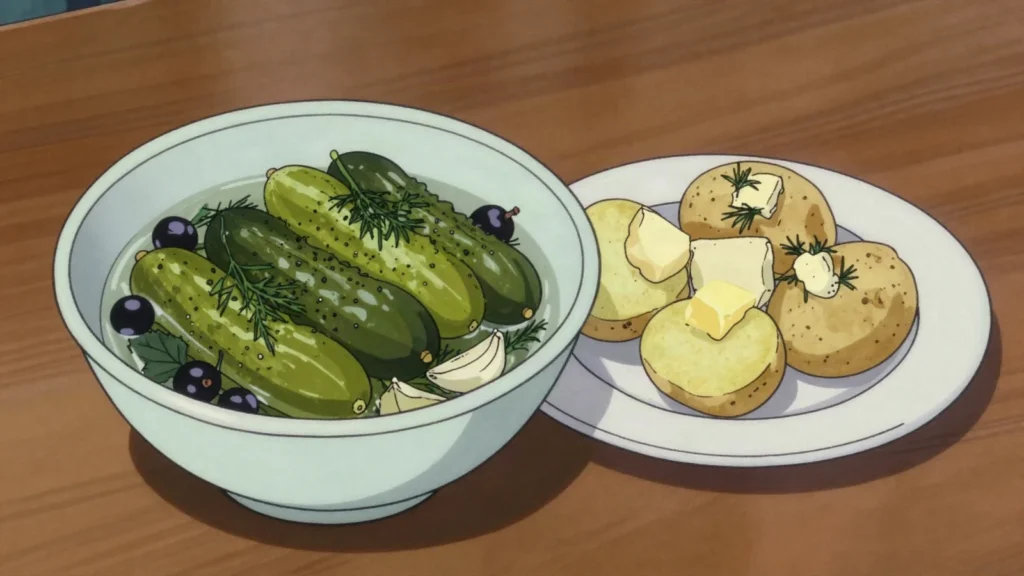

Ingredients
Cucumbers
- 2 kgsmall pickling cucumbers, firm and unwaxed
Brine
- 2 litreswater
- 100 gcoarse non-iodised salt — 5% of the water’s weight
Aromatics
- 1large bunch dill, with flower heads if you have them
- 8blackcurrant leaves
- 4cherry or oak leaves
- 1 headgarlic, cloves peeled
- 1 piecehorseradish root, sliced
- 1 tbspblack peppercorns
Directions
- Soak the cucumbers in ice-cold water for three to four hours. Cold firm cucumbers make crisp pickles; limp ones never recover.
- Trim a sliver off the blossom end of each cucumber. That end carries an enzyme that softens the whole jar, and it is the usual reason home-brined cucumbers go hollow and soft.
- Dissolve the salt completely in the water. Weigh it — 5% is what protects the jar in the days before the acidity builds.
- Line the bottom of a clean jar or crock with half the leaves and dill, pack the cucumbers in upright, and tuck the garlic, horseradish, peppercorns and the rest of the leaves and dill among them.
- Pour over the brine so everything is covered by 3 cm, and weight the cucumbers down. Anything above the brine will spoil.
- Cover loosely and leave at cool room temperature for one to two weeks. The brine will cloud and bubble — that is the ferment. Skim any white film off as it appears.
- They are ready when they are sour all the way through and no longer bright green inside. Move them somewhere cold, where they keep for months.
Technique
- Trim the blossom end. It is a thirty-second job and it is the single biggest cause of soft pickles.
- The blackcurrant, cherry and oak leaves are not decoration — their tannins are what keep the cucumbers crisp through months in brine.
- Cool room, not warm. Fermented above 22°C (72°F) they sour in days and go hollow.
Substitutions
- Grape or horseradish leaves in place of blackcurrant, all of which carry the same tannins.
- A splash of brine from a working jar to get the ferment moving faster.
Variations
- The Russian solyonye ogurtsy and Polish ogórki kiszone are the same preserve.
- Small green tomatoes fermented in the same brine alongside the cucumbers.
History
Barrels of brined cucumbers were kept in cellars for winter across the Baltic; the dill and horseradish brine is still made at home each August.
Frequently asked questions
What is Hapukurk?
Hapukurk is a fermented & pickled from Estonia: salt-brined cucumbers with dill and blackcurrant leaf, eaten with potatoes. Barrels of brined cucumbers were kept in cellars for winter across the Baltic; the dill and horseradish brine is still made at home each August.
How long does Hapukurk take to make?
Hapukurk takes 30 min plus 1 to 2 weeks fermenting of preparation and no cooking at all. The recipe makes fills a 3-litre jar. It is rated easy to make.
What can I substitute in Hapukurk?
Yes, within limits. Grape or horseradish leaves in place of blackcurrant, all of which carry the same tannins. A splash of brine from a working jar to get the ferment moving faster.
What is the most important thing to get right in Hapukurk?
Soak the cucumbers in ice-cold water for three to four hours. Cold firm cucumbers make crisp pickles; limp ones never recover.