
Ingredients
Beans
- 1 kgdried African locust beans (Parkia biglobosa seeds)
- water to cover, plus more for boiling
- 2 tbspwood ash or 1 tsp bicarbonate of soda (to soften the hulls)
Fermenting and storing
- banana or Uapaca leaves, wilted over a flame, to line the basket
- 1clean woven basket or colander
- 30 gfine salt, for the dry-salted keeping version
Directions
- Sort the seeds, discarding stones and split beans, and rinse well.
- Boil the seeds hard in plenty of water with the ash or bicarbonate for 8–12 hours, topping up with boiling water, until a seed crushes easily between finger and thumb. In Nigeria this is done overnight over a wood fire.
- Drain and dehull: rub the hot seeds against a rough basket or between the palms and rinse in several changes of water so the black hulls float off, leaving pale yellow cotyledons.
- Boil the dehulled cotyledons a second time for 45–60 minutes until fully soft, then drain very thoroughly and spread to steam-dry for 20 minutes. Surface water gives you slime, not iru.
- Line a basket with wilted leaves, pack the warm beans in a layer 5–8 cm deep, cover with more leaves and wrap the whole basket in cloth or jute.
- Ferment in a warm dark place at 35–40°C (95–105°F) for 48–72 hours. Do not disturb it for the first 24 hours. The natural Bacillus subtilis on the leaves does the work.
- Check at 48 hours: the beans should be coated in a sticky, pulling thread, smell sharply of ammonia and mushrooms, and have darkened to olive-black. Ferment 24 hours longer for a stronger iru woro.
- For fresh iru (iru pete), mash lightly and use within 3 days, refrigerated. For keeping iru, mix through the salt, then sun-dry the beans 2–3 days until hard and store airtight for months.
Technique
- The ammonia smell is correct and is the sign of a healthy Bacillus fermentation, exactly as in Japanese natto. Pink, orange or fuzzy green growth, or a sour vinegar smell, means contamination – discard the batch.
- Temperature control matters more than time. Below 30°C (85°F) the ferment stalls and spoilage organisms take over; a warm airing cupboard, a yoghurt maker on low or a box with a heat mat all work.
- Everything must be scrupulously clean but not sterile: the leaves carry the culture, so use fresh leaves, wilted only to make them pliable.
Substitutions
- Cannot find locust beans? Soya beans fermented the same way give iru woro’s cousin, and Japanese natto is a workable stand-in in stews.
- Wilted banana leaf can be replaced by fig or vine leaves; in a pinch, a bamboo steamer basket lined with muslin ferments well.
Variations
- Iru woro, the whole-bean salted and dried version sold in Lagos markets.
- Iru pete, mashed and soft, dissolved into stews for a smoother savour.
- Ogiri, the Igbo relative made from fermented castor or melon seeds.
History
Parkia biglobosa seeds boiled and fermented by Yoruba and Hausa producers; iru is the seasoning that defines efo riro and ewedu.
Frequently asked questions
What is Iru?
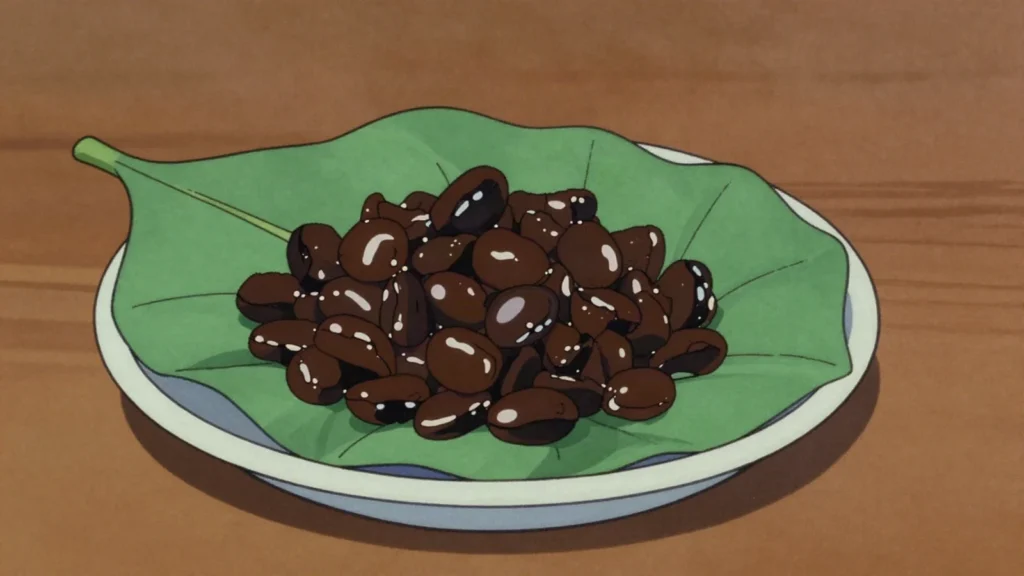
Iru is a fermented & pickled from Nigeria: fermented locust beans, black and sticky, dropped into stews for deep savour. Parkia biglobosa seeds boiled and fermented by Yoruba and Hausa producers; iru is the seasoning that defines efo riro and ewedu.
How long does Iru take to make?
Iru takes 1 hr of preparation and 3 days of cooking. The recipe makes about 400 g (enough for 15–20 pots of soup). It is rated hard to make.
What can I substitute in Iru?
Yes, within limits. Cannot find locust beans? Soya beans fermented the same way give iru woro’s cousin, and Japanese natto is a workable stand-in in stews. Wilted banana leaf can be replaced by fig or vine leaves; in a pinch, a bamboo steamer basket lined with muslin ferments well.
What is the most important thing to get right in Iru?
Line a basket with wilted leaves, pack the warm beans in a layer 5–8 cm deep, cover with more leaves and wrap the whole basket in cloth or jute.