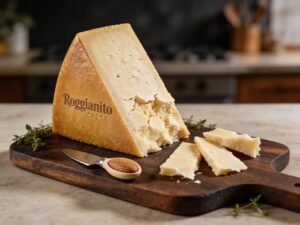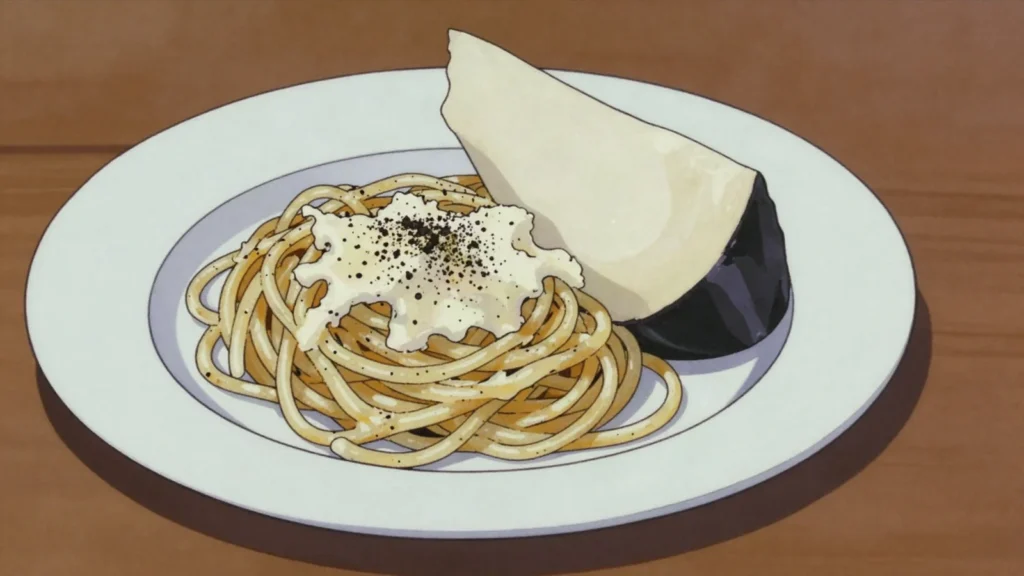

A hard, very salty sheep cheese grated over Roman pasta. Roman writers including Pliny and Columella described it as legion rations; most is now made in Sardinia, though DOP rules keep the Roman name.
It is a DOP raw-milk cheese made with lamb rennet paste and hand-salted over weeks, then ripened for months in a controlled store.
What goes into it
- raw sheep’s milk
- lamb rennet paste
- a natural whey starter
- coarse salt, in quantity
How it is made
Raw sheep’s milk is set with lamb rennet paste, the curd cut to rice-sized grains and scalded, then pressed hard into wheels and pierced. The wheels are dry-salted repeatedly by hand over weeks — the salting is the defining step and is why the cheese is so salty — and then ripened for five months or more.
How long it takes: five months minimum, eight for the grating grade
How it is eaten
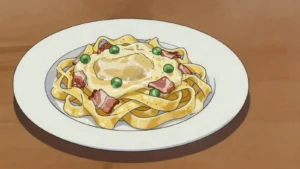
Grated over cacio e pepe, carbonara and amatriciana — never over fish, in Rome.
History
Described by Roman writers including Pliny and Columella as legion rations; most is now made in Sardinia, though DOP rules keep the name.
Frequently asked questions
What is Pecorino Romano?
Pecorino Romano is a cheese & dairy from Vatican City: hard, very salty sheep cheese grated over Roman pasta. Described by Roman writers including Pliny and Columella as legion rations; most is now made in Sardinia, though DOP rules keep the name.
How is Pecorino Romano made?
Raw sheep’s milk is set with lamb rennet paste, the curd cut to rice-sized grains and scalded, then pressed hard into wheels and pierced. The wheels are dry-salted repeatedly by hand over weeks — the salting is the defining step and is why the cheese is so salty — and then ripened for five months or more. It takes five months minimum, eight for the grating grade.
Can I make Pecorino Romano at home?
No, and the atlas gives no method for it. It is a DOP raw-milk cheese made with lamb rennet paste and hand-salted over weeks, then ripened for months in a controlled store.
What goes into Pecorino Romano?
Raw sheep’s milk, lamb rennet paste, a natural whey starter, coarse salt, in quantity.
How is Pecorino Romano eaten?
Grated over cacio e pepe, carbonara and amatriciana — never over fish, in Rome.