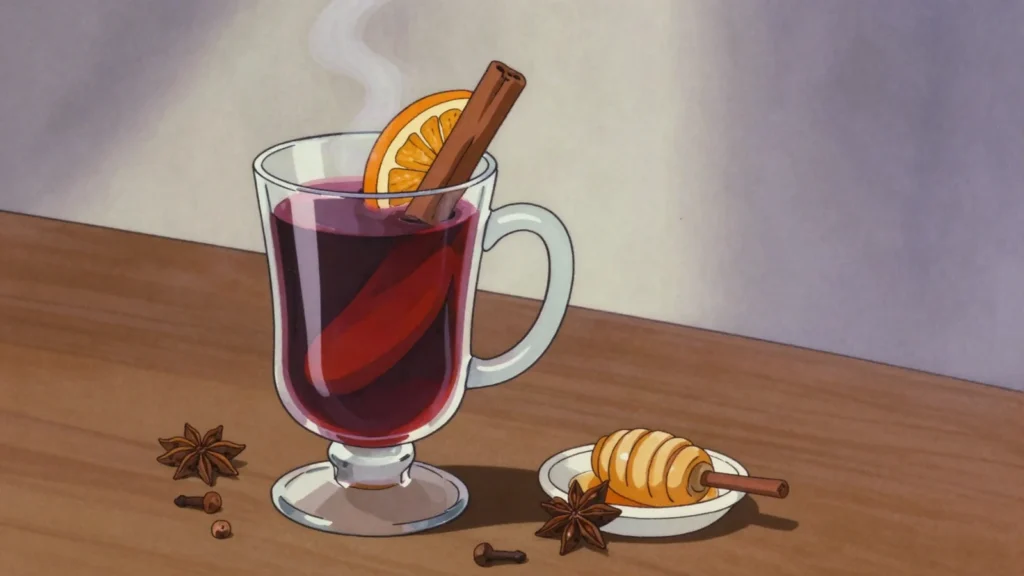

Ingredients
The wine
- 1.5 litresred wine
- a soft fruity one
- 4 tablespoonshoney
- or 120 g sugar
Spices
- 3cinnamon sticks
- 10whole cloves
- 1 teaspoonwhole allspice berries
- 3star anise
- 5cm fresh ginger, sliced
- a pinch of grated nutmeg
Fruit
- 2oranges, sliced
- 1lemon, sliced
- 1apple, sliced
- 100 graisins, optional
Sometimes added
- a shot of brandy or rum
- 200 mlapple or cherry juice
Directions
- Keep it at a bare steam instead. Use a soft and fruity red wine. It should not be heavily tannic. Put the whole spices in a dry pan. Warm them over a medium low heat. Give them about two full minutes.
- Shake the pan as they warm through. They should smell noticeably stronger. Wash the oranges and lemon thoroughly. Waxed fruit should be scrubbed well.
- Slice them all into thin rounds. Keep the peel on, since it carries the oil. Slice the apple up thinly as well. Pour about a third of the wine into a pot. Add the toasted spices and the sliced ginger. Add the sliced fruit and the raisins. Warm it gently over a low heat.
- Let it simmer very gently for ten minutes. The cold wine brings the temperature down. Warm the whole pot through gently. Bring it to a bare steam only. Never let it bubble at all here.
- Hold it there for fifteen minutes. Judging the temperature takes attention. Steam should rise from the surface. No bubbles should break it at all. Turn the heat right down if it starts to bubble. Adding the honey is done off the heat. Take the pot off the heat entirely. Stir the honey in until it dissolves.
- Taste it and adjust the sweetness. Add more honey if it seems sharp. Squeeze in more lemon if it is flat. Add it off the heat at the very end. Leaving them in keeps infusing it. Pour it into thick mugs or heatproof glasses. Add a fresh orange slice to each one.
- Add a cinnamon stick if you like. It keeps two days refrigerated. Warm alcohol is absorbed faster than cold. Never drive after drinking it.
Technique
- Gluhwein means glowing wine in German, and glintvein is the Russian rendering of that word, the drink having arrived with its name attached.
- Honey rather than sugar is common in the Russian version and must go in off the heat, since heating honey hard destroys its aroma.
- Warm alcohol is absorbed faster than cold and tastes far less strong than it is, since the honey and spice hide the wine completely.
Substitutions
- Sugar stands in for honey, though the sweetness is flatter.
- Any soft fruity red wine works, and there is no point using a fine one.
Variations
- Ginger is common in the Russian version and suits the cold.
- Some households add apple or cherry juice to lengthen it.
- Forralt bor in Hungary and glintveinas in Lithuania are the same idea.
History
Adopted from German Glühwein and now standard at Russian winter fairs and ski resorts.
Frequently asked questions
What is Glintvein?
Glintvein is a cocktail from Russia: red wine heated with honey, cloves, cinnamon and orange. Adopted from German Glühwein and now standard at Russian winter fairs and ski resorts.
How long does Glintvein take to make?
Glintvein takes 10 minutes of preparation and 25 minutes of cooking. The recipe makes serves 6. It is rated easy to make.
What can I substitute in Glintvein?
Yes, within limits. Sugar stands in for honey, though the sweetness is flatter. Any soft fruity red wine works, and there is no point using a fine one.
What is the most important thing to get right in Glintvein?
Keep it at a bare steam instead. Use a soft and fruity red wine. It should not be heavily tannic. Put the whole spices in a dry pan. Warm them over a medium low heat. Give them about two full minutes.