
Ingredients
The filling
- 400 gbeef
- skirt, flank or braising steak
- or half beef and half pork
- 600 gpotatoes
- peeled and diced small
- 2 tablespoonsoil
- 1onion, finely chopped
- 3spring onions, sliced
- 2 clovesgarlic, crushed
- 2tomatoes, chopped
- 1 teaspoonground cumin
- 1 teaspoonsazón or achiote
- for the colour
- salt and black pepper
- a handful of coriander, chopped
The dough
- 500 gmasarepa
- precooked white maize flour
- the arepa flour
- 1 teaspoonsalt
- 1 teaspoonachiote or turmeric
- for colour
- 1 tablespoonoil
- about 700 ml warm water
The ají
- the sauce, essential
- 4spring onions, finely sliced
- 1tomato, deseeded and diced
- a large handful of coriander
- 1or 2 hot chillies, chopped
- juice of 2 limes
- 3 tablespoonswater
- 1 tablespoonvinegar
- salt, to taste
For frying
- 1 litrevegetable oil
- or enough for 6 cm depth
To serve
- hot, with ají
- lime wedges
Directions
- Put the beef in a pot with water to cover. Add half an onion and a little salt. Simmer it for about forty-five minutes. It should be tender enough to shred. Lift it out and let it cool. Keep the cooking liquid. Pull the meat apart with two forks. Boil the diced potato until soft. Use the beef cooking liquid if you like. Drain it and mash it roughly.
- Leave some texture rather than a purée. It cooks to a soft golden mash. Heat the oil in a pan. Add the chopped onion and spring onion. Cook them for about eight minutes. Add the garlic and cook two minutes. Add the chopped tomato.
- Cook it down for about eight minutes. Add the cumin and the achiote or sazón. Add the shredded beef and the mashed potato. Add a little of the cooking liquid to moisten it. Season it well with salt and pepper. Add the chopped coriander. It must be thick and hold together. Cook off any excess liquid. Warm filling makes the dough soft and unworkable.
- Spread it on a tray to cool faster. Refrigerate it if you have time. Season the filling boldly. Taste it and push the salt and cumin. Put the masarepa in a large bowl. Add the salt and the achiote or turmeric. Add the oil. Now add warm water gradually.
- Mix with your hand as you go. It should be soft, smooth and pliable. Add water a little at a time. Roll a small ball and flatten it between your palms. If the edges crack, it needs more water. Knead more water in and test again. Keep the dough covered while you work. Take a ball of dough about the size of a walnut.
- Cut open a plastic bag or use cling film. Put the ball between two sheets of plastic. Press it flat with a plate or a flat pan. Press it to about three millimetres thick. Peel off the top sheet of plastic.
- Put a spoonful of cold filling on one half. Leave a clear border around it. Lift the bottom plastic sheet. Use it to fold the dough over the filling. Press the edges together through the plastic. Press the edge firmly all the way round. Trim it with a bowl rim or a cutter for a neat half-moon. Press the trimmed edge again.
- Check there are no gaps or thin spots. Filling escaping into hot oil spits dangerously. Use a deep heavy pot. Fill it no more than one third full. Never leave hot oil unattended. Keep a well fitting lid within reach. If it catches fire, turn off the heat and cover it. Fry them for three or four minutes. Turn them so they colour evenly. They should be deep golden and blistered.
- Lift them out with a slotted spoon. Drain them on a rack over kitchen paper. Let the oil recover between batches. It is sharp, hot and herby. Combine the sliced spring onion and diced tomato. Add the chopped coriander and chilli. Add the lime juice, vinegar and water. Add salt and stir.
- Let it stand fifteen minutes before serving. It should be sharply sour and clearly hot. Serve them hot, within minutes of frying. Serve the ají in a bowl alongside. Serve lime wedges too. They keep a day in an airtight tin. Freeze them on a tray before bagging. Fry them from frozen at a slightly lower temperature. Give them an extra two minutes.
Technique
- Use masarepa, the precooked maize flour sold for arepas — Harina PAN, Areparina or similar. It is not masa harina, which is nixtamalised and makes tortillas; not cornmeal or polenta, which are raw and will not hydrate; and not cornflour or cornstarch, which is pure thickening starch. Getting the right flour is most of the battle.
- Rest the dough five minutes after mixing and then judge it again. Masarepa keeps absorbing water, and it almost always needs more than you first added.
- Test the dough by flattening a ball between your palms. If the edges crack it needs more water — cracked edges mean torn empanadas, which is the commonest failure with this dough.
- Press the dough flat between two sheets of plastic. It has no gluten and sticks to everything, so it cannot be rolled and lifted like pastry; the plastic peels away cleanly and doubles as the tool for folding.
- Keep the filling thick and cool it completely before folding. Wet filling tears the dough and bursts the parcels in hot oil, which is a burn risk as well as a ruined batch; warm filling makes the dough soft and unworkable.
- Season the filling boldly. The plain maize shell dilutes it considerably.
- Press every seam firmly and check for thin spots. Filling escaping into hot oil spits dangerously.
- This dough is forgiving — cracks close with a wet finger and a torn empanada can simply be reshaped. That is a real advantage over wheat pastry.
- Fry at 180 degrees. The filling is already cooked and you are only crisping and blistering the shell.
- Deep-frying rules apply: fill the pot no more than a third, never leave it unattended, keep a lid within reach, and if the oil catches fire turn off the heat and smother it. Never throw water on burning oil.
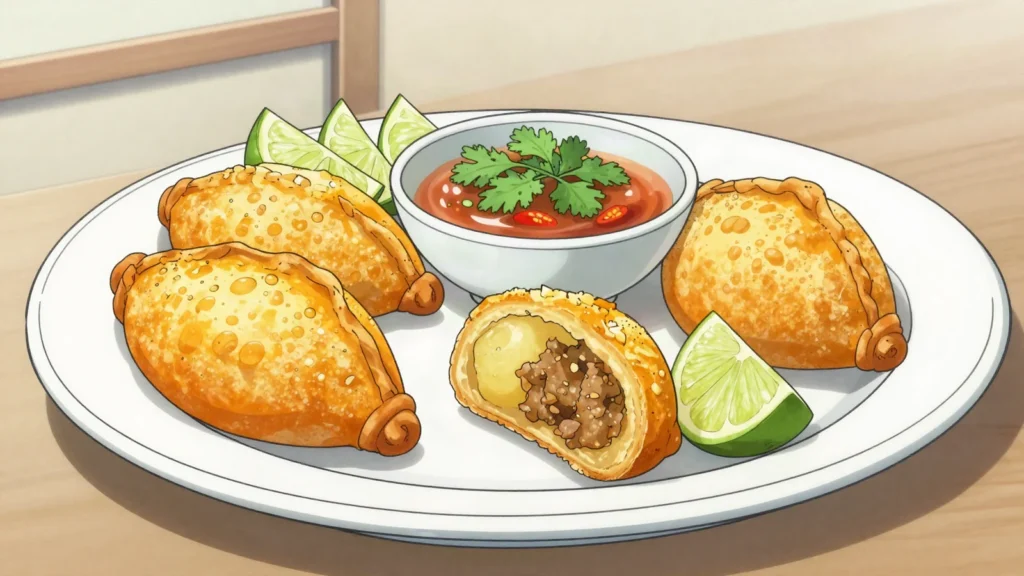
- Ají is not optional. The fresh sour herby sauce cuts the fried shell entirely, and empanadas without it are half the dish — they are bitten open and the ají is spooned inside.
- Colombian empanadas are maize-dough and fried, unlike the baked wheat-pastry empanadas of Argentina and Chile. They are also naturally gluten free.
Substitutions
- Pork, or a mixture of beef and pork, replaces beef and is common.
- Any floury potato replaces papa criolla, which is sold frozen abroad.
- Turmeric replaces achiote or sazón for the colour, though the flavour differs slightly.
- Shredded chicken makes a common alternative filling.
- A cheese and potato filling makes a vegetarian version.
- Baking at 200 degrees with a brush of oil is possible but gives a noticeably different, drier result.
Variations
- Empanadas de pipián, from Popayán, are filled with peanut-thickened potato.
- Empanadas vallunas from the Valle del Cauca are a regional variation with their own filling.
- Arepas use the same masarepa dough, griddled rather than filled and fried.
- Pastel de yuca uses a cassava dough instead of maize.
- Argentine and Chilean empanadas are baked wheat pastry and a quite different thing.
- Empanada de viento in Ecuador is a puffy fried cheese empanada dusted with sugar.
History
A fried pastry, its dough made from cornmeal rather than wheat flour, filled with a mixture of potato and meat and typically served with a tangy salsa called ají, developed across Colombia with regional variations found in different parts of the country. Its corn-based dough, distinguishing Colombian empanadas clearly from the wheat-flour empanadas found in neighboring Venezuela and much of the rest of Latin America, reflects corn’s deep and continuous importance across Colombian and wider Andean cooking, tracing back to Indigenous agricultural tradition that predates Spanish colonization. Empanada colombiana remains one of Colombia’s most widely eaten street foods and snacks, found across virtually every region of the country.
Frequently asked questions
What is Empanada colombiana?
Empanada colombiana is a street food from Colombia: crisp corn-flour pockets of beef and potato, served with ají. A fried pastry, its dough made from cornmeal rather than wheat flour, filled with a mixture of potato and meat and typically served with a tangy salsa called ají, developed across Colombia with regional variations found in different parts of the country. Its corn-based dough, distinguishing Colombian empanadas clearly from the wheat-flour empanadas found in neighboring Venezuela and much of the rest of Latin America, reflects corn’s deep and continuous importance across Colombian and wider Andean cooking, tracing back to Indigenous agricultural tradition that predates Spanish colonization. Empanada colombiana remains one of Colombia’s most widely eaten street foods and snacks, found across virtually every region of the country.
How long does Empanada colombiana take to make?
Empanada colombiana takes 1 hour of preparation and 1 hour, plus frying of cooking. The recipe makes makes about 24. It is rated medium to make.
What can I substitute in Empanada colombiana?
Yes, within limits. Pork, or a mixture of beef and pork, replaces beef and is common. Any floury potato replaces papa criolla, which is sold frozen abroad. Turmeric replaces achiote or sazón for the colour, though the flavour differs slightly. Shredded chicken makes a common alternative filling. A cheese and potato filling makes a vegetarian version. Baking at 200 degrees with a brush of oil is possible but gives a noticeably different, drier result.
What is the most important thing to get right in Empanada colombiana?
Leave some texture rather than a purée. It cooks to a soft golden mash. Heat the oil in a pan. Add the chopped onion and spring onion. Cook them for about eight minutes. Add the garlic and cook two minutes. Add the chopped tomato.