
Ingredients
The mash
- 400 gbuckwheat flour
- or 400 g millet flour
- or 400 g maize flour
- 1.2 litreswater
- 1 teaspoonsalt
- 1 tablespoonghee, optional
To serve
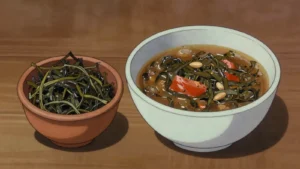
- gundruk ko jhol, fermented greens soup
- a lentil dal
- a vegetable or meat curry
- achar, pickle
- yoghurt
Equipment
- a heavy pot
- a dhido stick or a strong wooden spoon
Directions
- Put the water into a heavy pot. Add the salt to the boiling water. Bring it to a full rolling boil. Add the ghee now if you are using it.
- Sprinkle about a third of the flour in. Stir it hard as you pour it in. Let it cook for two full minutes.
- Stir constantly the whole time. Work the stick against the side of the pot. Press and fold rather than simply stirring. Break up every lump you find against the pot.
- Keep working it for a full ten minutes. It should be completely smooth with no lumps. Cook it for longer if it does. Add a splash of hot water if it is too stiff.
- Add a little more flour if it is too soft. Some like it very stiff indeed. Spoon dhido into it and swirl it round. That shapes it into a smooth mound.
- Turn it out onto a warm plate. Repeat that for every portion. Water on the bowl stops it sticking.
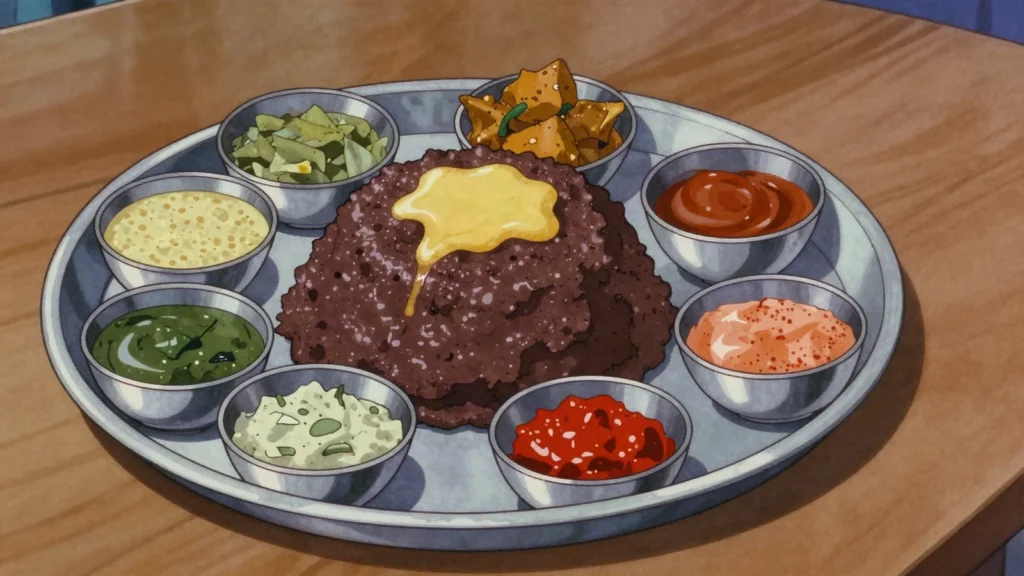
- Set the mound down on each plate. Arrange the curries and soup around it. It really does not keep well at all. Make only as much as will be eaten.
Technique
- Dhido is pinched off, rolled briefly against the palm, dipped and swallowed largely whole rather than chewed, since chewing it much makes it pasty.
- Buckwheat, millet and maize grow in the high hills where rice does not, which is why dhido is still preferred at altitude.
- A flat wooden dhido stick is made specifically for the stirring, since the mash becomes stiff enough to bend an ordinary spoon.
Substitutions
- Buckwheat, millet and maize flour all work, and mixtures of two are common.
- A strong wooden spoon stands in for a dhido stick.
Variations
- Each hill region uses whichever grain grows there.
- Some households mix two flours together.
- Gundruk ko jhol, the sour fermented greens soup, is the classic partner.
History
Buckwheat, maize or millet stirred into a stiff mash, the hill staple before rice became affordable and still preferred at high altitude.
Frequently asked questions
What is Dhido?
Dhido is a main from Nepal: hand-stirred buckwheat or millet mush, eaten with gundruk and curries. Buckwheat, maize or millet stirred into a stiff mash, the hill staple before rice became affordable and still preferred at high altitude.
How long does Dhido take to make?
Dhido takes 5 minutes of preparation and 25 minutes of cooking. The recipe makes serves 4. It is rated medium to make.
What can I substitute in Dhido?
Yes, within limits. Buckwheat, millet and maize flour all work, and mixtures of two are common. A strong wooden spoon stands in for a dhido stick.
What is the most important thing to get right in Dhido?
Stir constantly the whole time. Work the stick against the side of the pot. Press and fold rather than simply stirring. Break up every lump you find against the pot.