
Ingredients
Cuy
- 2whole guinea pigs, cleaned
- with the skin on
- split flat down the belly
- 2 teaspoonssalt
Marinade
- 8garlic cloves, crushed
- 2 tablespoonsground cumin
- 2 tablespoonsají panca paste
- juice of 3 limes
- 1 teaspoonblack pepper
- 3 tablespoonsoil
To coat
- 150 gmaize flour
- or fine cornmeal
- 1 teaspoonsalt
To fry
- oil or lard, for shallow frying
- a flat heavy stone, scrubbed clean
- or a heavy pan lid, as a press
To serve
- boiled potatoes
- mote, boiled hominy
- rocoto chilli sauce
- sliced onion salad
Directions
- Press down on the backbone to flatten it. Some cooks crack the ribs to help it lie flat. Rinse it thoroughly and pat it dry. Mix all the marinade ingredients together.
- Rub it over the whole flattened carcass. Work it into every single surface. Cover it and refrigerate it now. Give it at least four full hours.
- Mix the maize flour with the salt. Pat the marinated carcass dry. Press it into the maize flour on both sides.
- Coat it thoroughly and shake off the excess. Preparing the stone takes care. Use a flat heavy stone, scrubbed clean. Never use a stone that has been in water.
- Heat the stone slowly at the edge of the fire. Frying it needs a wide heavy pan. Pour oil or lard into the pan. It should come about two centimetres deep. Heat it until it clearly shimmers. It should sizzle firmly when tested.
- Lay the flattened carcass in skin side down. Set the hot stone or press on top of it. Press it down firmly onto the pan. That flattens the skin against the hot surface. Let it fry for about ten minutes. Do not lift it to look too often.
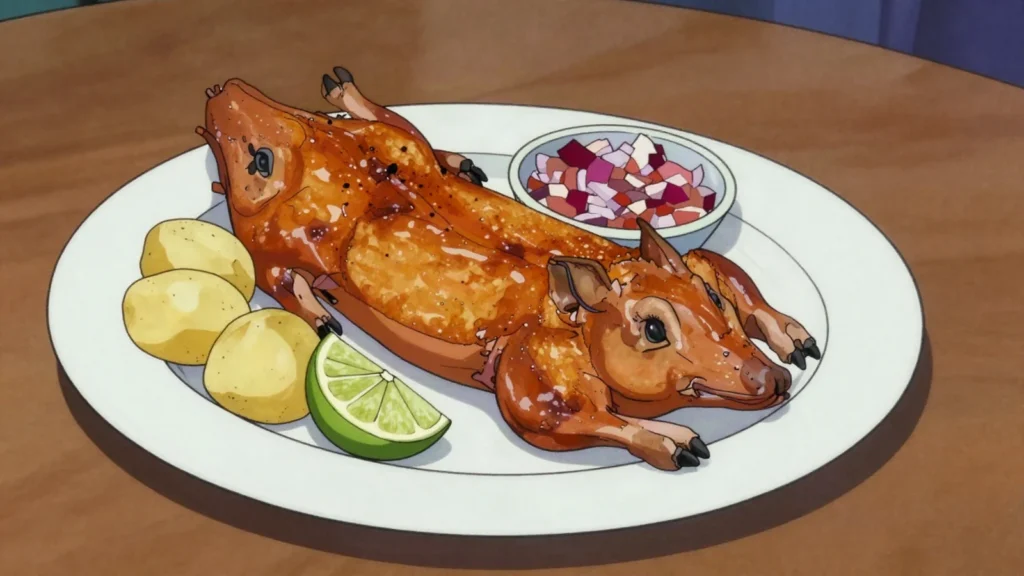
- Lift it onto a wire rack over a tray. A rack keeps every side crisp. Let the excess fat drain away. Serving it is done hot and whole. Serve boiled potatoes alongside. Rocoto is the hot red Peruvian chilli.
Technique
- The name comes from the Quechua chaqtay, meaning to press or crush, after the heavy flat stone traditionally used to press the carcass into the pan.
- Ecuador’s cuy asado roasts the animal whole on a spit, where the Peruvian dish flattens and fries it, and the two are quite different in method.
- A stone that has soaked up water can crack or explode when heated, so river stones are risky and a heavy pan lid is the safer press.
Substitutions
- A heavy pan lid or a second pan makes a far safer press than a heated stone.
- Cuy is very hard to find outside the Andes, and some Latin American shops sell it frozen.
Variations
- Some cooks coat the carcass in maize flour and some fry it plain.
- Cuy asado in Ecuador is spit-roasted rather than pressed and fried.
- Cuy al horno, baked in an oven, is made in some Peruvian regions.
History
Guinea pig, flattened under a heavy stone and fried until the skin turns crisp, developed in the Peruvian Andes, where guinea pig, called cuy, has been raised and eaten as a significant protein source for many centuries, with domestication and consumption of the animal documented among Indigenous Andean peoples well before Spanish colonization, distinguishing Andean cuy-eating from most other world food traditions, where guinea pigs are kept only as pets rather than raised for food. The technique of flattening the animal under a heavy stone before frying, giving cuy chactado its name and distinctive crisp, evenly cooked result, developed as a specific regional preparation method within the wider Andean tradition of eating cuy in various forms. It remains an important traditional and ceremonial dish across Peru’s highland regions specifically.
Frequently asked questions
What is Cuy chactado?
Cuy chactado is a main from Peru: guinea pig flattened under stone and fried crisp, Arequipa specialty. Guinea pig, flattened under a heavy stone and fried until the skin turns crisp, developed in the Peruvian Andes, where guinea pig, called cuy, has been raised and eaten as a significant protein source for many centuries, with domestication and consumption of the animal documented among Indigenous Andean peoples well before Spanish colonization, distinguishing Andean cuy-eating from most other world food traditions, where guinea pigs are kept only as pets rather than raised for food. The technique of flattening the animal under a heavy stone before frying, giving cuy chactado its name and distinctive crisp, evenly cooked result, developed as a specific regional preparation method within the wider Andean tradition of eating cuy in various forms. It remains an important traditional and ceremonial dish across Peru’s highland regions specifically.
How long does Cuy chactado take to make?
Cuy chactado takes 1 hour plus marinating of preparation and 30 minutes of cooking. The recipe makes serves 4. It is rated hard to make.
What can I substitute in Cuy chactado?
Yes, within limits. A heavy pan lid or a second pan makes a far safer press than a heated stone. Cuy is very hard to find outside the Andes, and some Latin American shops sell it frozen.
What is the most important thing to get right in Cuy chactado?
Rub it over the whole flattened carcass. Work it into every single surface. Cover it and refrigerate it now. Give it at least four full hours.