
Ingredients
Spiced milk
- 1 litrewhole milk
- 200 gcaster sugar
- 1cinnamon stick
- 6whole cloves
- Peel of 1 orange, in wide strips, no pith
- 1vanilla pod, split, or 1 tsp vanilla extract
- 1whole nutmeg, for grating
To finish
- 3 tbspinstant coffee granules, or 200 ml very strong espresso
- 250–300 mlaguardiente (Chilean cane spirit, about 40% ABV)
To serve
- Chilled small glasses or reused bottles
- Pan de Pascua or Christmas cake
Directions
- Warm the milk in a heavy pan over medium-low heat with the sugar, cinnamon, cloves, orange peel and split vanilla pod.
- Bring it just to the point of steaming, around 85°C (185°F), then hold it there for 15 minutes without letting it boil; boiled milk catches on the base and tastes scalded.
- Take off the heat, stir in the instant coffee until fully dissolved, and grate over a quarter of a nutmeg.
- Cover and leave to infuse until completely cold, at least 2 hours; infusing hot then cooling in the pan extracts far more clove and cinnamon than a quick steep.
- Strain through a fine sieve, pressing the peel to release its oils, and discard the spices.
- Stir in the aguardiente only when the mixture is cold. Adding spirit to hot milk drives off the alcohol and can curdle the milk.
- Pour into clean bottles, seal and refrigerate overnight so the flavours marry and the coffee bitterness rounds out.
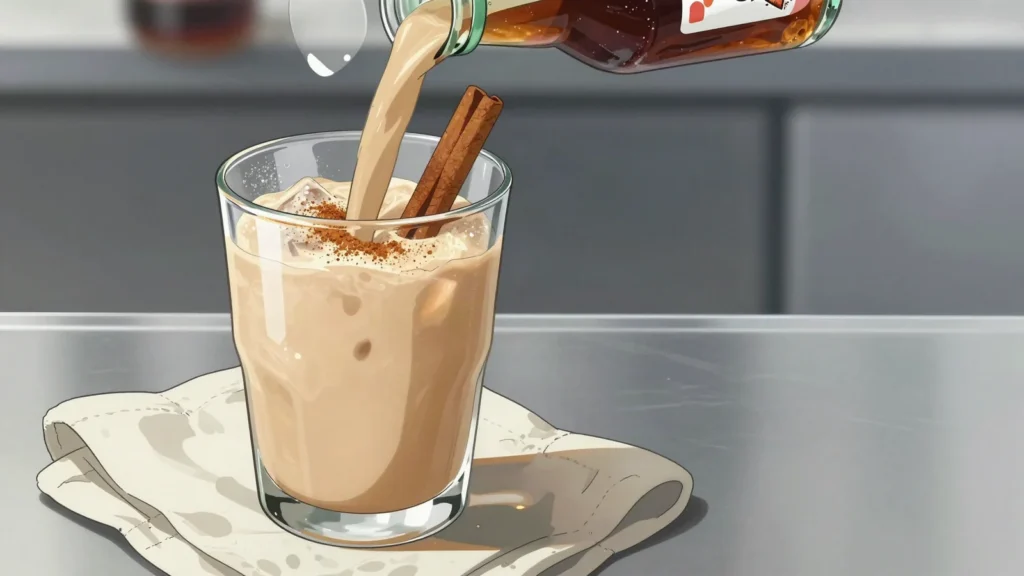
- Shake well and serve very cold in small glasses with a fresh grating of nutmeg, alongside pan de Pascua. Keeps a week in the fridge.
Technique
- The name (monkey’s tail) is disputed: the most repeated story ties it to President Pedro Montt and a borrowed Colt revolver, with ‘cola de Montt’ drifting into cola de mono. No version is documented beyond hearsay.
- Chileans bottle this in the days before Christmas and keep it chilled through the holidays; the flavour improves for the first three or four days.
- Curdling comes from heat or from adding acid; if it splits, blitz briefly with a stick blender and strain again.
Substitutions
- No aguardiente? Use pisco for a grapier, softer drink, or a light unaged rum. Vodka works but tastes anonymous.
- Evaporated milk in place of a third of the fresh milk gives the thicker, sweeter version many families prefer.
Variations
- Cola de mono con crema adds 200 ml single cream for a richer, dessert-like drink.
- Some households thicken it lightly with a teaspoon of cornflour slaked in cold milk during the infusion.
History
Made in Chilean homes every December; the odd name, meaning monkey’s tail, has several disputed legends attached.
Frequently asked questions
What is Cola de mono?
Cola de mono is a cocktail from Chile: cold aguardiente with milk, coffee, sugar and cloves, bottled for Christmas. Made in Chilean homes every December; the odd name, meaning monkey’s tail, has several disputed legends attached.
How long does Cola de mono take to make?
Cola de mono takes 10 min of preparation and 20 min plus overnight chilling of cooking. The recipe makes 1.5 litres, about 8 glasses. It is rated easy to make.
What can I substitute in Cola de mono?
Yes, within limits. No aguardiente? Use pisco for a grapier, softer drink, or a light unaged rum. Vodka works but tastes anonymous. Evaporated milk in place of a third of the fresh milk gives the thicker, sweeter version many families prefer.
What is the most important thing to get right in Cola de mono?
Bring it just to the point of steaming, around 85°C (185°F), then hold it there for 15 minutes without letting it boil; boiled milk catches on the base and tastes scalded.