The seed of a fruit, roasted — and the most traded agricultural commodity after oil, grown entirely in the tropics and drunk mostly outside them.
Where it comes from
Coffee originates in the highland forests of Ethiopia, where Coffea arabica still grows wild and where the coffee ceremony remains a daily social form. It moved through Yemen — the port of Mocha gave its name to the trade — into the Ottoman world, and reached Europe in the seventeenth century, where coffee houses became a recognised institution almost immediately.
The plant produces a cherry; the beans are its two seeds. Processing them — washed, natural or honey — changes the cup as much as the roast does, and long before it.
Almost all coffee is grown by smallholders in a belt around the equator, and the commodity price they receive bears little relation to what a cup sells for. That gap is what the various certification schemes are attempting, with mixed results, to address.
Varieties
- Arabica — Most speciality coffee. More acidic, more aromatic, more delicate, lower caffeine.
- Robusta — Hardier, higher yielding, higher caffeine, harsher. Instant coffee, and the body and crema in many espresso blends.
- Washed process — Pulp removed before drying. Cleaner and more acidic; the flavour is the bean.
- Natural process — Dried in the whole cherry. Fruity, heavier, more variable.
- Light and dark roasts — Light keeps origin character and acidity; dark trades it for roast flavour and bitterness.
- Turkish and Arabic preparations — Ground to powder and boiled, often with cardamom. Not filtered.
In the kitchen
Coffee goes stale from the moment it is ground — surface area is the enemy. Grinding to order is the single largest improvement available to anyone making coffee at home.
Water just off the boil, not boiling. Fully boiling water extracts more of the bitter compounds and scalds the grounds.
Bitterness is usually over-extraction and sourness usually under-extraction. The lever is grind size and time, not the amount of coffee.
Choosing and keeping
Keep beans airtight, cool and dark, and out of the freezer unless sealed and never opened until used — condensation does more damage than age.
Dishes with coffee
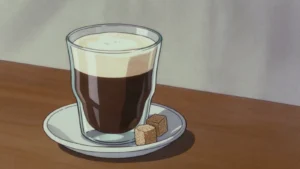 Nous noushalf espresso, half hot milk, the standard order in Moroccan cafés
 Irish coffeeHot coffee, Irish whiskey, sugar, floated cream.
 Espresso martiniVodka, coffee liqueur and fresh espresso shaken to a foamy head
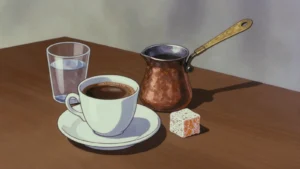 Turkish coffeefinely ground coffee simmered in cezve, served with grounds; UNESCO-listed
 Ethiopian coffee ceremonybeans roasted, ground and brewed in a jebena, served in three rounds
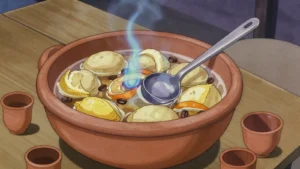 QueimadaGalician orujo burned with sugar, coffee beans and lemon peel while a spell is read.
 Ca Phe TrungEgg yolk whipped with condensed milk into a foam poured over black coffee
 Kafe Tuk Doh KoDark filtered coffee poured over condensed milk and a glass of ice
Coffee is tagged on 73 dishes from 61 countries in the atlas. These notes are written from general knowledge and carry no per-fact citation — see About.