
Ingredients
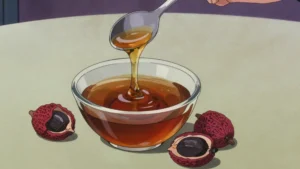
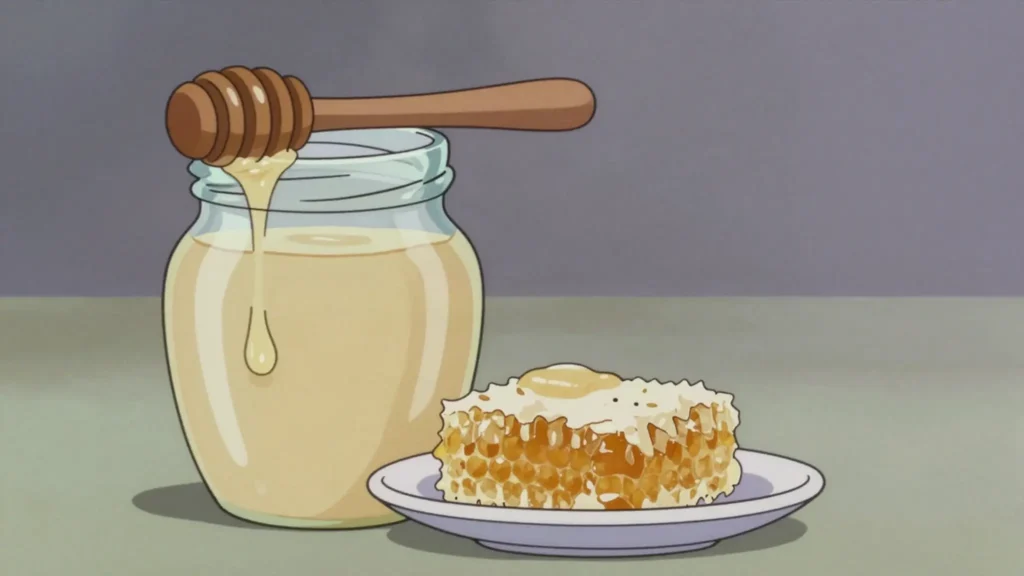
The honey
- sainfoin honey
- esparcet, pale and thick
- or alpine wildflower honey
- raw and unfiltered
Eaten with
- fresh bread
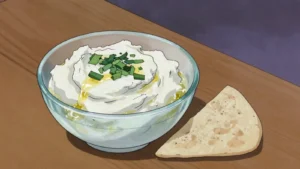
- kaymak or clotted cream
- boorsok, fried dough
- tea
Sometimes used in
- chak-chak and sweets
- marinades for meat
- warm drinks
Directions
- Keep the honey in a sealed jar. Do not refrigerate honey at all. Stand the jar in a bowl of warm water.
- Let it warm right through slowly. Stir it as the crystals dissolve.
- Use warm water rather than hot. Never microwave it in the jar.
- Set the jar or a bowl on the table. Serve fresh bread alongside it.
- Spread it thickly on the bread. Kaymak is the thick clotted cream.
- Spread the kaymak on bread first. Stir it into tea off the boil.
- Let the tea cool for a minute first. It keeps essentially indefinitely. Keep the jar sealed and kept dry.
Technique
- Never give honey to a child under one year old: it can contain botulism spores that an adult gut handles safely but an infant gut cannot, and infant botulism is rare but very serious. That applies to all honey, raw and pasteurised alike.
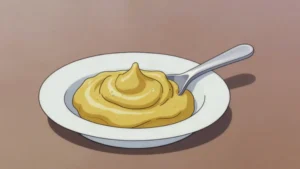
- Sainfoin, called esparcet locally, is a flowering legume grown as fodder that yields abundant nectar; its honey is very pale, almost white, mild and delicately floral, and crystallises into a fine smooth cream. Crystallisation is a natural property of the sugars rather than a fault, and fine even crystals are considered desirable here.
- Honey has very little free water and is naturally acidic, so bacteria cannot grow in it and it keeps essentially indefinitely; but a wet spoon introduces water that can let fermentation start locally, so always use a clean dry spoon, and never refrigerate it since cold speeds crystallisation.
Substitutions
- Alpine wildflower honey is darker and more strongly flavoured than sainfoin.
- Stand a crystallised jar in warm water around forty degrees, never boiling, to reliquefy it.
Variations
- It is eaten with bread, with kaymak, or with boorsok dipped straight into it.
- It goes into chak-chak and other sweets and into marinades for meat.
- Honey stirred into tea goes in off the boil to preserve its aroma.
History
Beekeepers move hives into alpine valleys each summer; white sainfoin honey is the country’s best-known export.
Frequently asked questions
What is Kyrgyz honey?
Kyrgyz honey is a sauce & condiment from Kyrgyzstan: pale mountain honey from sainfoin and alpine wildflowers. Beekeepers move hives into alpine valleys each summer; white sainfoin honey is the country’s best-known export.
How long does Kyrgyz honey take to make?
Kyrgyz honey takes no preparation of preparation and no cooking at all. The recipe makes as available. It is rated easy to make.
What can I substitute in Kyrgyz honey?
Yes, within limits. Alpine wildflower honey is darker and more strongly flavoured than sainfoin. Stand a crystallised jar in warm water around forty degrees, never boiling, to reliquefy it.
What is the most important thing to get right in Kyrgyz honey?
Keep the honey in a sealed jar. Do not refrigerate honey at all. Stand the jar in a bowl of warm water.