
Ingredients
Dough
- 500 gcassava flour, manioc flour
- 200 gcaster sugar
- 100 gbutter, melted
- 2eggs
- 1 teaspoonbaking powder
- 1/2 teaspoonsalt
- 1 teaspoonvanilla
- about 100 ml milk
Sometimes added
- 1 teaspoonground cinnamon
- the zest of 1 lime
- 2 tablespoonsdesiccated coconut
Equipment
- wooden biscuit moulds, if you have them
- or a rolling pin and cutters
- baking trays
Directions
- Use cassava flour, sold in African and Latin shops. It needs no further treatment before use. Put the cassava flour in a large bowl. Add the sugar, baking powder and salt. Whisk them together thoroughly.
- Add the cinnamon or lime zest if you want them. Pour in all of the melted butter. Rub it through the flour with your fingers.
- Work until it looks like coarse crumbs. Beat the eggs with the vanilla. Add them to the bowl and mix them in. Adding the milk needs restraint. Add the milk a spoonful at a time. Stop as soon as the dough comes together. Wrap the dough and leave it for twenty minutes.
- Dust the mould lightly with cassava flour. Press a piece of dough firmly into it. Press hard so it takes the pattern. The biscuit should drop out cleanly.
- Set it pattern side up on a baking tray. Roll the dough out on a floured surface. Roll it to about half a centimetre thick. Cut it into rounds or squares with a cutter. Press a fork or a stamp into each one.
- Set them on lined baking trays. Baking them is done low and slow. Heat the oven to only 160C for them. Bake them for about twenty-five minutes. They should be firm and only just golden.
- Let them cool down completely. Test one once it is fully cold. Cool them completely before storing. Put them in an airtight sealed tin. They keep three or four weeks.
Technique
- Rose Belle in the south of Mauritius has made these biscuits since the nineteenth century, and the trade there is now small.
- Cassava flour is milled from the whole dried root and behaves quite differently from tapioca starch.
Substitutions
- A mixture of cassava flour and plain flour gives an easier dough and a softer biscuit.
- Any wooden or ceramic stamp gives a pattern in place of a traditional mould.
Variations
- Some makers add desiccated coconut to the dough.
- A version flavoured with vanilla alone is the plainest.
- Similar dry cassava biscuits are made across the Indian Ocean islands.
History
Made in the village of Rose Belle since the nineteenth century, one of the last Mauritian cottage biscuit trades.
Frequently asked questions
What is Biscuit manioc?
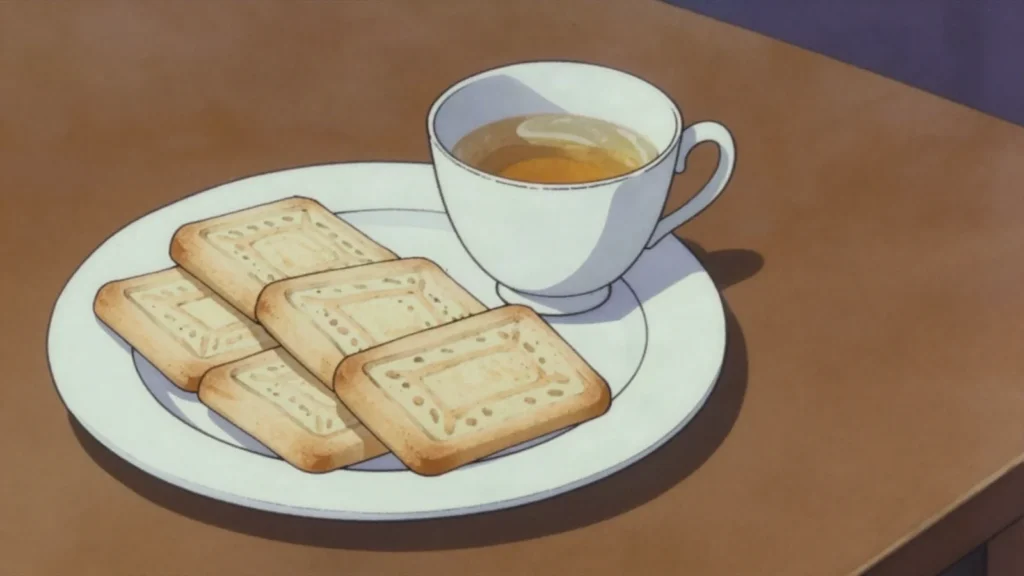
Biscuit manioc is a snack from Mauritius: dry cassava flour biscuits stamped in wooden moulds, dunked in tea. Made in the village of Rose Belle since the nineteenth century, one of the last Mauritian cottage biscuit trades.
How long does Biscuit manioc take to make?
Biscuit manioc takes 30 minutes of preparation and 25 minutes of cooking. The recipe makes about 40 biscuits. It is rated medium to make.
What can I substitute in Biscuit manioc?
Yes, within limits. A mixture of cassava flour and plain flour gives an easier dough and a softer biscuit. Any wooden or ceramic stamp gives a pattern in place of a traditional mould.
What is the most important thing to get right in Biscuit manioc?
Cassava flour is milled from the whole dried root and behaves quite differently from tapioca starch.