
Ingredients
Marinade
- 1 kgbeef heart, trimmed and cut into 3 cm squares about 1 cm thick
- 5 tbspají panca paste
- 8 clovesgarlic, crushed to a paste
- 100 mlred wine vinegar
- 1 tbspground cumin
- 1 tbspdried oregano
- 2 tspsalt
- 1 tspblack pepper
- 60 mlvegetable oil
Basting
- 2 tbspof the strained marinade
- 2 tbspvegetable oil
Ají sauce
- 3 tbspají amarillo paste
- 1 clovegarlic
- 2 tbspmayonnaise
- 1 tbsplime juice
- salt
To serve
- 4waxy potatoes, boiled and thickly sliced
- 2choclo cobs (large-kernel Peruvian corn), boiled and cut into rounds
- wooden or metal skewers
Directions
- Trim the heart hard: strip the outer membrane, cut away every piece of white sinew and all the fat, and slice the muscle into flat squares rather than cubes. Flat pieces cook evenly over coals in the two or three minutes a side they get.
- Whisk the marinade together and turn the meat through it. Cover and refrigerate overnight — Lima carts marinate for a day and the vinegar both seasons and tenderises in that time.
- Blend the ají amarillo, garlic, mayonnaise and lime to a smooth sauce and season. Keep it cold.
- Lift the meat from the marinade and thread three or four flat pieces per skewer, pushing them close together so they shield each other from the fire.
- Strain a little marinade and mix it with oil for basting — never baste with the marinade the raw meat sat in without boiling or straining it first.
- Grill over hot charcoal for 4–6 minutes total, turning every 90 seconds and brushing with the basting mix each turn. The surface should char in places while the inside stays pink and juicy.
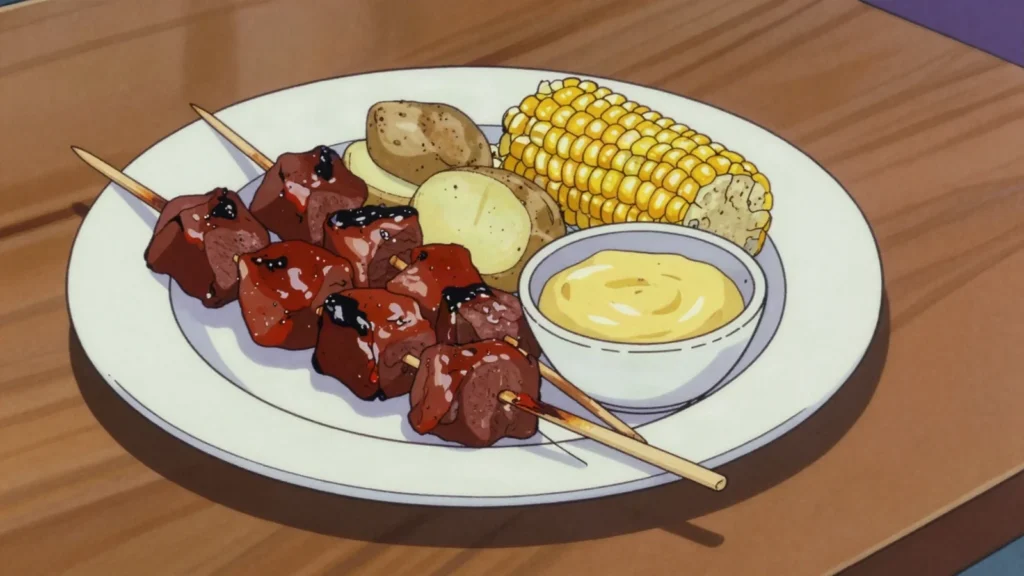
- Serve two skewers each with slices of boiled potato and rounds of choclo, and the ají sauce alongside. Anticuchos are eaten off the skewer, standing up, from a cart in the evening.
Technique
- Flat squares, not cubes. This is the difference between the Peruvian street version and a kebab, and it is why they cook so fast.
- Ají panca is a dried dark chilli, mild and fruity — it gives colour and depth rather than heat. The heat comes separately, from the ají amarillo sauce.
- Cook them over serious heat. A cool grill stews the heart grey and tough.
Substitutions
- Sirloin or beef skirt for anyone who will not eat heart, marinated the same way but grilled a minute less.
- Where choclo is unavailable, ordinary sweetcorn works, though the kernels are much smaller and sweeter.
Variations
- Anticuchos de pollo, made with chicken thigh, sold from the same carts.
- Rachi, grilled tripe, and mollejitas, sweetbreads, the other skewers on a Lima anticuchera’s grill.
History
Skewered, grilled beef heart, marinated in a paste built on ají panca, a mild Peruvian chili, vinegar and cumin, tracing back to Indigenous Andean cooking practices predating Spanish colonization, though the specific use of beef heart developed after Spanish colonizers introduced cattle to a continent that previously had none, leaving organ meats, including heart, more accessible and affordable to Indigenous and lower-income populations than the prime cuts often reserved for colonial elites. Some food historians also trace vinegar-marinated skewered meat more broadly to earlier Moorish and Spanish culinary influence carried over during colonization, layered onto Andean grilling technique. Anticuchos became a widespread Peruvian street food sold from carts particularly in the evening, and are now eaten and enjoyed across all social classes despite that origin tied to necessity and limited means.
Frequently asked questions
What is Anticuchos?
Anticuchos is a street food from Peru: grilled beef-heart skewers marinated in ají panca, evening carts. Skewered, grilled beef heart, marinated in a paste built on ají panca, a mild Peruvian chili, vinegar and cumin, tracing back to Indigenous Andean cooking practices predating Spanish colonization, though the specific use of beef heart developed after Spanish colonizers introduced cattle to a continent that previously had none, leaving organ meats, including heart, more accessible and affordable to Indigenous and lower-income populations than the prime cuts often reserved for colonial elites. Some food historians also trace vinegar-marinated skewered meat more broadly to earlier Moorish and Spanish culinary influence carried over during colonization, layered onto Andean grilling technique. Anticuchos became a widespread Peruvian street food sold from carts particularly in the evening, and are now eaten and enjoyed across all social classes despite that origin tied to necessity and limited means.
How long does Anticuchos take to make?
Anticuchos takes 30 min plus overnight marinating of preparation and 12 min of cooking. The recipe makes 4 servings, 12 skewers. It is rated medium to make.
What can I substitute in Anticuchos?
Yes, within limits. Sirloin or beef skirt for anyone who will not eat heart, marinated the same way but grilled a minute less. Where choclo is unavailable, ordinary sweetcorn works, though the kernels are much smaller and sweeter.
What is the most important thing to get right in Anticuchos?
Trim the heart hard: strip the outer membrane, cut away every piece of white sinew and all the fat, and slice the muscle into flat squares rather than cubes. Flat pieces cook evenly over coals in the two or three minutes a side they get.