
Ingredients
Dough
- 500 gwholemeal atta flour
- 1 tspsalt
- 3 tbspghee
- 1/2 tspajwain seeds
- 300 mlwarm water
Sattu filling
- 300 gsattu, roasted gram flour
- 1onion, very finely chopped
- 6garlic cloves, crushed
- 1thumb ginger, grated
- 3green chillies, finely chopped
- 1 tspajwain seeds
- 1 tspkalonji, nigella seeds
- 3 tbsppickle masala, from a jar of mango pickle
- juice of 1 lemon
- 3 tbspmustard oil
- a handful of coriander, chopped
- salt
Chokha
- 2large aubergines
- 4potatoes
- 4tomatoes
- 1onion, finely chopped
- 6garlic cloves
- 3green chillies
- 3 tbspmustard oil
- a handful of coriander, chopped
- salt
To finish
- 150 gghee, melted, for dipping
Directions
- Put the sattu in a large bowl. Add the finely chopped onion, garlic, ginger and green chilli. Add the ajwain and kalonji seeds. Take the oily spice paste from a jar of Indian mango pickle.
- Chop any large pieces of mango finely and add them too. Add the lemon juice, mustard oil, coriander and salt. Mix it all thoroughly with your fingers. The filling should be crumbly and just barely hold together when squeezed. Add a spoonful of water only if it is completely dry and dusty. Taste it and adjust the salt, sour and heat. It should taste strong, since the plain dough surrounds it.
- Mix the flour, salt and ajwain in a bowl. Rub in the ghee with your fingertips. Add the warm water gradually and bring it to a dough. Knead it for eight minutes until smooth. It should be firm rather than soft, since it must hold the filling.
- Cover it and rest it for thirty minutes. Now shaping, which takes some care. Divide the dough into twelve pieces and roll them into balls. Flatten one ball into a disc in your palm. Spoon in a generous tablespoon of the sattu filling. Bring the edges up around it and pinch them closed. Roll it between your palms into a smooth ball.
- Check for cracks and smooth them over. Now the fire, which should be embers rather than flame. Lay the balls directly on the embers. Turn them every four or five minutes with tongs. Bake them for about twenty-five minutes in total. They should sound hollow when tapped and feel light. Break one open to check: the filling should be dry and hot. Now the oven method, which works if you have no fire.
- Bake them at 200C for twenty-five minutes, turning once. Finish them directly over a gas flame for a minute for the char. Rub the aubergines with oil and prick them several times. Roast the aubergines, potatoes and tomatoes on the embers. Turn them until the skins are blackened and the insides soft. The aubergines take about twenty minutes and the tomatoes about ten.
- Roast the garlic and green chillies alongside for five minutes. Let everything cool enough to handle. Peel off all the blackened skin and discard it. Mash the aubergine, potato and tomato together in a bowl. Mash the roasted garlic and chilli and add them.
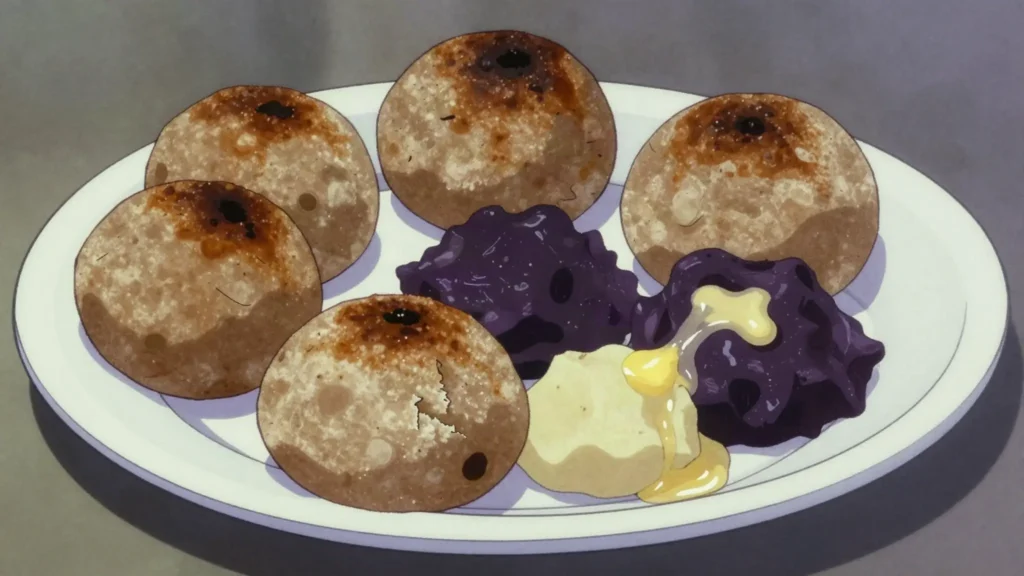
- Add the chopped raw onion and the coriander. Pour in the mustard oil and season with salt. Mix it with your hands rather than a spoon. It should be rough and lumpy rather than smooth. Crack each hot litti open with your hands or the back of a spoon. Do this while it is very hot, since cold litti will not absorb it. Serve them piled on a plate with the chokha beside them.
Technique
- The sattu filling must be crumbly, not a wet paste, or the litti goes soggy inside.
- Prick the aubergines before roasting, since an unpricked one can burst.
- Dunk the litti in ghee while very hot, as cold ones will not absorb it.
Substitutions
- An oven at 200C, finished over a gas flame for the char.
- Sattu has no real substitute and must be bought.
Variations
- Baked in an appe pan, which is a common shortcut.
- With a chokha of tomato only.
- Deep-fried, which some restaurants do though it is not traditional.
History
Round, dense wheat-flour balls stuffed with roasted sattu, a ground roasted gram flour, baked or traditionally cooked directly over hot coals or cow-dung cakes, then served with chokha, a mashed and spiced vegetable side most often made from roasted aubergine, tomato and potato, developed in the Bihar region of northern India. Its rustic cooking method, baking directly in ash or embers rather than in an oven, reflects rural Bihari cooking traditions predating widespread oven or stovetop access, and the dish carries strong associations with Bihari regional and cultural identity specifically, distinguishing it from many other North Indian breads and sides. Litti chokha experienced a notable resurgence in popularity and visibility across India more broadly beginning in the 2000s, tied partly to growing pride in regional Bihari cuisine.
Frequently asked questions
What is Litti Chokha?
Litti Chokha is a main from India: wheat balls stuffed with roasted gram flour, baked in embers, with mashed vegetables. Round, dense wheat-flour balls stuffed with roasted sattu, a ground roasted gram flour, baked or traditionally cooked directly over hot coals or cow-dung cakes, then served with chokha, a mashed and spiced vegetable side most often made from roasted aubergine, tomato and potato, developed in the Bihar region of northern India. Its rustic cooking method, baking directly in ash or embers rather than in an oven, reflects rural Bihari cooking traditions predating widespread oven or stovetop access, and the dish carries strong associations with Bihari regional and cultural identity specifically, distinguishing it from many other North Indian breads and sides. Litti chokha experienced a notable resurgence in popularity and visibility across India more broadly beginning in the 2000s, tied partly to growing pride in regional Bihari cuisine.
How long does Litti Chokha take to make?
Litti Chokha takes 45 min plus 30 min resting of preparation and 1 hour of cooking. The recipe makes 12 litti, serving 4. It is rated medium to make.
What can I substitute in Litti Chokha?
Yes, within limits. An oven at 200C, finished over a gas flame for the char. Sattu has no real substitute and must be bought.
What is the most important thing to get right in Litti Chokha?
Mix the flour, salt and ajwain in a bowl. Rub in the ghee with your fingertips. Add the warm water gradually and bring it to a dough. Knead it for eight minutes until smooth. It should be firm rather than soft, since it must hold the filling.