
Ingredients
Coffee
- 50 ggreen or very lightly roasted arabica beans, Yemeni or Ethiopian in origin, roasted only to a pale cinnamon colour
- 1 litrewater
Spices
- 2 tbspgreen cardamom pods, cracked, about 20 pods
- 1generous pinch saffron threads, about 0.2 g
- 4whole cloves (optional)
- ½ tspground ginger (optional, Hijazi style)
- No sugar
To serve
- 1dallah (long-spouted brass or steel pot)
- Small handleless finjan cups
- 300 gsoft dates, khalas, sukkari or ajwa
Directions
- Roast the beans very lightly. Saudi qahwa is a pale coffee, roasted only until the beans turn the colour of raw almonds and smell of hay and bread, about 8–10 minutes in a dry pan over medium heat, stirring constantly. Take them anywhere near brown and the drink stops being qahwa.
- Cool the beans completely, then grind medium-fine, coarser than espresso, finer than filter. Grind only what you will use; the aroma is gone within an hour.
- Bring the litre of water to a boil in the dallah or a saucepan, then reduce to a bare simmer.
- Stir in the ground coffee and simmer very gently, uncovered, for 10–15 minutes. It should never boil hard. The surface will foam, then settle to a thin ring.
- Crush the cardamom pods, husks and all, in a mortar and add them for the last 3 minutes only. Adding them at the start boils off the volatile oil and leaves a soapy taste.
- Steep the saffron in 2 tbsp of hot water for 5 minutes until the liquid runs deep orange, then stir it in with the cloves and ginger, if using, and take the pot off the heat.
- Let it settle 5 minutes, then strain through a fine sieve or a cloth into a second warmed dallah. Well-made qahwa is clear, thin and the colour of weak tea, never black and never muddy.
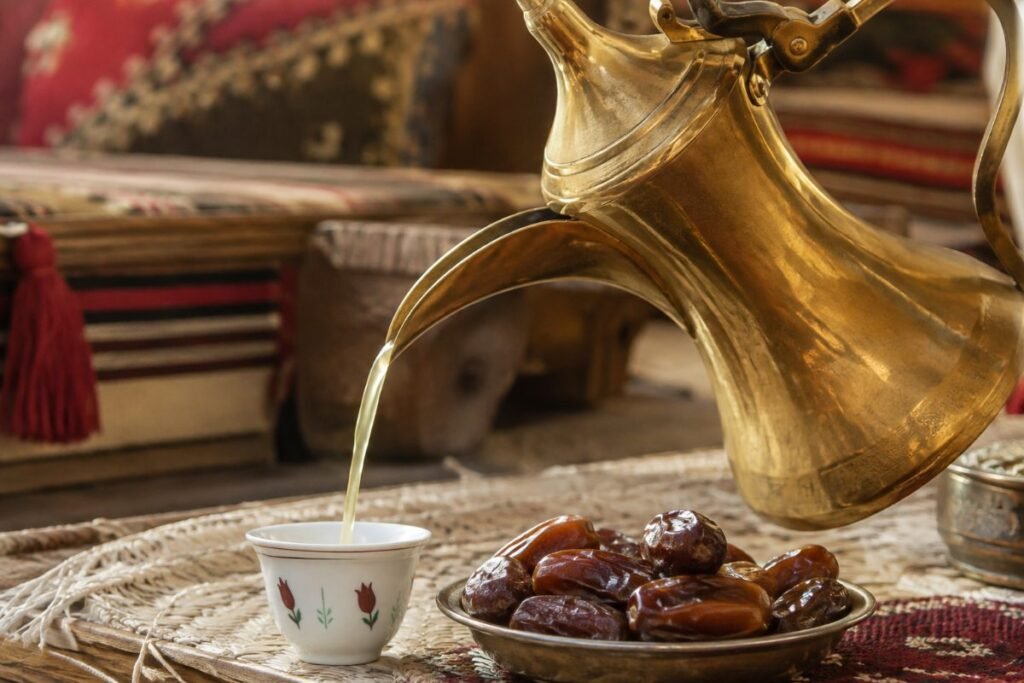
- Serve standing, pouring with the right hand from a height into cups filled only a third full, starting with the eldest or most senior guest. The guest holds the cup in the right hand.
- Refill until the guest shakes the cup gently from side to side, which means enough. Serve dates alongside and never sugar; the date is the sweetness.
Technique
- Qahwa is a ritual of hospitality before it is a beverage. Small pours, repeated, are the point: a full cup implies you want the guest to leave. The gahwaji stands while serving and holds the dallah in the left hand, cups in the right.
- The pale roast is not underdevelopment, it is the style. Saudi, Kuwaiti and Emirati qahwa are all light; the strength comes from long simmering and from cardamom, not from roast colour.
- Cardamom quantity varies sharply by region and family. The Najdi standard is assertive, roughly 1 part cardamom to 3 parts coffee by volume, which shocks first-time drinkers.
- In 2015 Saudi Arabia’s Arabic coffee tradition was inscribed with several Gulf states on the UNESCO intangible cultural heritage list.
Substitutions
- Cannot roast green beans? Buy pre-ground Arabic coffee (qahwa arabiyya) from a Middle Eastern grocer, already blended with cardamom, and simmer 10 minutes.
- No saffron? The coffee is still authentic without it; saffron marks a more generous or ceremonial pot.
- Ground cardamom can replace pods at 1 tsp per litre, added at the very end, though whole cracked pods give a cleaner flavour.
Variations
- Hijazi qahwa, darker roasted and heavier on ginger and cloves, drunk in Jeddah and Makkah.
- Qahwa with a splash of rose water, served at weddings.
- Gulf variants with a much stronger saffron dose, giving a distinctly yellow cup.
History
Poured from a brass dallah for guests; the Gulf hospitality ritual was inscribed by UNESCO in 2015.
Frequently asked questions
What is Arabic coffee?
Arabic coffee is a drink from Bahrain: cardamom and saffron coffee served in tiny cups with dates. Poured from a brass dallah for guests; the Gulf hospitality ritual was inscribed by UNESCO in 2015.
How long does Arabic coffee take to make?
Arabic coffee takes 10 min of preparation and 20 min of cooking. The recipe makes 6 small cups (finjan). It is rated easy to make.
What can I substitute in Arabic coffee?
Yes, within limits. Cannot roast green beans? Buy pre-ground Arabic coffee (qahwa arabiyya) from a Middle Eastern grocer, already blended with cardamom, and simmer 10 minutes. No saffron? The coffee is still authentic without it; saffron marks a more generous or ceremonial pot. Ground cardamom can replace pods at 1 tsp per litre, added at the very end, though whole cracked pods give a cleaner flavour.
What is the most important thing to get right in Arabic coffee?
Stir in the ground coffee and simmer very gently, uncovered, for 10–15 minutes. It should never boil hard. The surface will foam, then settle to a thin ring.