
Ingredients
The dates
- 700 gsoft dates
- pitted
- khalas or similar
The topping
- 250 gplain flour
- 200 gghee
- or clarified butter
- 150 gsugar
- or 100 g, to taste
- 2 teaspoonsground cardamom
- 1 teaspoonground cinnamon
- a pinch of saffron, optional
Sometimes added
- a handful of sesame seeds
- chopped nuts, to scatter
- a little rose water
To serve
- warm
- in a shallow dish
- with Arabic coffee
Directions
- Flour is toasted in ghee until it browns. Heat browns the starch and protein together. Toasting the flour takes real time. Flour goes from golden to burnt fast. It should reach a warm sandy brown. Take it off the heat when it comes. Use ghee or clarify the butter first. Soft moist dates are what is wanted.
- Taste it and judge for yourself. The whole dish takes half an hour. Pit all of the dates carefully. Pull the stone out from inside. Check every one for missed stones. Lay the pitted dates in a shallow dish. Press them into a single even layer. They should form a solid base.
- Flatten them slightly with your palm. A deep dish gives too thick a layer. Warm the dish of dates gently. A few minutes in a low oven does it. Warm dates take the topping better.
- Melt the ghee in a wide heavy pan. Thin pans create scorching hot spots. Add the flour to the melted ghee. Add it all at once and stir immediately. Break up any lumps as they form. It should be smooth from the start. Cook it on a medium heat throughout.
- Stir it constantly with a wooden spoon. It needs time as much as it needs heat. Stir it without stopping at all. Flour settles and burns on the bottom. Constant movement prevents that entirely.
- Take it off the heat at that moment. Stir the sugar into the toasted flour. Add it after the flour has toasted. It also stops the flour toasting properly. Stir in the cardamom and cinnamon. Add them off the heat or on a low one. Stir them right through the mixture. Grind it fresh if you possibly can. Steep the saffron in a little hot water.
- Add a little more warm ghee if so. Too loose and it soaks into the dates. Cook it a moment longer if so. Pour the hot topping over the dates. Pour it while it is genuinely hot. Work quickly from this point on. Spread it evenly with a spatula.
- Work from the centre right outward. Cover every one of the dates entirely. Press it down gently as you go. Scatter sesame seeds or nuts over it. Do it while the surface is still soft. Leave them off entirely if in doubt. Serving it is done genuinely warm. Serve it warm rather than hot or cold.
- Warm is when the topping is softest. Cold it goes firm and rather dense. Let it settle ten minutes first. Small portions are quite enough. Serve Arabic coffee alongside it. It keeps four days at room temperature. Warm it gently to soften it again.
Technique
- Toasting the flour takes ten to fifteen minutes of constant stirring on a medium heat, scraping the base the whole time, since flour settles and burns on the bottom. It goes pale, then sandy, then golden — and from golden to burnt very fast, at which point it is bitter and unrescuable. The smell is the more reliable guide than the colour: take it off the moment it smells strongly of toasted nuts.
- Add the sugar only after the flour has toasted, since sugar added early burns immediately and stops the flour toasting properly, and stir the ground spices in off the heat or on a low one, since they scorch very quickly.
- Use ghee or clarified butter rather than ordinary butter, whose milk solids scorch and turn bitter at this heat.
Substitutions
- Hard dates can be steamed a few minutes or soaked in warm water and then drained thoroughly; soft moist dates need no cooking at all and dry ones give a poor result.
- Scattered sesame seeds or chopped nuts go on while the surface is still soft so they stick as it sets — added later they simply fall off. Nuts are visible on top but tree nut allergy can be severe, so say clearly if you have added them.
Variations
- Pour the topping over while it is genuinely hot and work quickly, since it spreads far more easily then and stiffens rapidly as it cools.
- Dates are already extremely sweet and the topping adds more sugar, so many cooks reduce it sharply — taste and judge for yourself. Serve it warm rather than hot or cold, which is when the topping is softest, in small portions since it is genuinely very rich.
- The atlas also carries Iranian ranginak, dates under toasted flour and butter spiced the same way but stuffed with walnuts — the two are near neighbours across the Gulf, recorded as separate entries without pretending they are unrelated.
History
A quick Gulf sweet made in one pan, served warm in a shallow dish for guests.
Frequently asked questions
What is Rangeena?
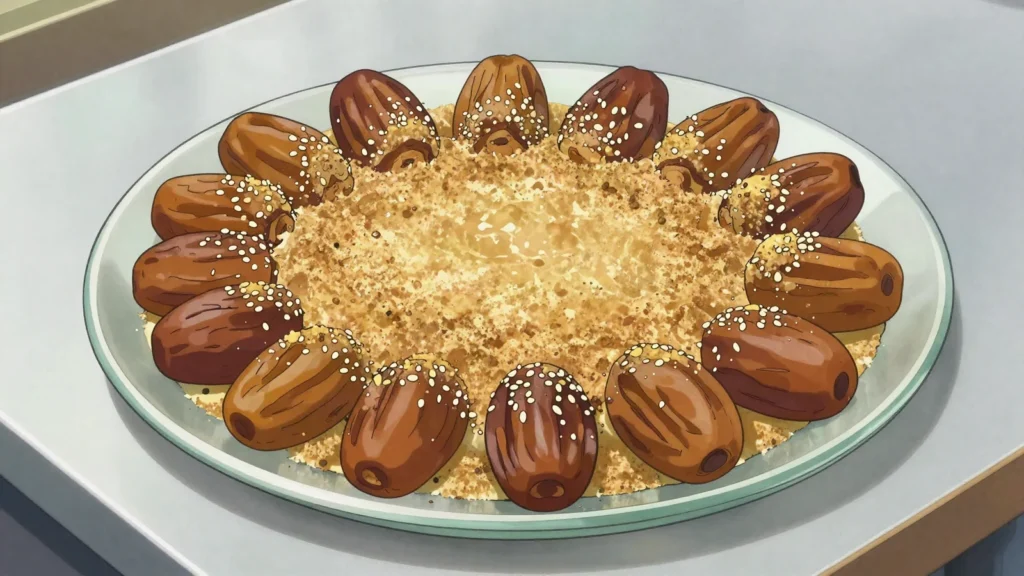
Rangeena is a dessert from Bahrain: pitted dates covered in toasted flour cooked with ghee and cardamom. A quick Gulf sweet made in one pan, served warm in a shallow dish for guests.
How long does Rangeena take to make?
Rangeena takes 20 minutes of preparation and 20 minutes of cooking. The recipe makes serves 6. It is rated easy to make.
What can I substitute in Rangeena?
Yes, within limits. Hard dates can be steamed a few minutes or soaked in warm water and then drained thoroughly; soft moist dates need no cooking at all and dry ones give a poor result. Scattered sesame seeds or chopped nuts go on while the surface is still soft so they stick as it sets — added later they simply fall off. Nuts are visible on top but tree nut allergy can be severe, so say clearly if you have added them.
What is the most important thing to get right in Rangeena?
Taste it and judge for yourself. The whole dish takes half an hour. Pit all of the dates carefully. Pull the stone out from inside. Check every one for missed stones. Lay the pitted dates in a shallow dish. Press them into a single even layer. They should form a solid base.