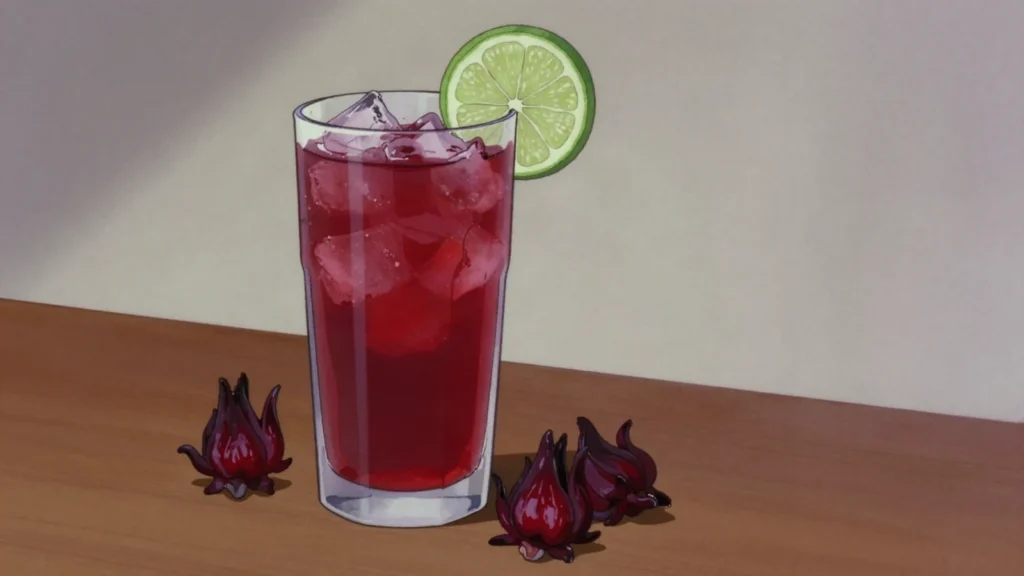

Ingredients
The roselle
- 80 gdried roselle calyces
- the fleshy sepal cup, not the flower
- or 250 g fresh calyces
- 1.5 litreswater
To sweeten
- 200 gsugar
- or to taste
- a good pinch of salt
To serve
- plenty of ice
- or hot in a glass
- a slice of lime, optional
Directions
- Rinse the dried calyces in cold water. Do not soak them for very long. Put them in a pot with the water. Bring the pot up to a full boil.
- Use a stainless or enamel pot. Simmering it takes about fifteen minutes. Let it simmer for about fifteen minutes. Ten to twenty minutes is the usual range.
- Pour it all through a fine sieve. Press the calyces against the mesh. The soft calyces hold a lot of liquid.
- Add the sugar to the hot liquid. Stir it until it dissolves completely. Add the pinch of salt as well. Sugar dissolves in hot liquid readily.
- Add it while the pot is still hot. Taste it and adjust the sugar. It should be clearly sweet to taste.
- Let it cool to room temperature. Give it at least three full hours. Chill it properly well beforehand.
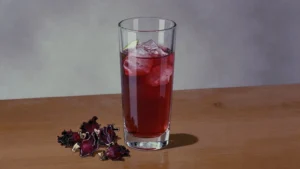
- Fill tall glasses right up with ice. Pour the cold roselle over it. Add a slice of lime if you like. Serving it hot is the other way. Pour it out hot into a warm glass. Hot is common in cooler weather.
Technique
- Roselle carries real documented cautions from Thailand’s own national drug listing, and they are worth stating plainly. It is contraindicated in impaired kidney function — stated there as a prohibition rather than a caution. It lowers blood pressure partly through a diuretic effect, so Thai guidance advises against taking it alongside prescribed antihypertensives. It acts as a mild laxative and large quantities cause diarrhoea and cramping. It has measurable drug interactions, reducing chloroquine absorption in one study. And Thai guidance advises against long continuous daily use, and against prolonged use in pregnancy or while breastfeeding, on the basis of animal reproductive-toxicity findings. These concern daily medicinal quantities and specific conditions rather than an occasional sweetened glass.
- The drink uses the calyx — the fleshy sepal cup left after the flower drops — and not the bloom or petals; recipe writing that says hibiscus flowers is persistently wrong. It is also boiled as a decoction for ten to twenty minutes rather than steeped as an infusion, which is what extracts the deep red colour; the steeped form is the medicinal preparation.
- The atlas gives blood pressure as the folk use, but the documented Thai traditional indication is urinary — diuretic, dysuria and urinary stones. Blood pressure is a modern popular claim rather than the recorded tradition.
Substitutions
- Fresh calyces work in place of dried, using about three times the weight.
- Use a stainless or enamel pot, since roselle is strongly acidic and reacts with aluminium and cast iron, giving a metallic taste and dull colour.
Variations
- It is served both iced and hot in Thailand, and sold nationally as a bottled soft drink.
- A pinch of salt goes in with the sugar, which sharpens the sweetness and is standard in Thai sweet drinks.
- Unsweetened roselle decoction is intensely sour and is essentially the medicinal preparation rather than the drink.
History
Sold from steel urns at Thai markets and street stalls, and drunk as a folk remedy for blood pressure.
Frequently asked questions
What is Nam Krachiap?
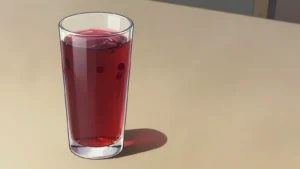
Nam Krachiap is a drink from Thailand: deep red roselle infusion served iced and sweetened over crushed ice. Sold from steel urns at Thai markets and street stalls, and drunk as a folk remedy for blood pressure.
How long does Nam Krachiap take to make?
Nam Krachiap takes 10 minutes of preparation and 25 minutes of cooking. The recipe makes serves 6. It is rated easy to make.
What can I substitute in Nam Krachiap?
Yes, within limits. Fresh calyces work in place of dried, using about three times the weight. Use a stainless or enamel pot, since roselle is strongly acidic and reacts with aluminium and cast iron, giving a metallic taste and dull colour.
What is the most important thing to get right in Nam Krachiap?
Rinse the dried calyces in cold water. Do not soak them for very long. Put them in a pot with the water. Bring the pot up to a full boil.