
Ingredients
Layers
- About 20 round or rectangular thin wafers (cialde), roughly 20 cm, unsweetened, of the type used for torrone or ice cream wafers
Hazelnut chocolate cream
- 300 gtoasted hazelnuts, skins rubbed off
- 200 gdark chocolate, 55 to 60 percent, chopped
- 200 gicing sugar
- 150 gunsalted butter, soft
- 1 pinchfine salt
- 1 tspvanilla extract
Coating
- 300 gdark chocolate, 60 percent, for tempering
- 30 gcocoa butter or 1 tbsp neutral oil, if not tempering
- 20 gchopped toasted hazelnuts, to finish
Directions
- Toast the hazelnuts at 160°C (325°F) for 12–14 minutes until fragrant and pale gold under the skin, then rub them in a tea towel to remove the skins. Bitter skins will show up in the finished cream.
- Grind the warm hazelnuts in a food processor for 6–10 minutes, scraping down often, until they pass from meal to paste to a loose, glossy hazelnut butter. Patience here is what makes the cream silky rather than sandy.
- Melt 200 g of dark chocolate over a bain-marie to 45°C (115°F), then let it cool to about 30°C (85°F).
- Beat the butter with the icing sugar, salt and vanilla until pale, then beat in the hazelnut paste, then the cooled melted chocolate. The cream should be thick, spreadable and hold a soft peak. If it is too loose, chill it 15 minutes.
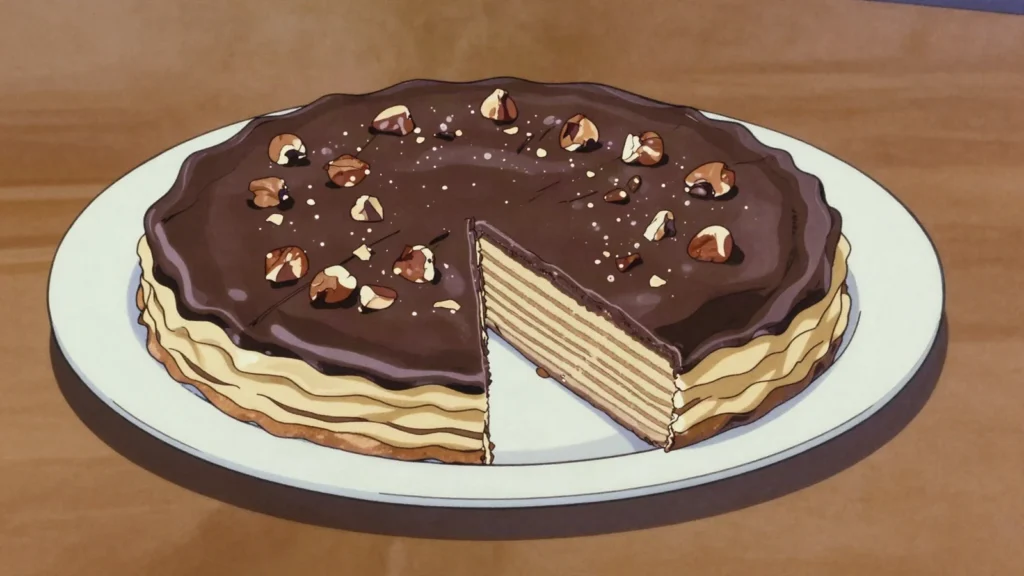
- Set a wafer on a board and spread a thin, even 4–5 mm layer of the cream right to the edge. Press the next wafer on top gently and repeat, building 8 to 10 wafers high, keeping the stack straight.
- Press the finished stack under a light board and a 500 g weight, and chill 2 hours. This compacts the layers so the slice shows clean stripes.
- Trim the edges with a hot serrated knife so the layers are flush, then coat the sides and top with a thin skim of cream to seal the wafers.
- Temper the coating chocolate: melt two-thirds to 50°C (120°F), stir in the remaining third off the heat, and work it down to 31–32°C (90–90°F) for dark chocolate. Pour and spread over the cake in one pass.
- Scatter the chopped hazelnuts over before the coating sets, then chill 1 hour. Cut with a knife dipped in hot water and wiped dry, in thin slices; this is a rich cake.
Technique
- The Torta Tre Monti is named for the three peaks of Monte Titano crowned by San Marino’s three towers, and it is the republic’s signature sweet, sold in every shop on the Titano and given as a gift.
- The commercial version is a factory product built on very thin dry wafer discs. At home the wafers stay crisper if the cream is on the firm side and the cake is eaten within three days.
- Do not soak the wafers. Unlike a Hungarian or Piedmontese layer wafer cake, the Tre Monti is meant to keep a distinct dry snap between the cream layers.
- Untempered coating chocolate will bloom grey and go soft at room temperature. If you will not temper, add the cocoa butter or oil and keep the cake refrigerated.
Substitutions
- No plain wafers? Sheets of Italian ostia or Dutch wafer used for nougat both work, or in a pinch thin ice-cream wafers cut to size.
- 300 g of good quality shop-bought gianduja spread can replace the homemade hazelnut cream if beaten with 100 g of butter to firm it, though the flavour is sweeter.
- Almonds can stand in for part of the hazelnuts, but a fully almond version tastes like a different cake.
Variations
- A white chocolate coating version sold as Tre Monti bianca.
- Small individual squares, cut before coating and enrobed one by one, sold as tronchetti.
- Some pasticcerie fold 30 ml of rum into the cream for a version aimed at adults.
History
A layered wafer cake filled with hazelnut cream and coated in chocolate, its name meaning literally three mountains cake, directly referencing San Marino’s national symbol and flag, which depicts three towers atop three mountain peaks. Developed as a specifically modern national dessert in the small, historic microstate, the cake’s deliberate visual and symbolic reference to San Marino’s most recognizable national emblem reflects a comparatively recent, self-conscious effort to create a distinctly Sammarinese culinary identity separate from the surrounding Italian region that San Marino is entirely enclosed within. Torta Tre Monti remains one of the clearest examples of a dish specifically and deliberately tied to San Marino’s national symbolism rather than reflecting older, organically developed peasant or court cooking traditions.
Frequently asked questions
What is Torta Tre Monti?
Torta Tre Monti is a dessert from San Marino: wafer layers with hazelnut-chocolate cream, honoring three towers. A layered wafer cake filled with hazelnut cream and coated in chocolate, its name meaning literally three mountains cake, directly referencing San Marino’s national symbol and flag, which depicts three towers atop three mountain peaks. Developed as a specifically modern national dessert in the small, historic microstate, the cake’s deliberate visual and symbolic reference to San Marino’s most recognizable national emblem reflects a comparatively recent, self-conscious effort to create a distinctly Sammarinese culinary identity separate from the surrounding Italian region that San Marino is entirely enclosed within. Torta Tre Monti remains one of the clearest examples of a dish specifically and deliberately tied to San Marino’s national symbolism rather than reflecting older, organically developed peasant or court cooking traditions.
How long does Torta Tre Monti take to make?
Torta Tre Monti takes 40 min of preparation and 3 hr chilling of cooking. The recipe makes 12 slices. It is rated medium to make.
What can I substitute in Torta Tre Monti?
Yes, within limits. No plain wafers? Sheets of Italian ostia or Dutch wafer used for nougat both work, or in a pinch thin ice-cream wafers cut to size. 300 g of good quality shop-bought gianduja spread can replace the homemade hazelnut cream if beaten with 100 g of butter to firm it, though the flavour is sweeter. Almonds can stand in for part of the hazelnuts, but a fully almond version tastes like a different cake.
What is the most important thing to get right in Torta Tre Monti?
Grind the warm hazelnuts in a food processor for 6–10 minutes, scraping down often, until they pass from meal to paste to a loose, glossy hazelnut butter. Patience here is what makes the cream silky rather than sandy.