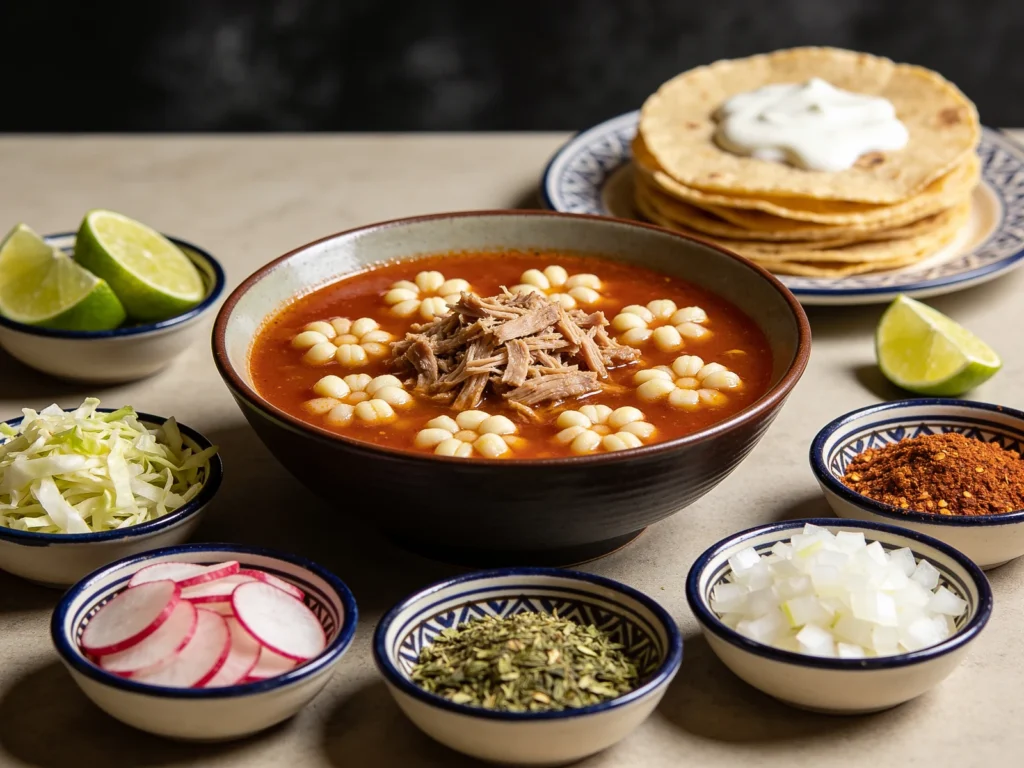

Ingredients
Hominy
- 500 gdried maiz cacahuazintle, or 1.5 kg tinned white hominy, drained and rinsed
- 2 tbspcal (food-grade calcium hydroxide), only if nixtamalising from dried
- 3 litreswater for the nixtamal
Broth
- 1 kgpork shoulder (maciza), in large chunks
- 700 gpork neck bones or backbone (espinazo)
- 2pig’s trotters, split
- 1 headof garlic, halved across
- 1white onion, halved
- 3bay leaves
- 4 litreswater
- 2 tbspsalt
Red chile base
- 8guajillo chiles, stemmed and seeded
- 4ancho chiles, stemmed and seeded
- 2chiles de arbol, for heat
- 4garlic cloves
- 1 tspdried Mexican oregano
- ½ tspcumin seed
- 2 tbsplard
Garnishes, all essential
- ½white cabbage or 2 romaine hearts, shredded fine
- 12radishes, sliced paper-thin
- 1white onion, finely chopped
- 3 tbspdried Mexican oregano, crumbled between the palms
- 2 tbspground chile piquin
- 4limes, in wedges
- 16tostadas, and crema to spread on them
Directions
- If starting from dried corn, simmer it with the cal in the 3 litres of water for 15 minutes, then leave it off the heat for 1 hour. Rub the kernels between your hands under running water until the yellow skins slip off, and rinse until the water runs clear and no slipperiness remains.
- Pinch out the hard pedicel, the little pointed cap at the base of each kernel. This is tedious and it is the reason properly made pozole flowers: without removing it the kernel cannot open.
- Cover the nixtamalised corn with fresh water and simmer 2 to 3 hours until each kernel bursts open into a white flower and is tender all through. Top up with hot water as needed.
- Meanwhile put the pork, bones and trotters in a large pot with the water, garlic head, onion and bay. Bring to a bare simmer and skim the grey foam carefully for the first 20 minutes, or the broth will never be clear.
- Simmer gently for 2 hours 30 minutes until the shoulder pulls apart under a fork and the trotters have given up their gelatine, which is what gives pozole its body. Add the salt only after the first hour.
- Toast the guajillo, ancho and arbol chiles on a dry comal for 20 seconds a side until they smell sweet, then soak them in hot broth for 20 minutes.
- Blend the soaked chiles with the garlic, oregano, cumin and a ladle of broth until completely smooth, then push the puree through a fine sieve; the guajillo skins never fully break down and will leave the soup gritty.
- Fry the strained puree in the lard in a small pan for 8–10 minutes, stirring, until it darkens and the fat separates. Only then stir it into the pot.
- Lift out the meat, shred the shoulder coarsely and pull the meat from the bones, discarding the bones and the bay, and return everything to the pot with the drained hominy.
- Simmer together for a final 30 minutes so the corn takes on the chile and the broth turns deep brick red. Taste hard for salt; pozole needs more than seems reasonable.
- Serve in deep bowls and put every garnish on the table. Each person adds their own cabbage, radish, onion, oregano, chile and lime, and eats it with a tostada spread with crema.
Technique
- Nixtamalisation is not optional chemistry: the alkaline cook loosens the hull, releases bound niacin and creates the flavour and aroma that make hominy taste of pozole rather than of sweetcorn.
- The garnishes are half the dish. Pozole arrives deliberately under-dressed and is finished at the table, and a bowl served without cabbage, radish, oregano and lime is considered incomplete.
- Trotters and neck bones are what make the broth. Lean shoulder alone gives a thin soup with no lip-sticking gelatine.
- Pozole has deep pre-Hispanic roots as a ceremonial dish and is now the standard Thursday and Independence Day meal across much of Mexico, most of all in Jalisco and Guerrero.
Substitutions
- Tinned hominy saves four hours and is what most home cooks use. Rinse it well and add it for the last 45 minutes only; it will not flower like nixtamal made from dried corn.
- No cal: do not substitute baking soda for nixtamalising, as the alkalinity is wrong. Buy tinned hominy instead.
- Chicken makes a lighter pozole and needs only 45 minutes of simmering.
Variations
- Pozole blanco, from Guerrero, leaves out the chile puree entirely and relies on the garnishes and a table salsa.
- Pozole verde, from Guerrero, is built on tomatillos, pumpkin seeds, epazote and green chiles.
- In Jalisco the pork is often replaced or supplemented with chicken, and the bowl is served with a stack of tostadas.
History
A hominy and meat soup with roots tracing back to pre-Columbian Aztec ritual and ceremonial cooking, in which an early version is documented, according to some Spanish colonial-era accounts, as having used human flesh from sacrificial victims in a religious context, a claim modern scholars treat with real caution given that it comes largely from Spanish colonial sources with their own motives for portraying Aztec practice as barbaric. After Spanish colonization and the suppression of that ritual context, pork became the standard meat in pozole, and the dish developed into the hominy-and-meat soup eaten today, with white, red and green versions differing by region and by which chilies or tomatillo-based sauce is used as the base. It remains closely tied to Mexican Independence Day celebrations and other major national and family occasions.
Frequently asked questions
What is Pozole?
Pozole is a soup & stew from Mexico: hominy and pork soup garnished with radish, cabbage, lime. A hominy and meat soup with roots tracing back to pre-Columbian Aztec ritual and ceremonial cooking, in which an early version is documented, according to some Spanish colonial-era accounts, as having used human flesh from sacrificial victims in a religious context, a claim modern scholars treat with real caution given that it comes largely from Spanish colonial sources with their own motives for portraying Aztec practice as barbaric. After Spanish colonization and the suppression of that ritual context, pork became the standard meat in pozole, and the dish developed into the hominy-and-meat soup eaten today, with white, red and green versions differing by region and by which chilies or tomatillo-based sauce is used as the base. It remains closely tied to Mexican Independence Day celebrations and other major national and family occasions.
How long does Pozole take to make?
Pozole takes 40 min of preparation and 3 hr 30 min of cooking. The recipe makes 8 servings. It is rated medium to make.
What can I substitute in Pozole?
Yes, within limits. Tinned hominy saves four hours and is what most home cooks use. Rinse it well and add it for the last 45 minutes only; it will not flower like nixtamal made from dried corn. No cal: do not substitute baking soda for nixtamalising, as the alkalinity is wrong. Buy tinned hominy instead. Chicken makes a lighter pozole and needs only 45 minutes of simmering.
What is the most important thing to get right in Pozole?
Meanwhile put the pork, bones and trotters in a large pot with the water, garlic head, onion and bay. Bring to a bare simmer and skim the grey foam carefully for the first 20 minutes, or the broth will never be clear.