
Ingredients
Leaves
- 50dried bamboo leaves
- kitchen string or raffia
Rice
- 1 kgglutinous rice, soaked overnight
- 2 tbsplight soy sauce
- 1 tbspdark soy sauce
- 1 tbspoil
- 1 tspsalt
Savoury filling
- 600 gpork belly, in large cubes
- 3 tbspsoy sauce
- 1 tbspShaoxing wine
- 1 tspfive spice
- 1 tspsugar
- 10salted duck egg yolks
- 20dried shiitake, soaked
- 50 gdried shrimp, soaked
- chestnuts, optional
Or sweet
- red bean paste, or plain rice with a jujube
Equipment
- a very large pot
- a bowl of water for your hands
To serve
- at Duanwu, the Dragon Boat Festival
Directions
- Soak the dried bamboo leaves in cold water overnight. Then boil them for 10 minutes and wash each one on both sides. Trim off the hard stem end of each. Keep them in a bowl of water as you work so they stay pliable.
- Soak the glutinous rice overnight, then drain it well. The rice cooks inside the parcel by absorbing water over hours, and unsoaked rice ends up hard in the middle.
- Season it with soy sauce, oil and salt and mix it thoroughly. Marinate the pork belly in soy, wine, five spice and sugar for several hours or overnight. Use belly with a good proportion of fat. The fat renders during the long cooking and bastes the rice around it, and lean pork gives a dry parcel.
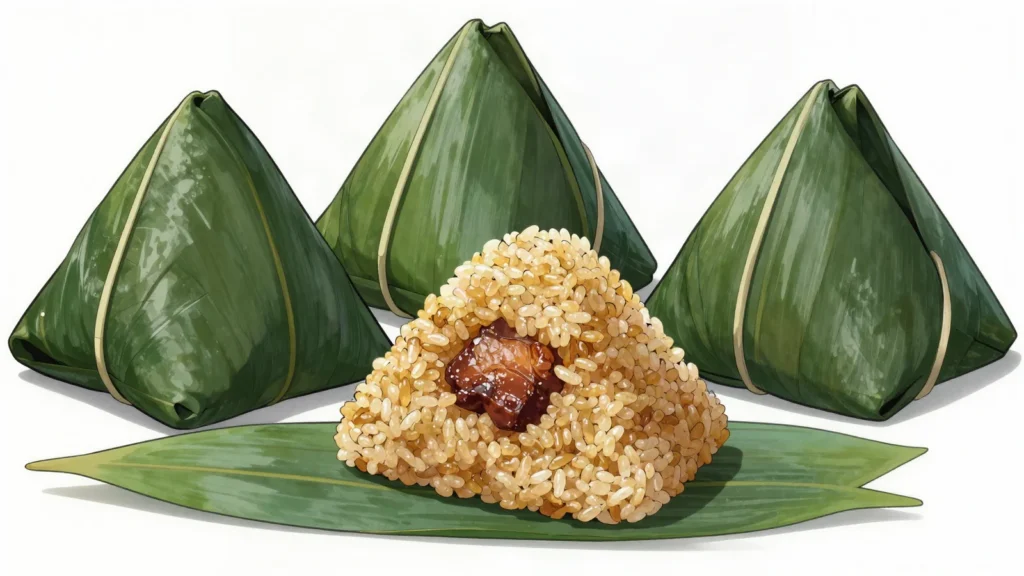
- Take two leaves and overlap them slightly, shiny side up. Fold them about a third of the way along into a cone, twisting so the point is completely closed. The point must be sealed with no gap at all.
- Check the cone by holding it up to the light. Fill it only about three-quarters full. Press the rice down gently to remove air pockets. Fold the sides in and wrap the remaining leaf around, forming a tetrahedron or a pyramid. Hold the whole thing firmly in one hand while you tie it.
- Tie it firmly but not so tight that it splits. It should hold its shape without being crushed. Boil them for 3 hours, topping up with boiling water as needed. Top up with boiling water rather than cold, which would interrupt the cooking. A pressure cooker does it in about an hour.
- Serve savoury ones as they are, and sweet ones with sugar or condensed milk. They keep a week refrigerated and freeze extremely well, and they are re-steamed rather than microwaved.
Technique
- Northern sweet and southern savoury versions are both entirely traditional.
- The point of the cone must be completely sealed or the parcel leaks.
- They are made communally in the days before Duanwu.
Substitutions
- Reed leaves or lotus leaves, which are used in some regions.
- Ready-made red bean paste for the sweet version.
Variations
- Sweet, with red bean paste or jujube.
- Jianshui zong, alkaline water zongzi, eaten with syrup.
- Cantonese style, with mung bean and pork.
History
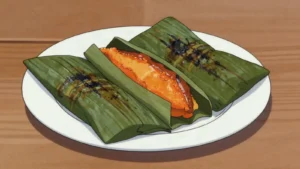
Glutinous rice, filled with meat, egg yolk or sweet paste, wrapped tightly in bamboo or reed leaves and boiled or steamed, traditionally eaten during the Dragon Boat Festival, held each year on the fifth day of the fifth lunar month. A widely told legend connects zongzi’s origin to Qu Yuan, a poet and statesman of ancient China’s Warring States period who drowned himself in a river in protest of political corruption around 278 BCE, with local people said to have thrown rice wrapped in leaves into the water to prevent fish from eating his body, a story that, whether fully historical or partly legendary, has shaped the dish’s strong symbolic association with that festival for many centuries since. Regional Chinese versions vary enormously in filling, from savory pork and salted egg in the south to sweeter red bean versions in the north.
Frequently asked questions
What is Zongzi?
Zongzi is a snack from China: sticky rice with pork or red bean wrapped in bamboo leaves for Dragon Boat Festival. Glutinous rice, filled with meat, egg yolk or sweet paste, wrapped tightly in bamboo or reed leaves and boiled or steamed, traditionally eaten during the Dragon Boat Festival, held each year on the fifth day of the fifth lunar month. A widely told legend connects zongzi’s origin to Qu Yuan, a poet and statesman of ancient China’s Warring States period who drowned himself in a river in protest of political corruption around 278 BCE, with local people said to have thrown rice wrapped in leaves into the water to prevent fish from eating his body, a story that, whether fully historical or partly legendary, has shaped the dish’s strong symbolic association with that festival for many centuries since. Regional Chinese versions vary enormously in filling, from savory pork and salted egg in the south to sweeter red bean versions in the north.
How long does Zongzi take to make?
Zongzi takes 2 hr plus overnight soaking of preparation and 3 hr of cooking. The recipe makes about 20. It is rated hard to make.
What can I substitute in Zongzi?
Yes, within limits. Reed leaves or lotus leaves, which are used in some regions. Ready-made red bean paste for the sweet version.
What is the most important thing to get right in Zongzi?
Take two leaves and overlap them slightly, shiny side up. Fold them about a third of the way along into a cone, twisting so the point is completely closed. The point must be sealed with no gap at all.