
Ingredients
The beef
- 1 kgbeef shin or chuck
- or brisket, well marbled
- cut into 4 cm cubes
- trimmed but not lean
The onions
- 1 kgonions
- sliced thinly
- yes, the same weight as the meat
- 80 glard
- or 80 ml oil
The paprika
- 3 tablespoonssweet paprika
- Hungarian if you can get it
- 1 teaspoonhot paprika
- or a pinch of cayenne
- 1 tablespoontomato purée
The seasoning
- 1 tablespooncaraway seeds
- coarsely crushed
- 1 teaspoondried marjoram
- 3 clovesgarlic, crushed
- grated zest of half a lemon
- 2 tablespoonsred wine vinegar
- salt and black pepper
- about 500 ml beef stock
- or water
To serve
- Semmel bread rolls
- or Semmelknödel, bread dumplings
- or boiled potatoes
- a fried egg, for Fiakergulasch
- a frankfurter, optional
- pickled gherkin
Directions
- Slice them thinly rather than chopping them. Thin slices break down far more completely. Chill the onions beforehand if they make you cry. A cold onion releases less of the irritant. Melt the lard in a very large heavy pot. Add all the sliced onion with a pinch of salt.
- Cook them over a medium to low heat. Stir them regularly so they do not catch. Cook them for a full forty-five minutes. That is genuinely how long it takes.
- Use a good Hungarian sweet paprika if you can. It should be bright red rather than brown. Brown paprika is old and it will taste flat. So take the pot off the heat completely. Add the paprika to the warm onions off the heat. Stir it through until the fat turns red. Add the crushed garlic at the same time.
- Add the caraway seeds, coarsely crushed. Crush it rather than leaving it whole. Add the dried marjoram as well. Use shin, chuck or brisket for this. That tissue melts into gelatine over hours. Cut the beef into generous cubes. Four centimetres is about right. Add the beef to the onions and stir it through.
- Add the vinegar, which is important here. It also helps tenderise the meat slightly. Add the lemon zest, which is a Viennese touch. It lifts what would otherwise be very heavy. Add stock or water to barely cover the meat. Do not add too much liquid at this stage.
- Season with salt and black pepper. Bring it to a simmer and then cover it. Simmer it very gently for two hours at least. Two and a half hours is often better. Stir it occasionally so nothing catches. It should be completely tender to a fork.
- Add more vinegar if it tastes cloying. Add salt gradually and taste after each addition. Grind over plenty of black pepper. Now let it rest before serving if you can.
Technique
- A kilo of onion to a kilo of beef is not a mistake. The onion is the thickening agent, not a background aromatic — it collapses completely and becomes the gravy, which is why no flour is used. Many Viennese cooks use even more.
- Cook the onions for a full forty-five minutes over medium-low heat, until deep golden and jammy with almost no shape left. This is the step people rush, and under-cooked onions leave visible pieces and fail to thicken anything.
- Paprika scorches within seconds on direct heat and turns irreversibly acrid, ruining the whole pot. Take the pan off the heat entirely, stir the paprika into the warm onions, then return it to a low flame. This is the single most important instruction in the recipe.
- Buy good paprika and buy it small. It should be bright red and smell sweet and fruity; brown paprika is stale and will taste flat. It loses its aroma within a few months.
- Do not add much liquid at the start. The onions release a great deal of their own and a thin goulash is the commonest failure. You can add more later; you cannot easily take it away. Never thicken it with flour.
- The meat should be tender but still in recognisable cubes, not falling into shreds. That distinction matters in this dish.
- Made a day ahead it is noticeably better. The flavours settle and deepen overnight, so it is worth planning for.
- Viennese goulash is not Hungarian gulyás. Gulyás is properly a soup with potato and other vegetables, eaten with a spoon; the Viennese version is a thick vegetable-free stew. Both descend from the same root and the difference is real, a legacy of the empire in which dishes moved constantly between its parts.
- One traditional variation is still commonly listed on menus under a name now widely considered offensive, and many restaurants have renamed it. The atlas notes that rather than reproducing the name as though it were unremarkable.
Substitutions
- Beef shin, chuck or brisket all work; all have the connective tissue the long cooking needs. Avoid lean cuts entirely.
- Oil replaces lard, though lard is traditional and gives a rounder flavour.
- Water replaces stock without much loss, since the onions and meat carry the flavour.
- Browning the meat first gives more depth; adding it raw to the onions is the older Viennese method. Both are used.
- Boiled potatoes replace bread rolls or dumplings.
- A pinch of cayenne replaces hot paprika for heat.
Variations
- Fiakergulasch is topped with a fried egg, a frankfurter and a pickled gherkin, named for the Viennese cab drivers.
- Herrengulasch uses better cuts of beef and is the more expensive restaurant version.
- Hungarian gulyás is the soup ancestor, thinner and with potato and vegetables.
- Pörkölt is the Hungarian stew that Viennese goulash most closely resembles.
- A pork version, Schweinsgulasch, is common and cooks in less time.
- Some Viennese cooks add a splash of red wine along with the vinegar.
History
Hungarian gulyás reworked in Vienna with more onion and no vegetables, a direct legacy of the Austro-Hungarian monarchy.
Frequently asked questions
What is Viennese goulash?
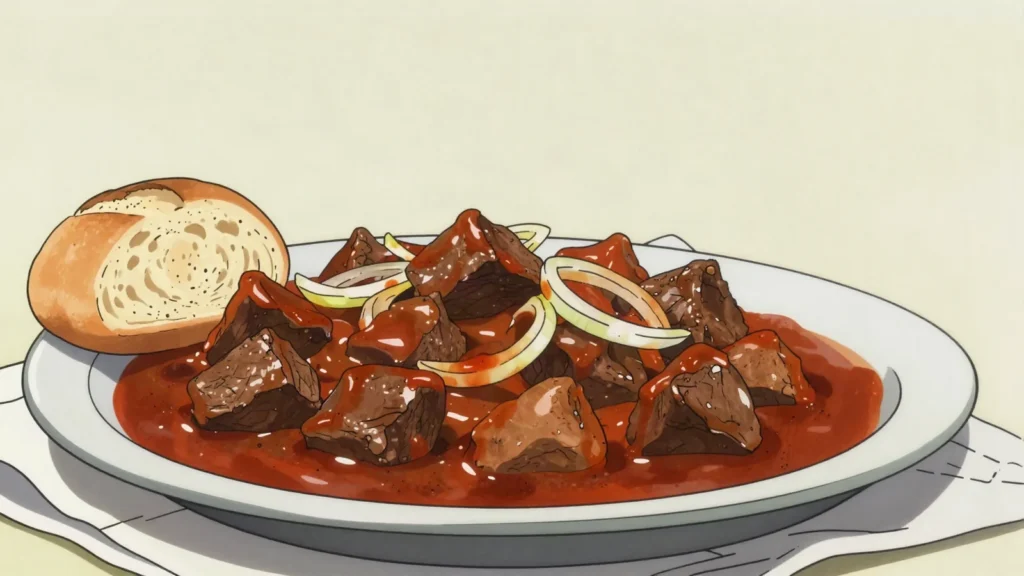
Viennese goulash is a soup & stew from Austria: thick paprika beef goulash with bread rolls or dumplings. Hungarian gulyás reworked in Vienna with more onion and no vegetables, a direct legacy of the Austro-Hungarian monarchy.
How long does Viennese goulash take to make?
Viennese goulash takes 30 minutes of preparation and 2 hours 30 minutes of cooking. The recipe makes serves 6. It is rated medium to make.
What can I substitute in Viennese goulash?
Yes, within limits. Beef shin, chuck or brisket all work; all have the connective tissue the long cooking needs. Avoid lean cuts entirely. Oil replaces lard, though lard is traditional and gives a rounder flavour. Water replaces stock without much loss, since the onions and meat carry the flavour. Browning the meat first gives more depth; adding it raw to the onions is the older Viennese method. Both are used. Boiled potatoes replace bread rolls or dumplings. A pinch of cayenne replaces hot paprika for heat.
What is the most important thing to get right in Viennese goulash?
Slice them thinly rather than chopping them. Thin slices break down far more completely. Chill the onions beforehand if they make you cry. A cold onion releases less of the irritant. Melt the lard in a very large heavy pot. Add all the sliced onion with a pinch of salt.