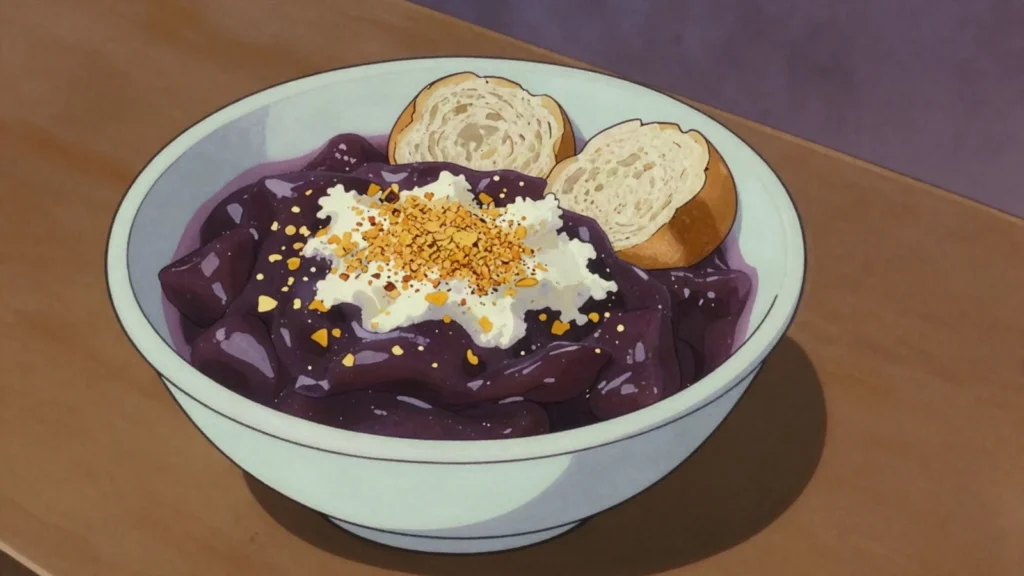

Ingredients
Yam
- 1 kgube, purple yam, peeled and cubed
- or 500 g frozen grated ube, thawed
To cook
- 400 mlcoconut milk
- 395 gtin sweetened condensed milk
- 150 mlevaporated milk
- 100 gbutter
- 80 gsugar, or to taste
- a pinch of salt
To finish
- 1 teaspoonube extract, optional
- extra butter, for the top
- latik, toasted coconut curds, optional
Directions
- Cut them into evenly sized cubes. Steam or boil them until completely tender. This takes about thirty minutes depending on size.
- Drain them thoroughly and let the steam escape. Mash them while hot until entirely smooth. A food processor works if you have one.
- Melt the butter in a wide heavy pan. Add the mashed ube and stir it into the butter. Pour in the coconut milk and stir it smooth.
- Add the condensed milk and the evaporated milk. Add the sugar and the pinch of salt. Set it over a low to medium heat. Now the stirring begins and it does not stop.
- Stir continuously with a sturdy wooden spoon. The mixture catches and scorches within seconds if left. Stir in the ube extract if you want a stronger colour. Taste it and add sugar if you want it sweeter.
- Spoon it into a buttered dish or into jars. Smooth the top with a spatula. Rub a little extra butter over the surface. That keeps a skin from forming as it cools. Let it cool completely at room temperature. Then refrigerate it for at least four hours.
- Spread it thickly on pandesal or on toast. Spoon it over shaved ice for halo-halo. Use it as a filling for cakes and buns. Scatter latik over the top for texture. It keeps for a week in the refrigerator.
Technique
- Ube is Dioscorea alata and is distinct from taro and from purple sweet potato, though all three are often confused in English writing about Filipino food.
- Halaya means jam or preserve, so the name simply describes what it is.
Substitutions
- Frozen grated ube is the most practical option outside Asia and needs no peeling or boiling.
- Ube powder works when rehydrated with hot water, though the texture is slightly grainier.
Variations
- Some households use only coconut milk for a dairy-free version.
- A richer version adds egg yolks near the end.
- The same method with purple sweet potato gives a different but pleasant jam.
History
A thick, sweet jam made from mashed purple yam, called ube, cooked slowly with coconut milk, condensed milk and sugar until it thickens into a dense, spreadable paste, developed in Filipino cooking using ube, a tuber long cultivated across the Philippine archipelago and valued both for its distinctive purple colour and its naturally sweet, nutty flavour. Its labor-intensive preparation, requiring extended stirring over low heat to achieve the correct thick, jam-like consistency without burning, made ube halaya historically a dish prepared for special occasions and gifting rather than routine everyday cooking. It has more recently gained significant international attention and popularity as ube-flavoured products, from ice cream to baked goods, have spread well beyond the Philippines into wider global dessert culture.
Frequently asked questions
What is Ube Halaya?
Ube Halaya is a dessert from Philippines: purple-yam jam eaten straight or crowning halo-halo. A thick, sweet jam made from mashed purple yam, called ube, cooked slowly with coconut milk, condensed milk and sugar until it thickens into a dense, spreadable paste, developed in Filipino cooking using ube, a tuber long cultivated across the Philippine archipelago and valued both for its distinctive purple colour and its naturally sweet, nutty flavour. Its labor-intensive preparation, requiring extended stirring over low heat to achieve the correct thick, jam-like consistency without burning, made ube halaya historically a dish prepared for special occasions and gifting rather than routine everyday cooking. It has more recently gained significant international attention and popularity as ube-flavoured products, from ice cream to baked goods, have spread well beyond the Philippines into wider global dessert culture.
How long does Ube Halaya take to make?
Ube Halaya takes 30 minutes of preparation and 1 hour of cooking. The recipe makes about 1 kg. It is rated medium to make.
What can I substitute in Ube Halaya?
Yes, within limits. Frozen grated ube is the most practical option outside Asia and needs no peeling or boiling. Ube powder works when rehydrated with hot water, though the texture is slightly grainier.