
Ingredients
Massa
- 300 gstrong white flour
- 180 mlcold water
- 1 tspsalt
- 200 gunsalted butter, softened to a spreadable paste
- flour, for dusting
Creme
- 500 mlwhole milk
- 40 gplain flour
- 400 gcaster sugar
- 250 mlwater
- 1cinnamon stick
- 1wide strip of lemon peel, no pith
- 6large egg yolks
- ½ tspsalt
To finish
- ground cinnamon
- icing sugar
Directions
- Mix the flour, salt and cold water to a rough dough, knead 3 minutes and rest, covered, 20 minutes.
- Roll to a 40 x 30 cm rectangle. Smear a third of the soft butter over two thirds of it, fold in three, turn 90 degrees and repeat twice more, chilling 20 minutes between turns. Portuguese bakeries smear soft butter rather than laminating a cold block; it is faster and gives the shattering, irregular layers.
- Roll the final sheet thin, then roll it up tightly from the long side into a log 4 cm across. Chill 1 hour, or freeze 20 minutes.
- Whisk the flour into 100 ml of the milk to a smooth slurry. Heat the rest of the milk with the lemon peel and cinnamon stick to just below boiling, whisk it into the slurry and cook 2 minutes to a thin béchamel.
- Separately boil the sugar and water to 100–103°C (200–225°F), a light syrup that threads off the spoon, and pour it into the hot milk base in a thin stream, whisking hard.
- Cool to blood heat, lift out the peel and cinnamon, then whisk in the yolks and salt and strain. The custard must be thin and pourable, like double cream; it sets in the oven, not in the pan.
- Cut the log into 12 discs 2 cm thick. Set each cut-side down in a muffin tin, dip your thumb in cold water and press it up the sides into a thin, even shell standing slightly proud of the rim.
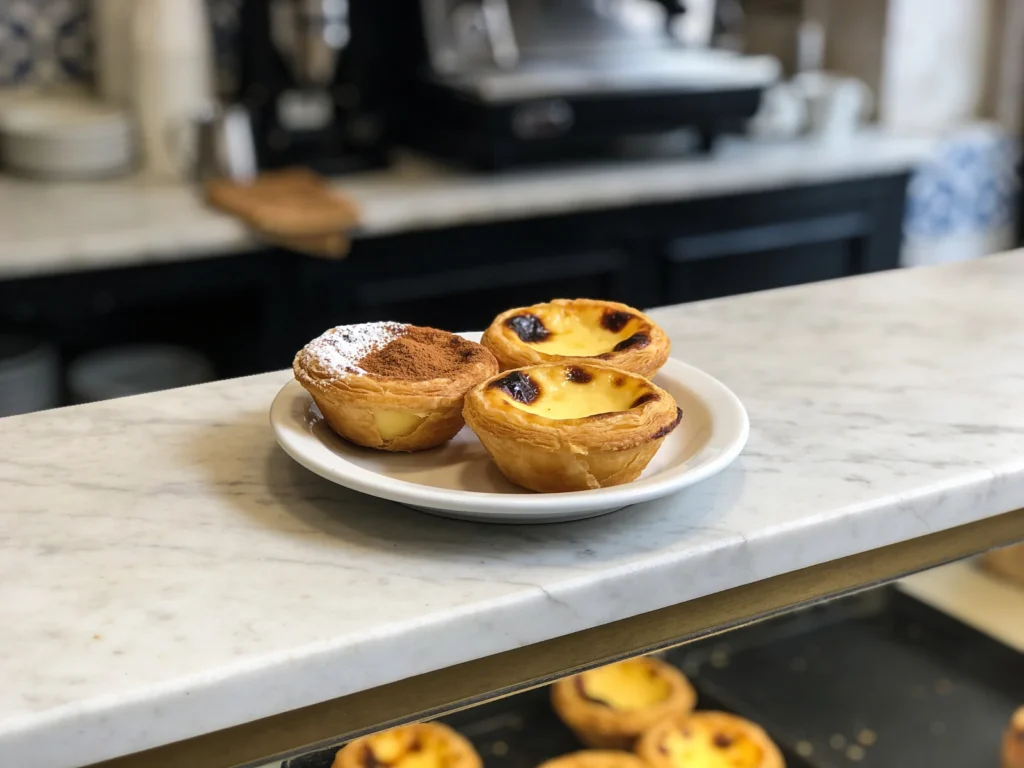
- Fill each shell three-quarters full, no more, and bake on the top shelf at the highest temperature your oven reaches, 280–300°C (525–575°F), for 10–14 minutes, until the pastry is brittle and gold and the custard is blistered with near-black scorch marks.
- Cool 5 minutes in the tin, turn out and eat warm, dusted with cinnamon and icing sugar at the table.
Technique
- The scorching needs real heat. The ovens in Belém run around 400°C (750°F); a domestic oven at 250°C (475°F) gives a pale, custardy tart that is pleasant but not a pastel de nata. Preheat for a full hour and use a baking steel if you have one.
- They were made by monks at the Jerónimos monastery in Belém before 1834, when the religious orders were dissolved and the recipe was sold to the sugar refinery next door. Pastéis de Belém still bakes to that recipe and is legally the only place allowed the name; everywhere else sells pastéis de nata.
- Do not thicken the custard on the stove past a pouring consistency, and never let it approach a boil after the yolks go in, or it will scramble and bake grainy.
- Cinnamon and icing sugar are dusted on by the eater, not by the baker.
Substitutions
- All-butter shop-bought puff pastry, rolled thinner and then rolled into a log, is a genuinely decent shortcut. The shell will be flakier and slightly less crisp.
- Orange peel in place of lemon is used in some northern bakeries and gives a rounder, sweeter custard.
Variations
- Pastel de Belém, the original, served with cinnamon and icing sugar on the side.
- Versions with a whisper of vanilla in the custard, common outside Lisbon.
- The Macanese Portuguese egg tart, made with cream and a softer set, which travelled from Macau across Asia.
History
Created by Catholic monks at the Jerónimos Monastery in Belém, a district of Lisbon, sometime before the 1820s, using large quantities of egg yolks left over from a convent practice of using egg whites to starch nuns’ habits. When Portugal’s 1834 liberal revolution shut down monasteries and convents, the monks sold their custard tart recipe to a nearby sugar refinery, which opened Casa Pastéis de Belém in 1837 and has produced tarts from that same original recipe, kept secret to this day, ever since. Every other Portuguese bakery’s version is legally required to use the name pastel de nata rather than the protected pastel de Belém, reserved for the one shop holding the original formula.
Frequently asked questions
What is Pastel de nata?
Pastel de nata is a bread & pastry from Portugal: caramelised custard tart with cinnamon, best warm from Belém. Created by Catholic monks at the Jerónimos Monastery in Belém, a district of Lisbon, sometime before the 1820s, using large quantities of egg yolks left over from a convent practice of using egg whites to starch nuns’ habits. When Portugal’s 1834 liberal revolution shut down monasteries and convents, the monks sold their custard tart recipe to a nearby sugar refinery, which opened Casa Pastéis de Belém in 1837 and has produced tarts from that same original recipe, kept secret to this day, ever since. Every other Portuguese bakery’s version is legally required to use the name pastel de nata rather than the protected pastel de Belém, reserved for the one shop holding the original formula.
How long does Pastel de nata take to make?
Pastel de nata takes 45 min plus chilling of preparation and 15 min of cooking. The recipe makes 12 tarts. It is rated hard to make.
What can I substitute in Pastel de nata?
Yes, within limits. All-butter shop-bought puff pastry, rolled thinner and then rolled into a log, is a genuinely decent shortcut. The shell will be flakier and slightly less crisp. Orange peel in place of lemon is used in some northern bakeries and gives a rounder, sweeter custard.
What is the most important thing to get right in Pastel de nata?
Roll to a 40 x 30 cm rectangle. Smear a third of the soft butter over two thirds of it, fold in three, turn 90 degrees and repeat twice more, chilling 20 minutes between turns. Portuguese bakeries smear soft butter rather than laminating a cold block; it is faster and gives the shattering, irregular layers.