
Ingredients
Dough
- 500 gstrong white flour
- 250 gsweet potato, boiled and mashed
- 7 ginstant yeast
- 1½ tsp salt
- 150 mlwarm water, plus a little more if needed
Garlic butter
- 150 gbutter, softened
- 4 clovesgarlic, crushed to a paste
- 3 tbspchopped flat-leaf parsley
- a pinch of salt
Directions
- Boil the sweet potato until completely soft, mash it smooth and leave it to cool to lukewarm. Mash added hot will kill the yeast outright.
- Mix the flour, yeast and salt, add the mashed sweet potato and enough warm water to bring it into a soft dough, then knead for 10 minutes until smooth and elastic.
- Cover and prove for about 1 hour, until doubled in size.
- Knock back, divide into four, and shape each piece into a round, flattening it to about 1.5 cm thick and 15 cm across.
- Set the rounds on a floured cloth and prove for a further 30 minutes.
- Heat a heavy dry surface over a medium flame: a basalt slab if you have one, otherwise a cast iron griddle or the heaviest frying pan you own. Use no oil at all. Bolo do caco is baked on stone, and oil in the pan gives you a fried bread with the wrong crust entirely.
- Cook each round for 6 to 8 minutes a side, pressing it down occasionally, until both faces are patched with dark brown and it sounds hollow.
- Stand it on its edge and roll it round the pan for a further minute so the rim cooks through as well.
- Mash the butter with the garlic, parsley and salt.
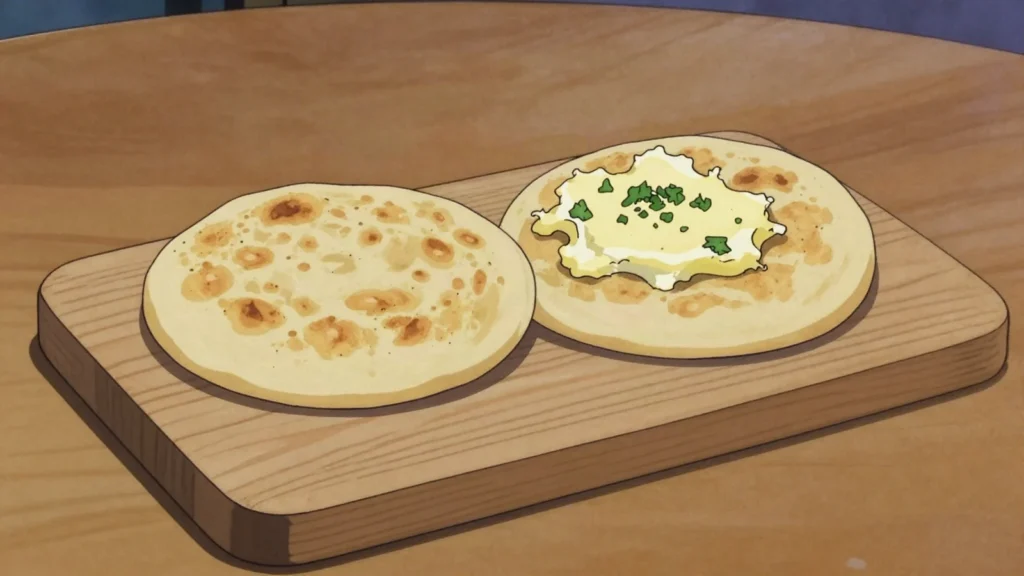
- Split each bread horizontally almost but not quite through while it is still hot, spread the garlic butter thickly over both cut faces, press it shut and let it melt for a minute before eating.
Technique
- The sweet potato is what makes this soft, faintly sweet and long-keeping. It is not an optional enrichment; without it you have an ordinary flatbread.
- The name comes from the caco, the flat basalt slab it was traditionally baked on, not from any ingredient.
- Cook it slower than you think. Too hot and the outside chars while the middle stays raw and gluey.
Substitutions
- Pumpkin or butternut squash in place of sweet potato, using a little less water.
- A pizza stone in a very hot oven if you have no griddle, turning the bread halfway.
Variations
- Plain, with no garlic butter, as an everyday bread.
- Prego no bolo do caco, split and filled with a thin garlicky steak, which is Madeira’s standard sandwich.
- With chouriço grilled and laid inside.
History
Named after the caco, the basalt slab it is baked on; now Madeira’s standard snack bread.
Frequently asked questions
What is Bolo do caco?
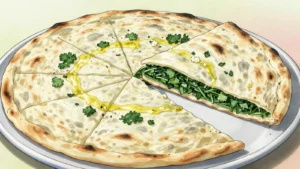
Bolo do caco is a bread & pastry from Portugal: round Madeiran flatbread cooked on a stone, split and slathered with garlic butter. Named after the caco, the basalt slab it is baked on; now Madeira’s standard snack bread.
How long does Bolo do caco take to make?
Bolo do caco takes 25 min plus 1 hr 30 min rising of preparation and 30 min of cooking. The recipe makes 4 breads. It is rated easy to make.
What can I substitute in Bolo do caco?
Yes, within limits. Pumpkin or butternut squash in place of sweet potato, using a little less water. A pizza stone in a very hot oven if you have no griddle, turning the bread halfway.
What is the most important thing to get right in Bolo do caco?
Heat a heavy dry surface over a medium flame: a basalt slab if you have one, otherwise a cast iron griddle or the heaviest frying pan you own. Use no oil at all. Bolo do caco is baked on stone, and oil in the pan gives you a fried bread with the wrong crust entirely.