
Ingredients
The maize
- 500 gcracked maize
- samp or coarse hominy
- rinsed well
- soaked overnight in cold water
- about 2 litres water, to cook
The beans
- 250 gdried cowpeas
- or dried red or brown beans
- soaked overnight separately
- or 400 g cooked beans
The groundnut
- 200 ggroundnut flour
- finely ground roasted peanuts
- or 200 g smooth peanut butter
- unsweetened
- loosened with warm water
The seasoning
- 1onion, finely chopped
- optional
- 2 tablespoonsoil
- or coconut oil
- salt, to taste
- a pinch of chilli
- optional
To serve
- on its own, as a full meal
- or with cooked greens
- matapa or pumpkin leaves
- or with a little grilled fish
Directions
- Discard any nuts that look mouldy or discoloured. Discard shrivelled, dark or damaged kernels. Never use nuts that smell musty or stale. Rinse the cracked maize in several changes of water. Keep rinsing until it runs reasonably clear. Cover it generously with cold water. Soak it overnight, or for at least eight hours. Soak the beans separately in their own water.
- Drain both and discard the soaking water. There is a safety point about dried beans. Put the drained maize in a large heavy pot. Cover it with about two litres of water. Bring it to a boil and then lower the heat. Simmer it partly covered for about an hour. Skim off any foam that rises at first.
- Stir it from time to time so it does not catch. Thin pots scorch the maize on the base. Boil them hard for ten full minutes. Then simmer them until they are tender. Drain them and set them aside for now. Now check the maize after the first hour. Add the cooked beans to the maize pot.
- Add more water if the pot is looking dry. The mixture should stay loose at this stage. Continue simmering for another hour. Stir it regularly throughout that time. The maize should become properly tender.
- Mix it with warm water into a smooth paste. Adding dry flour straight in makes lumps. Work it with warm water until it pours. Pour it in slowly while stirring constantly. Keep stirring so nothing catches on the base. Simmer it gently for another thirty minutes. Now add the onion if you are using it.
- Fry it separately in oil until golden first. Some households include onion and some do not. Season the pot generously with salt. Taste it carefully, since the mixture is bland alone. It needs more salt than people usually expect.
- Add a pinch of chilli if your household likes it. Stir in a little oil at the end for richness. The finished dish should be thick and holdable. Add hot water if it has become too stiff. Simmer it longer if it is still too loose. Serve it hot in bowls with a spoon. Leftovers keep for three days in the fridge. Stir it constantly while reheating it. It catches on the base just as easily cold.
Technique
- Cracked maize, not maize meal. The coarse broken kernels stay as separate chewy grains, and fine meal simply makes porridge, which is a different dish entirely. It is sold as samp or coarse hominy.
- Groundnuts and maize can carry aflatoxins, produced by moulds in warm humid storage. They are a documented problem across the region, are linked to liver damage and liver cancer, and are not destroyed by cooking. Buy from a reputable source, discard any nuts or kernels that are mouldy, dark, shrivelled or musty-smelling, and store dry goods airtight. Sorting the crop is exactly what households already do.
- Mix the groundnut flour into a smooth paste with warm water in a separate bowl. Tipped in dry it forms lumps that never break down.
- Groundnut catches and burns very easily and a burnt batch tastes bitter throughout with no way to rescue it. Lower the heat and stir often once it goes in.
- The oil rising to the surface is the sign the groundnut is properly cooked and the raw chalky taste has gone. Do not stop before that happens.
- Undercooked dried beans contain a lectin that causes severe vomiting and cramps. Discard the soaking water and boil hard for ten minutes before simmering.
- Peanut allergy can be severe and there is no version of this dish without groundnut. Tell guests.
- The Changana and the closely related Tsonga live across a border drawn by colonial powers, and related dishes are made in Mozambique, South Africa and Zimbabwe. The atlas records that rather than assigning ownership.
Substitutions
- Smooth unsweetened peanut butter replaces groundnut flour; loosen it with warm water first.
- Cowpeas, red beans or brown beans all work. Cowpeas are the most traditional and cook fastest.
- Tinned beans replace dried ones directly; add them in the last half hour.
- Coarse hominy or samp are the same thing as cracked maize under other names.
- Coconut oil replaces plain oil and is what coastal Mozambican households use.
- The onion is optional; the plainest and most traditional version has none.
Variations
- Matapa, cassava leaves cooked with groundnut and coconut milk, is the classic partner and is often served on top.
- Umngqusho, the South African samp and bean dish, is a close relative made without groundnut.
- A version cooked with coconut milk rather than water is made along the Mozambican coast and is much richer.
- Some households add pumpkin or sweet potato, which breaks down and sweetens the pot.
- A version with dried fish stirred in gives a savoury depth and is common where fish is available.
- Tihove made with fresh green maize, rather than dried cracked maize, is a seasonal version cooked at harvest.
History
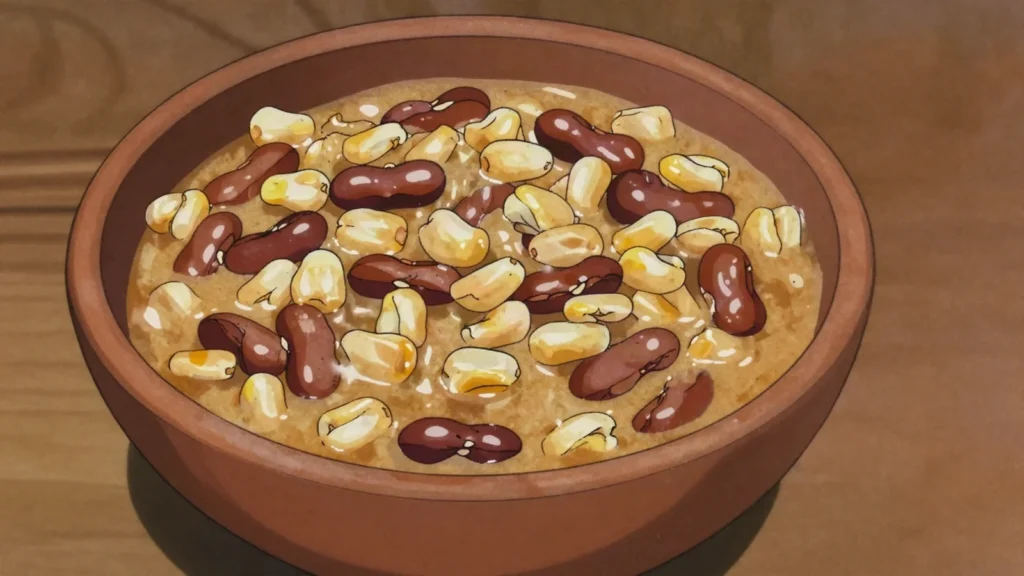
A Changana dish of southern Mozambique cooked over a long fire, eaten as a filling meal on its own.
Frequently asked questions
What is Tihove?
Tihove is a main from Mozambique: cracked maize simmered slowly with groundnut flour and beans. A Changana dish of southern Mozambique cooked over a long fire, eaten as a filling meal on its own.
How long does Tihove take to make?
Tihove takes 20 minutes plus overnight soaking of preparation and 2 hours 30 minutes of cooking. The recipe makes serves 6. It is rated easy to make.
What can I substitute in Tihove?
Yes, within limits. Smooth unsweetened peanut butter replaces groundnut flour; loosen it with warm water first. Cowpeas, red beans or brown beans all work. Cowpeas are the most traditional and cook fastest. Tinned beans replace dried ones directly; add them in the last half hour. Coarse hominy or samp are the same thing as cracked maize under other names. Coconut oil replaces plain oil and is what coastal Mozambican households use. The onion is optional; the plainest and most traditional version has none.
What is the most important thing to get right in Tihove?
Discard any nuts that look mouldy or discoloured. Discard shrivelled, dark or damaged kernels. Never use nuts that smell musty or stale. Rinse the cracked maize in several changes of water. Keep rinsing until it runs reasonably clear. Cover it generously with cold water. Soak it overnight, or for at least eight hours. Soak the beans separately in their own water.