
Ingredients
Palolo
- 300 gfresh palolo, the spawning tails of the reef worm Palola viridis, netted at dawn and kept cold
- 1 tspsea salt
To fry
- 40 gsalted butter or 2 tbsp coconut oil
- 1small onion (80 g), very finely chopped
- 1garlic clove, minced
- 1egg, beaten (optional, to bind)
- Black pepper
- 1red chilli, minced (optional)
To serve
- 4thick slices bread, toasted, or hot taro
- 1lemon, cut into wedges
- Fresh coconut cream, for the raw serving
Directions
- Know the timing, because there is no substitute for it: palolo rise from the coral reef once or twice a year, on the nights around the last quarter moon in October and November, usually a week after the full moon, in the hour before dawn. Villagers wade out with lamps and fine-mesh scoop nets.
- Scoop the swarming green-brown threads from the surface into buckets of seawater and get them cold and out of the sun immediately. They break down within hours.
- Rinse gently in fresh seawater to remove sand and coral fragments, then drain in a fine sieve. Do not squeeze; the tails burst and the prized creamy interior is lost.
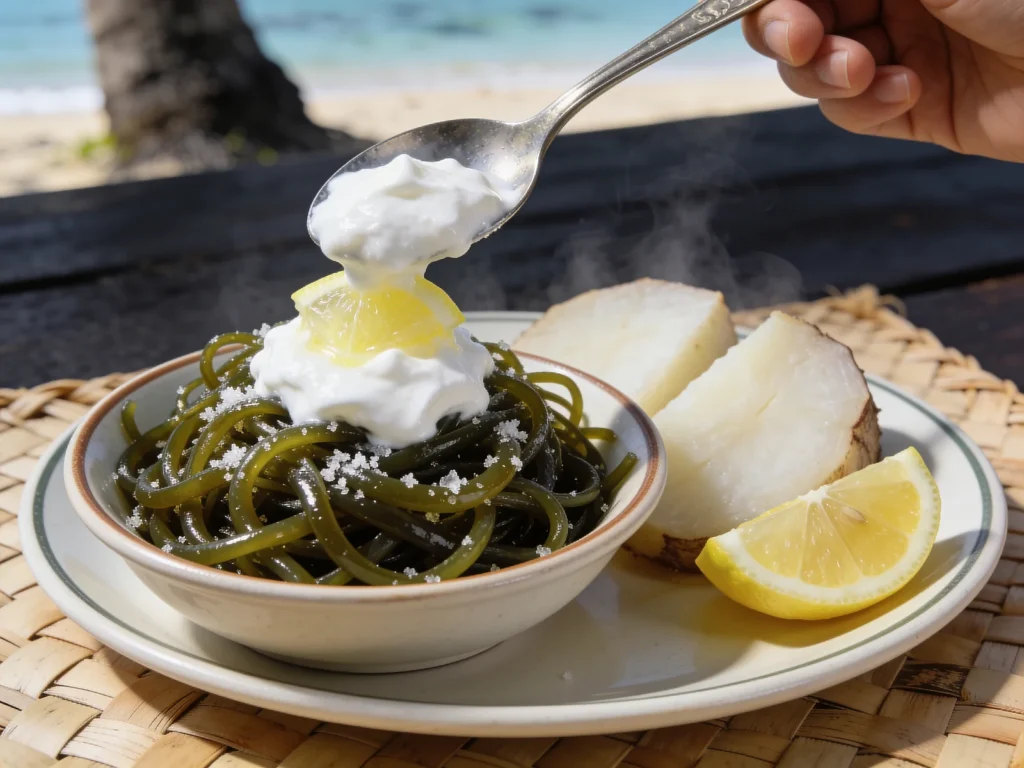
- For the raw serving, which is what most Samoans do first at the beach, simply salt lightly, dress with a spoon of thick coconut cream and a squeeze of lemon, and eat with the fingers or on hot taro.
- For the cooked version, melt the butter in a frying pan over medium heat and soften the onion and garlic 4 minutes until translucent but not coloured.
- Add the drained palolo and stir gently for 2–3 minutes. They turn from bright green to dull olive-brown and tighten; overcooking past 4 minutes makes them gritty and dry.
- Add the beaten egg if using and stir 1 minute more until it just sets and binds the mass, then season with salt, pepper and chilli.
- Pile onto hot buttered toast, squeeze over lemon and eat at once. The flavour is intensely marine and briny, closer to sea urchin roe than to anything land-based.
Technique
- Palolo is one of the most valuable foods in Samoa by weight and appears for only a few hours a year; it sells at extraordinary prices at Fugalei market and is given as a gift of honour.
- What rises is not the whole animal but the epitoke, the detachable reproductive segment of the worm, packed with eggs and sperm, which swims to the surface to spawn while the body stays in the coral.
- Freshness is everything and there is no margin. Palolo left at room temperature for even a few hours liquefies into a grey, foul-smelling slurry that must be thrown away.
- Some households preserve a portion by salting it heavily in jars or by baking it in taro-leaf parcels in the umu, which extends it for a few weeks.
Substitutions
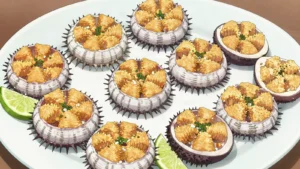
- There is no honest substitute for palolo; nothing else tastes like it. If you want the nearest flavour experience, fresh sea urchin roe on hot toast with lemon gives a similar oceanic, creamy, slightly bitter hit.
- Frozen palolo is sold occasionally in Pacific diaspora shops in Auckland and Honolulu. It loses the delicate texture but keeps most of the flavour; thaw in the fridge and fry straight from cold.
Variations
- Palolo baked in taro leaf parcels with coconut cream in the umu, a keeping method as much as a dish.
- Palolo omelette, folded through beaten eggs with onion and served for the swarm-morning breakfast.
- Salted palolo in jars, spooned out sparingly over hot taro through the year.
History
The reef worm rises on the seventh night after the October or November full moon; villagers wade out with lanterns and nets before dawn.
Frequently asked questions
What is Palolo?
Palolo is a snack from Samoa: sea worms swarming once a year, scooped by net and eaten raw or fried on toast. The reef worm rises on the seventh night after the October or November full moon; villagers wade out with lanterns and nets before dawn.
How long does Palolo take to make?
Palolo takes 15 min of preparation and 10 min of cooking. The recipe makes 4 servings as a snack. It is rated medium to make.
What can I substitute in Palolo?
Yes, within limits. There is no honest substitute for palolo; nothing else tastes like it. If you want the nearest flavour experience, fresh sea urchin roe on hot toast with lemon gives a similar oceanic, creamy, slightly bitter hit. Frozen palolo is sold occasionally in Pacific diaspora shops in Auckland and Honolulu. It loses the delicate texture but keeps most of the flavour; thaw in the fridge and fry straight from cold.
What is the most important thing to get right in Palolo?
Rinse gently in fresh seawater to remove sand and coral fragments, then drain in a fine sieve. Do not squeeze; the tails burst and the prized creamy interior is lost.