
Ingredients
Dough
- 300 gglutinous rice flour
- about 250 ml warm water
Black sesame filling
- 150 gblack sesame seeds, toasted
- 100 gcaster sugar
- 100 glard or butter, softened
Peanut filling
- 150 groasted peanuts, ground
- 100 gsugar
- 80 gbutter
Soup
- 1.5 litreswater
- 80 grock sugar
- 4 slicesfresh ginger
- 1 tbspdried osmanthus flowers, optional
Equipment
- a food processor
- a lined tray for the freezer
To serve
- hot, in the soup, at the Lantern Festival
Directions
- Grind the toasted sesame seeds to a fine powder, then blend with the sugar and softened lard into a smooth paste. Lard is traditional and it gives the filling its particular richness and the way it runs when hot. Butter works and is slightly less authentic.
- Roll the paste into balls of about 10 g, set them on a lined tray, and freeze for at least 2 hours. A soft oily paste is impossible to wrap, it tears the dough and squeezes out at the seam, and frozen it goes in cleanly every time.
- Keep them in the freezer until the moment you wrap each one. Glutinous rice flour has no gluten, so it will never be elastic and it must not be kneaded hard. Add warm water gradually to the flour, mixing with chopsticks first, then bring it together with your hands. Add the water a little at a time, because the amount varies with the flour and a wet dough is unworkable.
- Knead it gently for a few minutes until it is smooth and feels like soft modelling clay. It should be pliable and slightly tacky but not sticky. Take a small piece of the dough, boil it for a minute until it floats, then knead it back into the main dough.
- Keep the dough covered with a damp cloth at all times, since it dries and cracks within minutes. Take a piece of dough about 20 g and roll it into a ball, then press a hollow into it with your thumb.
- Work it into a cup with even walls, turning it as you go. Keep the walls even. A thin patch splits in the water and the filling escapes into the pot. Drop in a frozen filling ball and close the dough over it. Pinch the opening shut and roll it gently between your palms until smooth and seamless.
- Roll it until no seam shows at all, because any crease is where it will split. Set them on a tray dusted with glutinous rice flour, not touching. Simmer the water with the rock sugar and ginger for 10 minutes. Add osmanthus at the very end, off the heat, since its floral aroma boils away in minutes.
- Cook them separately rather than in the sweet soup, which would go starchy and cloudy. Lower them in gently and stir once so they do not stick to the base. Lift them out with a slotted spoon straight into bowls of the hot ginger syrup.
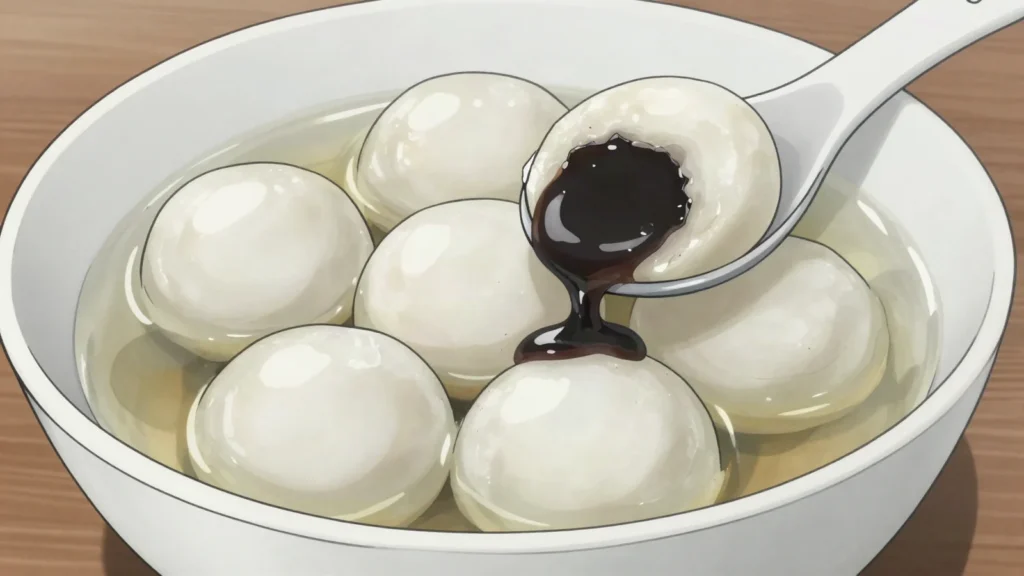
- Serve them immediately, and warn people that the filling is molten and will burn a mouth. That first bite, with hot sesame paste running out, is the whole experience of the dish.
Technique
- Northern yuanxiao are rolled in dry flour and are chewier and rougher.
- They freeze extremely well raw and are cooked from frozen.
- Savoury tangyuan with pork filling are made in some regions.
Substitutions
- Butter in place of lard, which is slightly less rich.
- Ready-made black sesame paste, which saves grinding.
Variations
- With peanut filling.
- With red bean paste.
- Savoury, with minced pork, as made in Shanghai.
History
Glutinous rice balls, either plain or filled with sweet black sesame or red bean paste, served in a light syrup or broth, traditionally eaten during the Lantern Festival, which marks the end of Chinese New Year celebrations on the fifteenth day of the first lunar month. Their round shape carries deliberate symbolic weight in Chinese culture, with roundness traditionally associated with family unity, completeness and reunion, making tangyuan a food eaten specifically to mark and reinforce that symbolic meaning around the festival rather than simply enjoyed for taste alone. Regional versions differ in whether the rice balls are filled or plain and in the specific sweet or savory broth they are served in, with both northern and southern Chinese traditions maintaining their own particular preferences.
Frequently asked questions
What is Tangyuan?
Tangyuan is a dessert from China: glutinous rice balls with sesame or peanut filling in sweet soup. Glutinous rice balls, either plain or filled with sweet black sesame or red bean paste, served in a light syrup or broth, traditionally eaten during the Lantern Festival, which marks the end of Chinese New Year celebrations on the fifteenth day of the first lunar month. Their round shape carries deliberate symbolic weight in Chinese culture, with roundness traditionally associated with family unity, completeness and reunion, making tangyuan a food eaten specifically to mark and reinforce that symbolic meaning around the festival rather than simply enjoyed for taste alone. Regional versions differ in whether the rice balls are filled or plain and in the specific sweet or savory broth they are served in, with both northern and southern Chinese traditions maintaining their own particular preferences.
How long does Tangyuan take to make?
Tangyuan takes 1 hr plus 2 hr freezing of preparation and 15 min of cooking. The recipe makes about 24. It is rated medium to make.
What can I substitute in Tangyuan?
Yes, within limits. Butter in place of lard, which is slightly less rich. Ready-made black sesame paste, which saves grinding.
What is the most important thing to get right in Tangyuan?
Keep them in the freezer until the moment you wrap each one. Glutinous rice flour has no gluten, so it will never be elastic and it must not be kneaded hard. Add warm water gradually to the flour, mixing with chopsticks first, then bring it together with your hands. Add the water a little at a time, because the amount varies with the flour and a wet dough is unworkable.