
Ingredients
The herb
- 2large bunches fresh chipilín
- leaves only, stripped from stems
- about 150 g of picked leaves
- or 100 g frozen chipilín leaves
- thawed and drained well
The masa
- 1 kgfresh masa for tamales
- not masa for tortillas if you can choose
- or 500 g masa harina
- plus about 700 ml warm water
- 1and a half teaspoons fine salt
The fat
- 180 glard, softened
- or 180 ml mild vegetable oil
- or 180 g vegetable shortening
- for a vegetarian version
Sometimes added
- 150 mlwarm chicken or vegetable stock
- 1 teaspoonbaking powder
- a little finely chopped white onion
- a spoonful of soft white cheese
The wrappers
- about 30 dried corn husks
- or fresh green corn husks
- or squares of banana leaf
- kitchen string or torn husk strips
To serve
- a simple tomato salsa
- soured cream or crema
- crumbled fresh white cheese
- hot coffee or atole
Directions
- Cook chipilín thoroughly and never eat the leaves raw. Never gather a wild Crotalaria plant as a substitute. Use roughly half the weight if you only have dried leaves. Strip the leaves from the stems before you do anything.
- Hold the top of a stem and pull downwards with two fingers. This takes patience and is best done sitting down. Wash the picked leaves in a bowl of cold water. Lift them out rather than pouring the whole bowl away. Drain them well and pat them dry with a clean cloth. Wet leaves will loosen the masa more than you want.
- Chop the leaves roughly if they are on the large side. Dried husks need a long soak to become flexible. Put them in a deep bowl and cover them with hot water. Soak them for at least thirty minutes, or longer. An hour is better and does no harm at all.
- Rinse each husk and rub away any grit or silk. Shake off the water and stack them on a clean cloth. Tear a few spare husks into long thin strips for ties. Fresh green husks need no soaking and are simply washed.
- Add the salt and stir it through the dry flour. Pour in warm water a little at a time while mixing. Work it with your hand rather than with a spoon. You are looking for a soft dough like thick mashed potato.
- Let the mixed masa rest for about fifteen minutes. Resting lets the flour take up all of the water. Add a splash more warm water if it feels tight. Put the softened lard in a separate large bowl. Beat it hard with a wooden spoon or a hand mixer. Beat until it is pale, soft and visibly fluffy. This takes about five minutes of steady work.
- Drop a small piece into a cup of cold water. If it floats, enough air has been beaten into it. Beat well after each addition before adding more. The mixture should stay light rather than going heavy.
- Add the baking powder now if you are using it. Pour in warm stock a little at a time if using. Keep beating until the mixture is soft and spreadable. It should drop from the spoon but not run off it. Taste a small pinch and check the salt level now. It should taste properly seasoned before it is steamed. Add them in two or three handfuls, not all at once.
- Fold gently rather than beating them into the masa. The masa should be visibly flecked with green leaves. Stir in the chopped onion or cheese now if using either. Set up your steamer before you start wrapping anything.
- Put a coin in the water at the bottom of the pot. It rattles while the water boils and goes quiet when dry. Line the rack with a layer of leftover corn husks. The husks stop the tamalitos sitting on bare metal. Fill the pot with water up to just below the rack. The water must never touch the tamalitos themselves. Bring the water to a boil while you wrap the tamalitos.
- Lay a soaked husk flat with the wide end towards you. Spoon about two tablespoons of masa into the centre. Spread it into a small rectangle with the back of a spoon. Leave a clear border of husk on every side of the masa. The masa expands during steaming and needs that room.
- Fold one long side of the husk over the masa. Fold the other long side over the top of the first. Fold the narrow pointed end up underneath the parcel. Tie the parcel around the middle with a husk strip.
- Tie it firmly but do not pull it tight like a parcel. Some husks are narrow and need two overlapped together. Stand the finished tamalitos upright in the steamer. Pack them snugly so they support one another well. They should not be crushed against each other though.
- Cover the top layer with a few more spare husks. Lay a clean cloth over the husks before the lid goes on. Put the lid on firmly and keep the water at a steady boil.
- Steam the tamalitos for about one hour and fifteen minutes. Small ones may be ready a little sooner than that. Check the water level every twenty minutes or so. Top up with boiling water and never with cold water. Cold water stops the steam and lengthens the cooking.
- Steam scalds badly, so lift the lid away from your face. Use a dry cloth, because a wet one conducts the heat. To test, take one tamalito out and let it rest briefly.
- Let it sit for five minutes before you open it up. Opened straight away it will look wet and cling to the husk. Turn off the heat and let the pot stand for ten minutes. Serve the tamalitos hot in their husks on a plate. The husk is never eaten and is set aside on the plate.
- Wrap them in a damp cloth if you use a microwave. Freeze them wrapped and steam them straight from frozen. Allow about half an hour of steaming from frozen. Do not thaw them first, because they go watery.
Technique
- Masa for tamales is ground coarser than masa for tortillas, and that coarser grind is what gives tamalitos their open, slightly crumbly texture. If your tortilleria only sells the fine grind, the recipe still works.
- Beating air into the fat is the single step that separates a light tamalito from a heavy one. The float test in cold water is a genuine, widely used check and it is worth doing.
- Chipilín belongs to Crotalaria, a genus that includes species carrying liver-damaging pyrrolizidine alkaloids. Chipilín is a long-established traditional food, always eaten cooked, and it has been studied directly, but the atlas quotes no figures and suggests no safe intake — those are matters for food-safety authorities, not a recipe page. Never gather a wild Crotalaria as a substitute; buy leaves sold as chipilín.
- Boiling steam scalds worse than boiling water because it carries far more heat and it condenses on skin. Always tilt the lid away from your face and use a dry cloth rather than a damp one.
- The coin in the bottom of the steamer rattles while there is water and falls silent when the pot runs dry. It is an old kitchen habit and it works better than remembering to check.
- Guatemalan tamalitos are deliberately small. They are a side dish and a snack, not the large filled tamales wrapped in banana leaf that appear at Christmas and on Saturdays.
Substitutions
- Fresh chipilín is the correct herb, and frozen chipilín from a Central American shop is a genuinely close second. Dried chipilín is much weaker; use about half the weight.
- If no chipilín is available at all, the honest answer is that you are making a different dish. Blanched, squeezed and finely chopped spinach or watercress gives a green-flecked corn tamalito, but it is not tamalitos de chipilín and should not be called that.
- Vegetable shortening or a mild oil replaces lard for a vegetarian version. Shortening whips up better than oil and gives a lighter result.
- Banana leaf squares replace corn husks and give a slightly different, greener aroma. Pass them over a flame first so they soften and stop splitting.
- Warm vegetable stock replaces chicken stock without any loss.
Variations
- Chiapas makes an almost identical tamalito, and the herb is equally at home on the Mexican side of the border. There the tamalitos are often a little larger and sometimes carry a piece of cheese in the centre.
- Some Guatemalan households add finely chopped white onion to the masa, and some add a spoonful of soft white cheese to each parcel.
- A version made with fresh green corn husks appears when maize is in season, and the husks give a sweeter, greener smell to the finished parcels.
- Tamalitos blancos are the same small tamales made without any herb at all, served plainly alongside a stew.
- Larger chipilín tamales wrapped in banana leaf, with chicken or pork inside, are a weekend and festival dish rather than an everyday one.
History
Chipilín is a native legume herb of Guatemala and Chiapas whose leaves lend a green, faintly bitter taste.
Frequently asked questions
What is Tamalitos de chipilín?
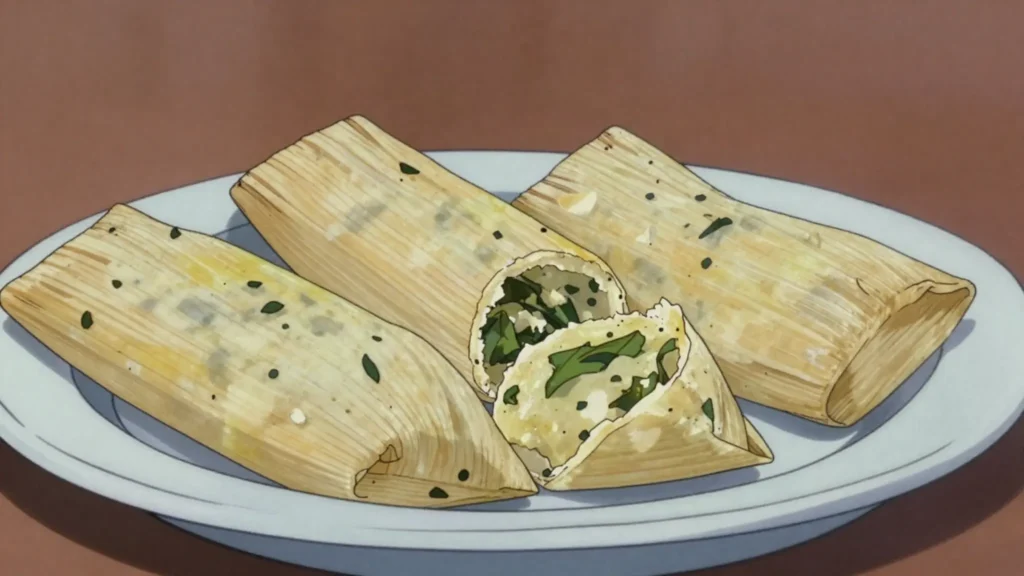
Tamalitos de chipilín is a snack from Guatemala: small corn tamales flecked with chipilín leaves, steamed in husks. Chipilín is a native legume herb of Guatemala and Chiapas whose leaves lend a green, faintly bitter taste.
How long does Tamalitos de chipilín take to make?
Tamalitos de chipilín takes 45 minutes of preparation and 1 hour 15 minutes of cooking. The recipe makes makes about 24 small tamalitos. It is rated medium to make.
What can I substitute in Tamalitos de chipilín?
Yes, within limits. Fresh chipilín is the correct herb, and frozen chipilín from a Central American shop is a genuinely close second. Dried chipilín is much weaker; use about half the weight. If no chipilín is available at all, the honest answer is that you are making a different dish. Blanched, squeezed and finely chopped spinach or watercress gives a green-flecked corn tamalito, but it is not tamalitos de chipilín and should not be called that. Vegetable shortening or a mild oil replaces lard for a vegetarian version. Shortening whips up better than oil and gives a lighter result. Banana leaf squares replace corn husks and give a slightly different, greener aroma. Pass them over a flame first so they soften and stop splitting. Warm vegetable stock replaces chicken stock without any loss.
What is the most important thing to get right in Tamalitos de chipilín?
Cook chipilín thoroughly and never eat the leaves raw. Never gather a wild Crotalaria plant as a substitute. Use roughly half the weight if you only have dried leaves. Strip the leaves from the stems before you do anything.