
Ingredients
Porridge
- 400 gmahangu (pearl millet) flour, finely milled
- 1.2 litreswater
- ½ tspsalt (optional; traditionally none is added)
Equipment
- 1heavy-based pot
- 1long flat wooden stirring stick (oshini) or a strong wooden spoon
- 1small bowl of cold water, for shaping
To serve
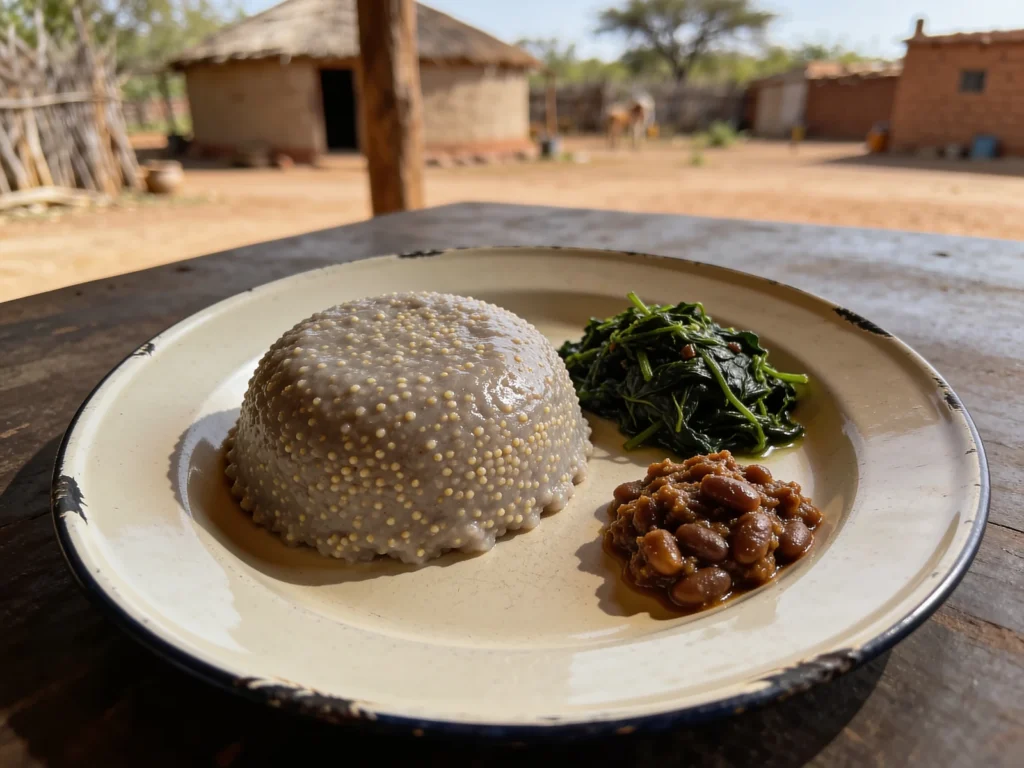
- Ombidi (wild greens) or spinach stewed with onion and tomato
- Evanda (cooked wild leaves) or a bean relish
- Oshikundu, the fermented mahangu drink, or sour milk
Directions
- Bring 900 ml of the water to a rolling boil in the heavy pot over high heat.
- Slake 100 g of the mahangu flour in the remaining 300 ml cold water, whisking until completely smooth, then stir this slurry into the boiling water and let it cook 3–4 minutes until it thickens to a loose gruel. Starting from a cold slurry is the reliable way to avoid lumps.
- Lower the heat to medium. Now add the rest of the flour a large handful at a time, sprinkling it evenly across the surface, and let each addition sit undisturbed for 30 seconds before you work it in.
- Beat it in hard with the wooden stick, pressing the mixture against the side of the pot and turning the pot as you go. This is physical work; the stick, not a spoon, is what gets a smooth mass.
- Keep adding flour until the porridge is stiff enough that the stick will stand up in it for a second or two before falling.
- Cover, lower the heat to its minimum, and let it steam for 8–10 minutes so the millet cooks through, then beat it hard again for 2 minutes.
- It is ready when it pulls cleanly away from the sides of the pot in one mass, has no raw floury smell and no gritty lumps when you press a little between your fingers.
- Wet your hands or a small bowl with cold water, scoop out portions and shape each into a smooth ball or a dome, turning it in the wet bowl so the surface is glossy.
- Serve hot, one dome per person, with a green relish and a bean or vegetable stew beside it. Eat with the right hand: pinch off a piece, roll it into a ball in your palm, press a dent in with your thumb and use it to scoop up the relish.
Technique
- Mahangu, pearl millet, grows where maize fails, which is why it is the staple of the Owambo north rather than a choice; it is drought-tolerant and needs no irrigation.
- Oshifima is deliberately bland and slightly sour-earthy. It is the vehicle, not the flavour, and it is never salted heavily or buttered in the traditional kitchen.
- Stiffness is judged by the stick standing up. Too soft and it cannot be pinched and scooped; too stiff and it turns dry and crumbly as it cools.
- The same flour, fermented rather than boiled, becomes oshikundu, the tangy household drink usually served alongside.
Substitutions
- No mahangu flour: use fine sorghum flour for the closest match, or white maize meal for a paler, sweeter porridge, which is then pap or oshifima shomahangu in name only.
- A wooden spoon can replace the oshini, but you will need a heavier hand and a sturdier pot.
- If the porridge goes lumpy despite everything, beat in 2–3 tbsp of boiling water and work it hard for another minute before it sets.
Variations
- Oshifima shomahangu, the pure pearl-millet version of the far north.
- Half mahangu, half maize meal, a common town compromise that is softer and milder.
- Cold leftover oshifima sliced and eaten with sour milk for breakfast.
History
Stiff porridge of mahangu, pearl millet, the drought-tolerant grain that feeds Namibia’s densely populated northern regions.
Frequently asked questions
What is Oshifima?
Oshifima is a main from Namibia: stiff pearl-millet mahangu porridge, Owambo staple. Stiff porridge of mahangu, pearl millet, the drought-tolerant grain that feeds Namibia’s densely populated northern regions.
How long does Oshifima take to make?
Oshifima takes 5 min of preparation and 25 min of cooking. The recipe makes 4 servings. It is rated medium to make.
What can I substitute in Oshifima?
Yes, within limits. No mahangu flour: use fine sorghum flour for the closest match, or white maize meal for a paler, sweeter porridge, which is then pap or oshifima shomahangu in name only. A wooden spoon can replace the oshini, but you will need a heavier hand and a sturdier pot. If the porridge goes lumpy despite everything, beat in 2–3 tbsp of boiling water and work it hard for another minute before it sets.
What is the most important thing to get right in Oshifima?
Mahangu, pearl millet, grows where maize fails, which is why it is the staple of the Owambo north rather than a choice; it is drought-tolerant and needs no irrigation.