
Ingredients
Curd version
- 500 gvarškė, dry curd cheese
- 3eggs
- 150 gplain flour
- 80 gsugar
- 1 tspbaking powder
- grated zest of 1 lemon
- a pinch of salt
- 1 tspvanilla
Yeast version
- 500 gplain flour
- 250 mlwarm milk
- 7 gyeast
- 2eggs
- 60 gsugar
- 60 gbutter, melted
- 1 tspsalt
To fry
- oil or lard, for deep frying
To finish
- icing sugar, in quantity
- or caster sugar with cinnamon
To serve
- hot, at Užgavėnės
Directions
- Press or sieve the curd to break up any lumps. Push it through a sieve, which is worth the minute it takes and gives a much smoother result. Beat the eggs with the sugar, then mix in the curd, lemon zest and vanilla. Add the flour and baking powder and mix to a soft, sticky dough.
- Use as little flour as will hold it together. Too much makes them dense and bready rather than light and tender. Heat the oil to 170°C (340°F). Keep the oil moderate rather than hot. Curd doughnuts need time for the inside to cook, and at high heat the outside browns while the centre stays raw.
- Shape the mixture into small balls with two wet spoons, or with wet hands. Wet the spoons or your hands between each, which stops the sticky mixture clinging.
- Keep them small, no bigger than a walnut, because larger ones will not cook through. Drop them carefully into the oil, a few at a time. Do not crowd the pan, which drops the temperature and makes them greasy.
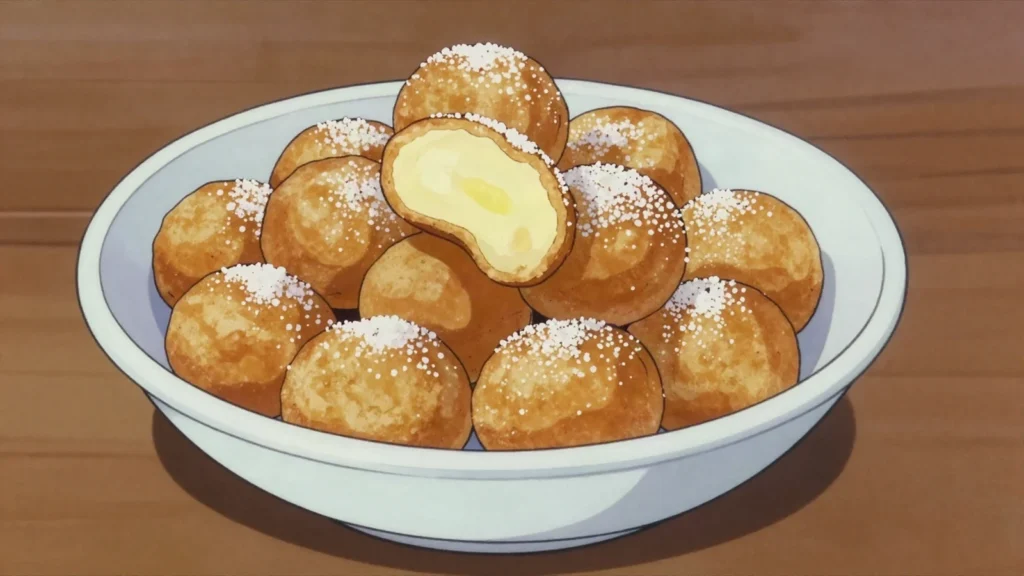
- Fry for 4 to 5 minutes, turning them if they need it, until deep golden all over. Lift one out and break it open to check the first batch.
- Drain them on a rack rather than paper. For the yeasted version, make an enriched dough, prove it for an hour, shape balls, prove again, and fry the same way.
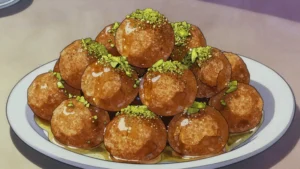
- Serve them immediately, piled in a bowl. They are best within minutes and they go heavy within an hour, so they are fried continuously at fairs rather than made ahead.
Technique
- Varškė is the Lithuanian dry curd cheese, sold in Baltic and Polish shops.
- The curd version is quicker and the yeasted one lighter.
- Užgavėnės falls on Shrove Tuesday and is marked with masks and bonfires.
Substitutions
- Dry cottage cheese or quark, drained thoroughly, in place of varškė.
- Ricotta pressed dry, which is a rougher substitute.
Variations
- The yeasted version, which is lighter.
- Filled with jam, in the yeasted version.
- With raisins through the curd mixture.
History
Fried at Lithuanian fairs and at Užgavėnės carnival on the eve of Lent.
Frequently asked questions
What is Spurgos?
Spurgos is a dessert from Lithuania: curd or yeast doughnuts fried and rolled in sugar. Fried at Lithuanian fairs and at Užgavėnės carnival on the eve of Lent.
How long does Spurgos take to make?
Spurgos takes 30 min plus 1 hr rising for the yeast version of preparation and 20 min of cooking. The recipe makes about 24. It is rated easy to make.
What can I substitute in Spurgos?
Yes, within limits. Dry cottage cheese or quark, drained thoroughly, in place of varškė. Ricotta pressed dry, which is a rougher substitute.
What is the most important thing to get right in Spurgos?
Use as little flour as will hold it together. Too much makes them dense and bready rather than light and tender. Heat the oil to 170°C (340°F). Keep the oil moderate rather than hot. Curd doughnuts need time for the inside to cook, and at high heat the outside browns while the centre stays raw.