
Ingredients
The herring
- 400 gsalted herring fillets
- skinned and boned
- finely diced
- soaked if very salty
The vegetables
- 4medium beetroot
- 600 gpotatoes
- 3carrots
- all boiled in their skins
- then cooled and grated
The rest
- 1onion, very finely chopped
- 4eggs, hard boiled
- 400 gmayonnaise
- or more, as needed
- salt and black pepper
To finish
- the last egg yolk, grated
- chopped dill
- or spring onion
- chilled overnight
Directions
- Warm vegetables grate into mush rather than shreds. Boil them the day before if that is easier. Taste a small piece before you decide anything. Soak it in cold water or milk if it is very salty. An hour or two of soaking is usually plenty.
- Taste it again after soaking before using it. Check the herring carefully for remaining pin bones. Pull any you find out with tweezers or pliers. Bones in a soft salad are genuinely unpleasant.
- Boil the beetroot, potatoes and carrots in their skins. Boil the beetroot in a separate pan from the rest. Keep it entirely separate throughout. Beetroot takes considerably longer than the rest. Drain the vegetables and let them cool completely. They must be entirely cold before you grate them. Warm vegetables simply turn to mush on a grater.
- Peel the cooled vegetables with your fingers or a knife. Wear gloves for the beetroot if you mind the staining. Pull the skin away from the tail end of the fillet. It should come off in one piece with a firm pull.
- Pull them out carefully with tweezers. Cut the herring into small even dice. About half a centimetre is a reasonable size. Take a moment over that rather than rushing. Chop the onion as finely as you possibly can. Some cooks rinse the chopped onion in cold water.
- Grate the potato, carrot and beetroot separately. Use a coarse grater rather than a fine one. Keep each vegetable in its own separate bowl. Grate the beetroot last of all the vegetables.
- Wash the grater thoroughly before other tasks. Wear gloves if you would rather not stain your hands. Boil them for about nine minutes for a firm yolk. Cool them under running cold water immediately. That stops the grey ring forming around the yolk.
- Peel them and grate them coarsely. Keep one yolk back for garnishing the top. Grate it finely over the finished salad. Spread the diced herring over the base of a dish. Use a glass dish so the layers are visible.
- Spread the herring in an even single layer. It should cover the whole base of the dish. Press it down gently to level it out. Scatter the finely chopped onion over the herring. It is a thin layer rather than a thick one. Spread the grated potato over the onion layer. Spread it gently rather than pressing it down hard.
- Season it lightly with salt and pepper. Spread mayonnaise over the potato layer. Spread it right to the edges of the dish. Use the back of a spoon to smooth it out. It should be a thin but complete covering. Work gently rather than pressing hard. Spread the grated carrot over the mayonnaise.
- Season it lightly as you did the potato. Then spread another thin layer of mayonnaise. Scatter the grated egg over the carrot layer. Keep back the one yolk for the top garnish. Spread the rest evenly across the surface. Spread the grated beetroot over the whole top. It should completely cover everything beneath it.
- Spread a final layer of mayonnaise over the beetroot. Smooth it out into an even white surface. Cover the dish and refrigerate it overnight. The layers firm up considerably during that time.
- Grate the reserved egg yolk finely over the top. Grated yolk dries out and hardens if left overnight. Scatter chopped dill or spring onion over as well. Cut the salad into squares and lift them out. Use a knife to cut cleanly through all the layers. That keeps the layers visible on the plate. Make it the day before you plan to serve it.
Technique
- This must be made the day before and refrigerated at least twelve hours: the layers firm up, the salt spreads through, the onion loses its raw harshness and the whole thing becomes one dish. Eaten straight away it is loose and tastes raw.
- Salted herring varies enormously in saltiness — taste a piece before deciding, and soak it an hour or two in cold water or milk if it is very salty, changing the water once. Check the fillets for pin bones with your fingers and pull any out, since bones in a soft salad are genuinely unpleasant.
- The salted herring is completely invisible under the vegetable layers, and the salad also contains eggs and a great deal of mayonnaise — say clearly what is in it, since both fish and egg allergy can be severe.
Substitutions
- This salad spread across the whole Soviet Union and is known in Russian as selyodka pod shuboy; it stayed on festive tables across the Baltic states. Claims about its exact origin vary and are contested, and the atlas does not adjudicate between them — it records that it is genuinely made in Latvia.
- Some versions leave the grated egg out of the layers entirely and use it only as garnish; some leave the beetroot bare on top rather than covering it with a final mayonnaise layer. Both finishes are genuinely used.
Variations
- Boil the vegetables whole in their skins so they do not waterlog, and boil the beetroot in a separate pan — it colours everything cooked with it and turns potatoes pink. Cool them completely, ideally overnight, before grating: warm vegetables grate to mush and melt the mayonnaise.
- Grate coarsely rather than finely, keep each vegetable in its own bowl, and grate the beetroot last since it stains the grater deeply. Wear gloves for it if you mind stained hands.
- Spread mayonnaise right to the edges between every layer — gaps let the layers slide — dolloping it in several places and spreading gently between them so you do not drag the layer beneath. The four hundred grams sounds like a great deal but is genuinely what the salad needs to hold together. Grate the reserved yolk over only just before serving, since it dries and hardens overnight.
History
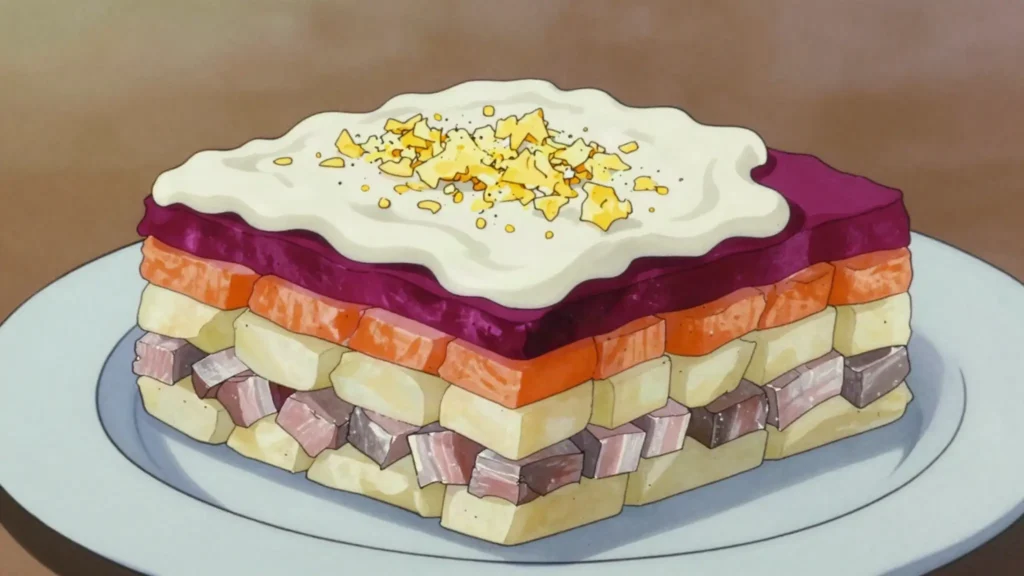
A layered herring salad that spread through the Soviet Union and stayed on Baltic festive tables, its name meaning herring in a fur coat.
Frequently asked questions
What is Silķe kažokā?
Silķe kažokā is a salad & side from Latvia: layered salad of herring under beetroot, potato and mayonnaise. A layered herring salad that spread through the Soviet Union and stayed on Baltic festive tables, its name meaning herring in a fur coat.
How long does Silķe kažokā take to make?
Silķe kažokā takes 45 minutes of preparation and 1 hour of cooking. The recipe makes serves 8. It is rated medium to make.
What can I substitute in Silķe kažokā?
Yes, within limits. This salad spread across the whole Soviet Union and is known in Russian as selyodka pod shuboy; it stayed on festive tables across the Baltic states. Claims about its exact origin vary and are contested, and the atlas does not adjudicate between them — it records that it is genuinely made in Latvia. Some versions leave the grated egg out of the layers entirely and use it only as garnish; some leave the beetroot bare on top rather than covering it with a final mayonnaise layer. Both finishes are genuinely used.
What is the most important thing to get right in Silķe kažokā?
Warm vegetables grate into mush rather than shreds. Boil them the day before if that is easier. Taste a small piece before you decide anything. Soak it in cold water or milk if it is very salty. An hour or two of soaking is usually plenty.