
Ingredients
The pork
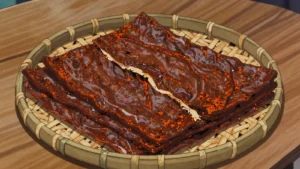
- 400 gdried pork belly
- sikam, bought dried
- not home-dried, see the note
- from a Bhutanese or Himalayan grocer
- or Chinese dried pork belly
- see the substitutions
The vegetables
- 1large white radish
- labu, or daikon
- in thick half-moons
- 2onions, sliced
- 4 clovesgarlic, sliced
- a thumb of ginger, julienned
- a handful of spinach or mustard greens
- optional
The chillies
- 15to 25 dried red chillies
- whole or split
- see the note on quantity
- or fewer, to taste
- 1 teaspoonchilli powder
- optional
The rest
- 300 mlwater
- 1 tablespoonoil
- only if the pork is lean
- salt, to taste
- see the note
To serve
- Bhutanese red rice
- or plain rice
- ema datshi alongside
- suja or ngaja to drink
Directions
- Warm and humid spoils. For most people outside Bhutan that is far too hot. Start with five or six.
- Use them whole for aroma with less heat. It transfers to eyes hours later. Wash with oil and then soap. It should be firm, dry and deep-coloured. Rinse it in warm water.
- Soak it in warm water for an hour or two. Soaking softens it enough to slice. Taste a piece before seasoning the dish. Slice it into thin strips or small squares.
- Cut across the grain. Put the pork in a pan with the water. Bring it to a simmer. Simmer it twenty minutes. Do not pour it off. Add oil only if the pork is lean. A fatty belly needs none at all. Add the onion, garlic and ginger. Cook them until the onion softens.
- Add the radish in thick half-moons. Radish collapses if it is cut thin. Add the dried chillies. Add them with the radish rather than at the start. Chillies added to hot dry fat burn quickly.
- Cover and simmer twenty minutes more. Add a little water if it dries. A small amount of thick red fatty sauce. Stir in spinach or mustard greens at the end. Two minutes is enough.
- Taste before adding any. Serve it with red rice. It takes longer to cook than white rice. Check it for damp and mould.
Technique
- Buy the pork already dried. The atlas gives no drying method because air-drying pork depends entirely on climate — Bhutanese sikam dries in cold dry mountain air, often above a hearth, where cold and dry preserves and warm and humid spoils. Uncured meat dried at ambient temperature is a genuine risk, with no nitrite and no controlled chamber; the safety rests on the climate and on practice.
- Twenty-five dried chillies is a Bhutanese quantity and not a misprint — chilli is treated as a vegetable there rather than a seasoning. For most people outside Bhutan that is far too hot; start with five or six. Reducing it does not ruin the dish, it makes a milder version of it.
- Most of the capsaicin is in the pith and the seeds attached to it, so shaking the seeds out reduces the heat considerably. Whole unsplit chillies release far less than split ones — use them whole for aroma with less heat.
- Handle dried chillies with care. Capsaicin binds to skin, water does not wash it off, and it transfers to eyes hours later — wash with oil and then soap. Frying this many releases capsaicin into the air, which makes people cough and stings the eyes, so open a window and use an extractor.
- Soak the pork an hour or two in warm water. Dried pork is rock hard and soaking softens it enough to slice; if it is salted the soak also draws salt out, so taste a piece before seasoning anything.
- Slice across the grain. Dried meat is tough along it, and cutting across makes every piece easier to chew. It is still chewy and meant to be — it will not become tender like a stew, and the atlas says so rather than promising otherwise.
- Do not pour off the rendered fat. It is the cooking fat for the rest of the dish, and a fatty belly needs no added oil at all.
- Cut the radish into thick half-moons. Thin pieces collapse; thick ones hold their shape and stay juicy. The radish absorbs the fat and the chilli and is the part that carries the sauce.
- Add the chillies with the radish and liquid rather than to hot dry fat. Chillies burn quickly in dry fat, and burnt chilli is acrid and bitter.
- There should be very little liquid at the end. This is not a soup.
- Taste before salting. Dried pork carries salt, how much varies, and the soaking removed an unpredictable amount.
- Judge dried pork by firm dry deep-coloured flesh with white or cream fat and a dried-meat smell. Yellowing fat means it is oxidising — rancidity beginning, tasting of old paint. Sliminess, mould or a sour smell mean leave it.
- For too much heat use dairy rather than water — capsaicin dissolves in fat and in milk casein, while water spreads it around the mouth. Rice helps by absorbing it, and the cheese in the ema datshi served alongside does the same job. That pairing is not an accident.
- Bhutanese red rice takes about forty minutes, considerably longer than white rice.
- This is a fatty dish, which is what it is for at altitude in cold weather. If your dried pork is cured rather than simply dried it contains nitrites, and processed meat has documented health associations — the atlas records that as fact and makes no dietary recommendation.
- Pork is avoided in several religious traditions. Say plainly what a dish contains.
Substitutions
- Chinese dried or cured pork belly is the most available substitute.
- Shakam, dried beef, makes shakam paa by the same method.
- Fresh pork belly makes phaksha paa, a different and softer dish.
- Daikon replaces labu exactly.
- Turnip or kohlrabi replace the radish.
- Fresh red chillies replace dried, giving a brighter and less smoky heat.
Variations
- Shakam paa uses dried beef instead of pork.
- Phaksha paa uses fresh pork belly.
- Sikam with spinach rather than radish is a common variation.
- Sikam ezay is the dried pork relish version.
- Phaksha pa with dried turnip leaves is made in some valleys.
- Ema datshi is the chilli and cheese dish served alongside.
Frequently asked questions
What is Sikam Paa?
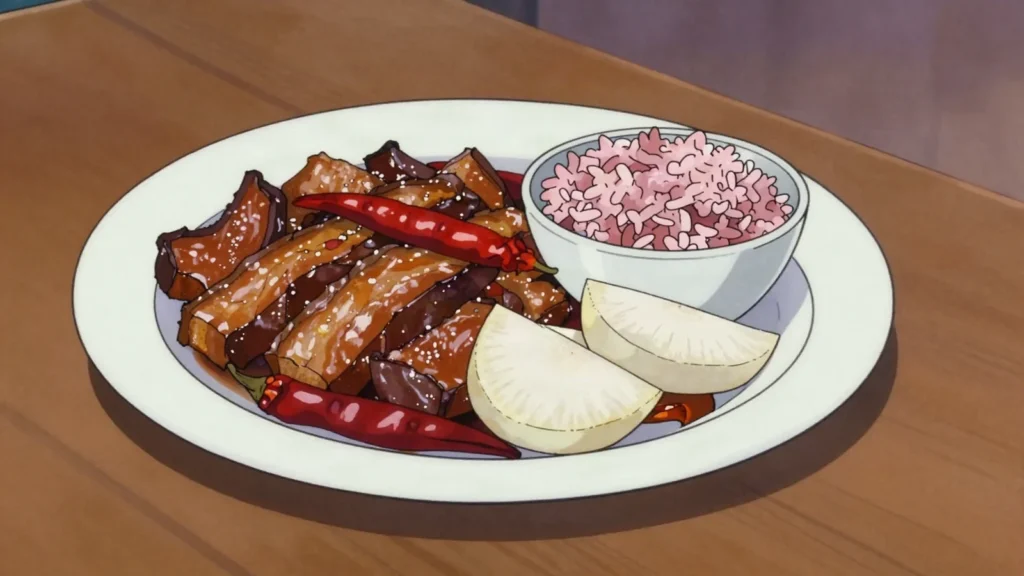
Sikam Paa is a charcuterie & cured from Bhutan: dried pork belly stir-fried with dried chillies and radish, chewy and fatty.
How long does Sikam Paa take to make?
Sikam Paa takes 20 minutes plus soaking of preparation and 40 minutes of cooking. The recipe makes serves 4. It is rated medium to make.
What can I substitute in Sikam Paa?
Yes, within limits. Chinese dried or cured pork belly is the most available substitute. Shakam, dried beef, makes shakam paa by the same method. Fresh pork belly makes phaksha paa, a different and softer dish. Daikon replaces labu exactly. Turnip or kohlrabi replace the radish. Fresh red chillies replace dried, giving a brighter and less smoky heat.
What is the most important thing to get right in Sikam Paa?
Cut across the grain. Put the pork in a pan with the water. Bring it to a simmer. Simmer it twenty minutes. Do not pour it off. Add oil only if the pork is lean. A fatty belly needs none at all. Add the onion, garlic and ginger. Cook them until the onion softens.