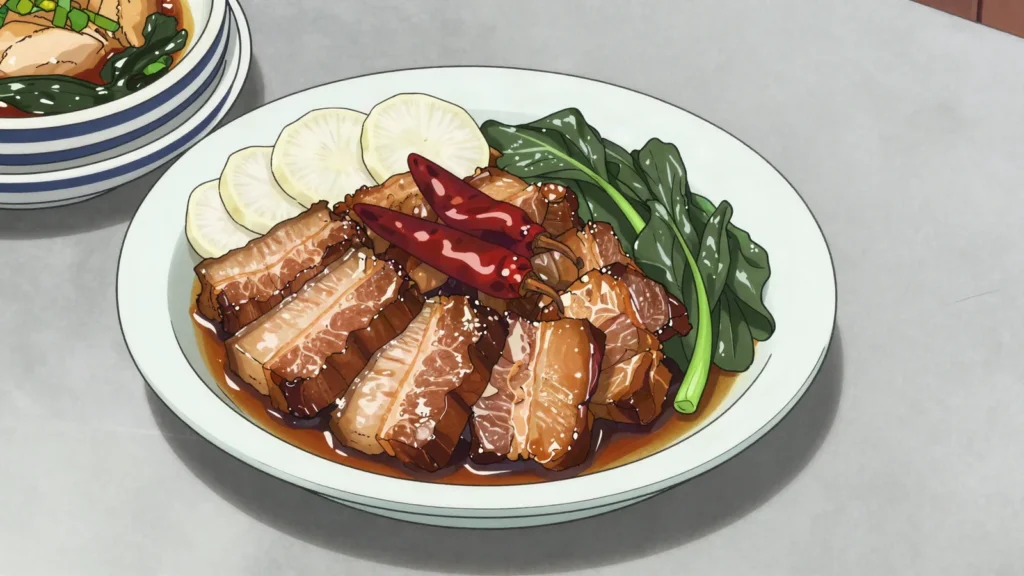

Ingredients
Pork
- 800 gpork belly, skin on, cut into thick slices about 5 mm x 5 cm
- 1 tspsalt
Aromatics
- 2onions, sliced lengthways
- 6garlic cloves, sliced
- 30 gfresh ginger, cut into matchsticks
- 12whole dried red chillies, stems removed, halved
- 2fresh green chillies, split
- ¼ tspground Sichuan pepper (thingye)
- 1 tspsalt
- 300 mlwater
Vegetables
- 300 gwhite radish (mooli), peeled and cut into thick half-moons
- 150 gspinach or mustard greens, roughly chopped
To serve
- 400 gBhutanese red rice, steamed
- 50 gdatshi or feta, crumbled (optional)
Directions
- Put the sliced pork belly into a dry heavy pan or wok over medium heat with a splash of water and the teaspoon of salt, and cook 12–15 minutes, stirring, until the water has gone and the fat has rendered out into a clear pool.
- Let the slices continue in their own fat for another 5 minutes until the edges are browned and the skin has gone translucent and chewy.
- Push the pork to one side and fry the onions, garlic and ginger in the rendered fat for 5 minutes until softened and just golden.
- Add the dried red chillies and turn them in the hot fat for 1 minute until they darken a shade and smell toasty. Do not let them blacken, which makes the whole dish acrid.
- Pour in the water, add the radish, cover, and simmer 20–25 minutes until the radish is translucent and tender and the pork is soft enough to cut with the side of a spoon.
- Stir in the fresh green chillies and the Sichuan pepper and cook uncovered for 5 minutes to reduce the liquid to a short, glossy, orange-red sauce that clings to the meat.
- Fold in the spinach or mustard greens and cook 2 minutes only, until just wilted and still bright.
- Taste for salt. If you want it richer, scatter the crumbled cheese over and let it melt in off the heat for a minute, as some households do. Serve with red rice.
Technique
- Phaksha paa is a dry-ish braise, not a soupy curry: the finished sauce should barely coat the pork rather than pool around it.
- Rendering the fat first is the whole method. The pork cooks in its own fat, which then carries the chilli and ginger through the dish, so no cooking oil is added at any point.
- Sikam paa is the same dish made with sikam, sun-dried and lightly cured pork belly, which is chewier and far more intense; it is the winter version in the highlands.
- Thingye, Bhutanese Sichuan pepper, gives the numbing citrus note that distinguishes Bhutanese cooking from Tibetan; use it sparingly.
Substitutions
- No white radish: turnip or kohlrabi behaves similarly, or use halved new potatoes, which gives kewa phaksha.
- If whole dried Bhutanese chillies are unavailable, use dried Kashmiri chillies for colour plus 2 tsp of chilli flakes for heat.
Variations
- Phaksha paa with dried radish leaves, rehydrated, an autumn staple in Bumthang.
- Some cooks finish it with a splash of ara, the local rice or wheat spirit, in the last two minutes.
History
Pork belly simmered with dried chillies and radish; drying pork was how Himalayan households kept meat through the long winter.
Frequently asked questions
What is Phaksha Paa?
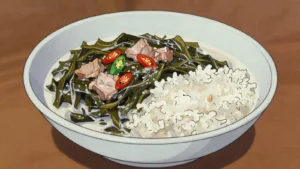
Phaksha Paa is a main from Bhutan: pork slices braised with whole red chilies and mountain greens. Pork belly simmered with dried chillies and radish; drying pork was how Himalayan households kept meat through the long winter.
How long does Phaksha Paa take to make?
Phaksha Paa takes 20 min of preparation and 50 min of cooking. The recipe makes 4 servings. It is rated easy to make.
What can I substitute in Phaksha Paa?
Yes, within limits. No white radish: turnip or kohlrabi behaves similarly, or use halved new potatoes, which gives kewa phaksha. If whole dried Bhutanese chillies are unavailable, use dried Kashmiri chillies for colour plus 2 tsp of chilli flakes for heat.
What is the most important thing to get right in Phaksha Paa?
Add the dried red chillies and turn them in the hot fat for 1 minute until they darken a shade and smell toasty. Do not let them blacken, which makes the whole dish acrid.