
Ingredients
Rice and beans
- 300 gshort grain or sticky rice, soaked 4 hours
- 150 gwhole green mung beans, soaked overnight
- 1.5 litreswater
- 1 tspfine salt
To sweeten
- 250 gsugar
- 1 tspground green cardamom
- 1 tbsprosewater
- 100 mlsunflower oil
- 60 gghee
To serve
- 3 tbspslivered pistachios
- 2 tbspslivered almonds
- ground cinnamon, for dusting
Directions
- Drain the soaked mung beans, cover with 750 ml of the water and simmer for 30 to 35 minutes until the skins split and the beans crush easily between two fingers but still hold their shape.
- Drain the rice, add it to the beans with the remaining water and the salt, and bring to a boil.
- Cook uncovered over medium heat for 20 minutes, stirring often from the base, until the grains are swollen and most of the water has been absorbed.
- Add the sugar and stir continuously for 5 minutes; the mixture loosens sharply as the sugar dissolves and pulls water out of the starch.
- Pour in the oil and the ghee, stirring so it emulsifies into the rice rather than sitting on top, and keep the pan on the lowest heat.
- Cook a further 25 to 30 minutes, stirring every few minutes with a wooden spoon and mashing some grains against the side, until the sholeh is thick, glossy and sticky enough that a spoon dragged through leaves a track that closes slowly.
- Stir in the cardamom and rosewater, cover the pan with a cloth under the lid and rest off the heat for 10 minutes so it steams and settles.
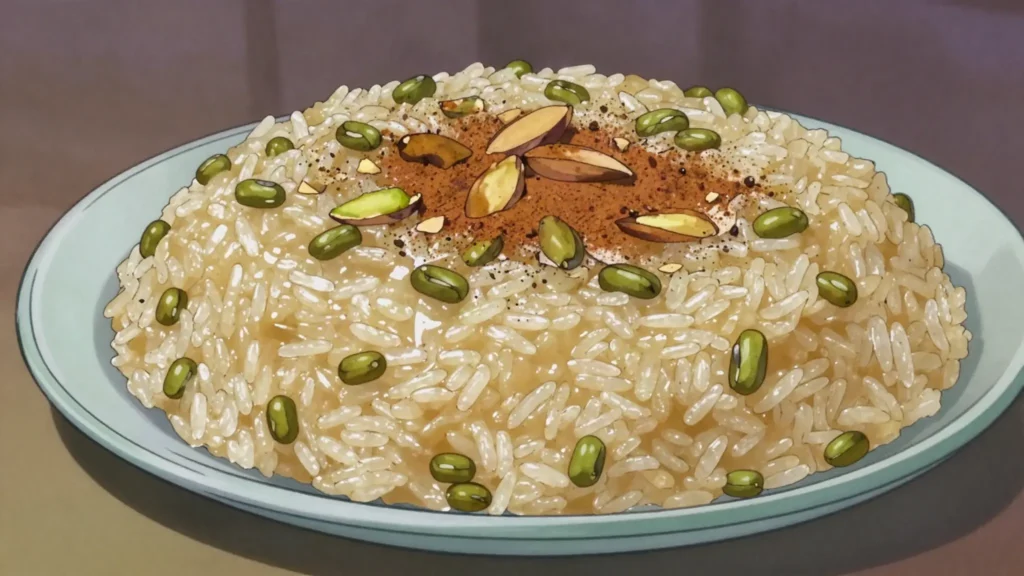
- Spoon warm into bowls, flatten the tops, scatter with pistachio and almond and dust with cinnamon.
Technique
- Sholeh means a sticky rice porridge, and the Ghorband valley in Parwan is known for the sweet mung bean version cooked for weddings and mourning gatherings alike.
- The generous fat is not optional. It keeps the grains separate inside a sticky mass and stops the sholeh setting to a solid brick as it cools.
- Sugar always goes in after the rice is soft. Added at the start it hardens the grain and no amount of extra cooking will rescue it.
Substitutions
- No whole green mung beans: split yellow mung dal works, needs no overnight soak and cooks in 20 minutes, but gives a smoother, less speckled result.
- Ghee can be replaced entirely by sunflower oil for a lighter version, common in summer.
Variations
- Sholeh shireen skips the beans altogether and colours the rice with saffron and turmeric.
- A savoury sholeh from the same valley leaves out the sugar and finishes with fried onion, black pepper and dried mint.
History
Named for the Ghorband valley in Parwan province where it originated; cooked in quantity for religious gatherings and family celebrations.
Frequently asked questions
What is Sholeh Ghorbandi?
Sholeh Ghorbandi is a dessert from Afghanistan: sticky sweetened rice cooked with mung beans and cardamom, served warm in bowls. Named for the Ghorband valley in Parwan province where it originated; cooked in quantity for religious gatherings and family celebrations.
How long does Sholeh Ghorbandi take to make?
Sholeh Ghorbandi takes 20 min plus overnight soaking of preparation and 1 hr 30 min of cooking. The recipe makes 6 to 8 bowls. It is rated medium to make.
What can I substitute in Sholeh Ghorbandi?
Yes, within limits. No whole green mung beans: split yellow mung dal works, needs no overnight soak and cooks in 20 minutes, but gives a smoother, less speckled result. Ghee can be replaced entirely by sunflower oil for a lighter version, common in summer.
What is the most important thing to get right in Sholeh Ghorbandi?
Pour in the oil and the ghee, stirring so it emulsifies into the rice rather than sitting on top, and keep the pan on the lowest heat.