
Ingredients
Fish
- 800 gfirm river fish such as trout or carp, cut into 4 cm steaks on the bone
- 1 tspturmeric
- 1 tspchilli powder
- 2 tspsalt
- juice of 1 lemon
- 100 gfine rice flour
- 50 ggram (chickpea) flour
- ½ tspground coriander
- cold water to mix
Jelabi
- 150 gplain flour
- 2 tbspcornflour
- ½ tspfast-action yeast
- 150 mlwarm water
- 1 pinchsaffron or a little turmeric for colour
Jelabi syrup
- 300 gsugar
- 200 mlwater
- 1 tbsplemon juice
- 4cardamom pods, cracked
- 1 tsprosewater
To fry
- 1.5 litresvegetable oil
To serve
- Afghan naan
- chopped coriander and green chilli
- lemon wedges
Directions
- Rub the fish with turmeric, chilli, salt and lemon juice and leave 20 minutes; the acid firms the flesh and takes the muddiness off river fish.
- Whisk the jelabi flour, cornflour, yeast, saffron and warm water into a thick pouring batter, cover and leave 30 minutes to an hour until it is bubbly and smells faintly fermented.
- Boil the sugar, water, lemon juice and cardamom for 5 minutes to a syrup of one-thread consistency, stir in the rosewater and keep it warm, around 50°C (120°F).
- Mix the rice flour, gram flour and ground coriander with just enough cold water to make a thin coating batter, no thicker than single cream.
- Heat the oil to 180°C (350°F). Dip the fish pieces in the batter, let the excess run off, and fry in batches for 5 to 6 minutes, turning once, until the crust is crisp and deep gold and the flesh flakes at the bone.
- Drain the fish on a rack and keep it warm; never stack it, or the crust softens.
- Pour the jelabi batter into a squeeze bottle or a piping bag with a 5 mm nozzle and spiral it directly into the hot oil, three or four concentric loops per jelabi, working quickly.
- Fry 90 seconds a side until crisp and pale gold but not brown, lift out and drop straight into the warm syrup for 30 seconds, turning once.
- Lift the jelabi out onto a rack to drain; they should be crunchy and only lightly sticky, not soaked and floppy.
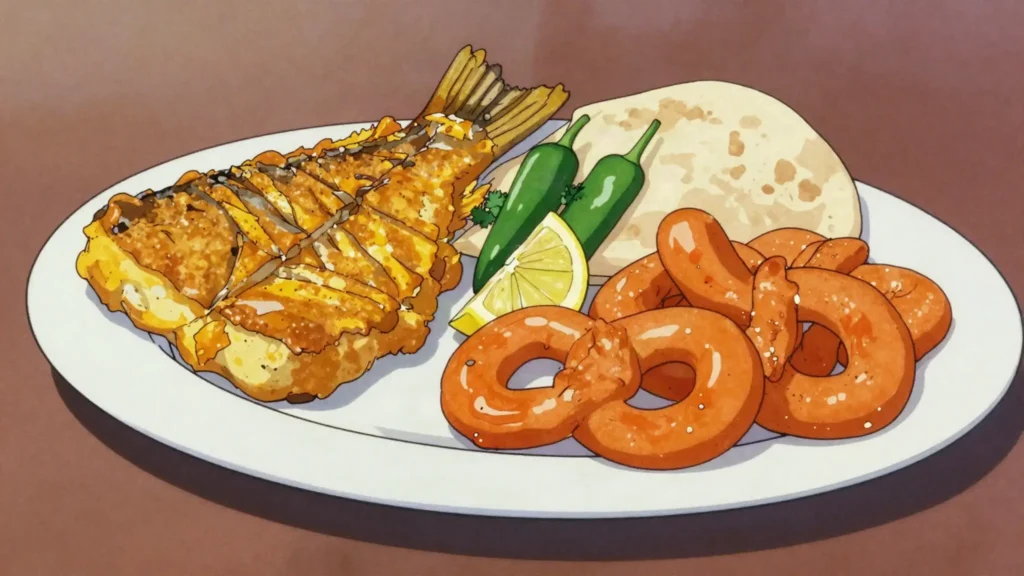
- Serve the fish and the jelabi together on the same plate, with naan, coriander, chilli and lemon. You eat a mouthful of salty spiced fish and a mouthful of syrupy pastry alternately, which is the whole point.
Technique
- The pairing is a genuine Kabul winter tradition, eaten on Fridays and around Nowruz, and it puzzles visitors every time; the salt, chilli and sour lemon of the fish are what make the very sweet jelabi work.
- Rice flour in the coating is what gives the shatteringly crisp crust; a plain wheat batter goes soft within minutes.
- The syrup must be warm and the jelabi hot when they meet. Cold syrup will not penetrate and hot syrup makes them soggy.
- The fish traditionally comes from the Kabul and Panjshir rivers, or now from trout farms, and is always cooked on the bone for flavour.
Substitutions
- No river fish: any firm white sea fish steak works, though Kabulis would call it a compromise. Shop-bought jalebi from an Indian or Afghan sweet shop is what many households actually buy on the way home.
Variations
- Some stalls serve the fish with a fiery coriander and chilli chutney rather than plain lemon.
- In Mazar-e-Sharif the same fish is fried whole and eaten with naan and raw onion, without the jelabi.
History
Fixed cold-weather pairing in Kabul, where fish shops and sweet-makers work side by side and families buy both on the Friday holiday.
Frequently asked questions
What is Mahi wa Jelabi?
Mahi wa Jelabi is a street food from Afghanistan: fried river fish eaten with syrup-soaked jalebi, a Kabul winter Friday tradition. Fixed cold-weather pairing in Kabul, where fish shops and sweet-makers work side by side and families buy both on the Friday holiday.
How long does Mahi wa Jelabi take to make?
Mahi wa Jelabi takes 30 min plus 30 min batter resting of preparation and 40 min of cooking. The recipe makes 4 servings. It is rated medium to make.
What can I substitute in Mahi wa Jelabi?
Yes, within limits. No river fish: any firm white sea fish steak works, though Kabulis would call it a compromise. Shop-bought jalebi from an Indian or Afghan sweet shop is what many households actually buy on the way home.
What is the most important thing to get right in Mahi wa Jelabi?
Drain the fish on a rack and keep it warm; never stack it, or the crust softens.