
Ingredients
Flour
- 200 gshiro powder, milled chickpea or broad bean flour with spices
- or 200 g gram flour plus 2 tbsp berbere
Base
- 5 tbspoil, or niter kibbeh outside fasting periods
- 2onions, very finely chopped
- 6garlic cloves, crushed
- 1thumb ginger, grated
- 2tomatoes, finely chopped
Spices
- 2 tbspberbere, or to taste
- 1 tspground cardamom
- 1/2 tspground fenugreek
- salt
Liquid
- 1 litrewater, hot
To finish
- a handful of chopped green chilli
- a little chopped onion
- olive oil, to pour over
To serve
- injera
- or bread
Directions
- Chop the onions as finely as you possibly can. Coarse onion is unpleasant in what should be a smooth stew.
- Cook them dry for eight minutes until they soften and release water. Continuing the base takes another ten minutes. Add the oil and cook the onions for another ten minutes. They should turn soft and golden.
- Add the garlic and ginger and cook for two minutes. Add the chopped tomatoes and cook them down. Stir in the berbere, cardamom and fenugreek. Fry the spices for a minute so they lose their raw edge. This is the step that decides whether the stew is smooth.
- Take the pan off the heat for a moment. Add the shiro powder to the base. Stir it in thoroughly so it coats everything. It will form a thick heavy paste.
- Return the pan to a very low heat. Add the hot water a ladleful at a time. Whisk hard after each addition until completely smooth. Keep adding until you have the consistency you want. The whisking is what makes shiro smooth rather than grainy.
- Simmer it gently for fifteen to twenty minutes. Stir it every couple of minutes. Taste it: there should be no raw floury flavour. Shiro for injera should be thick enough to scoop.
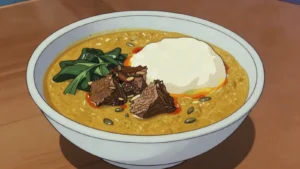
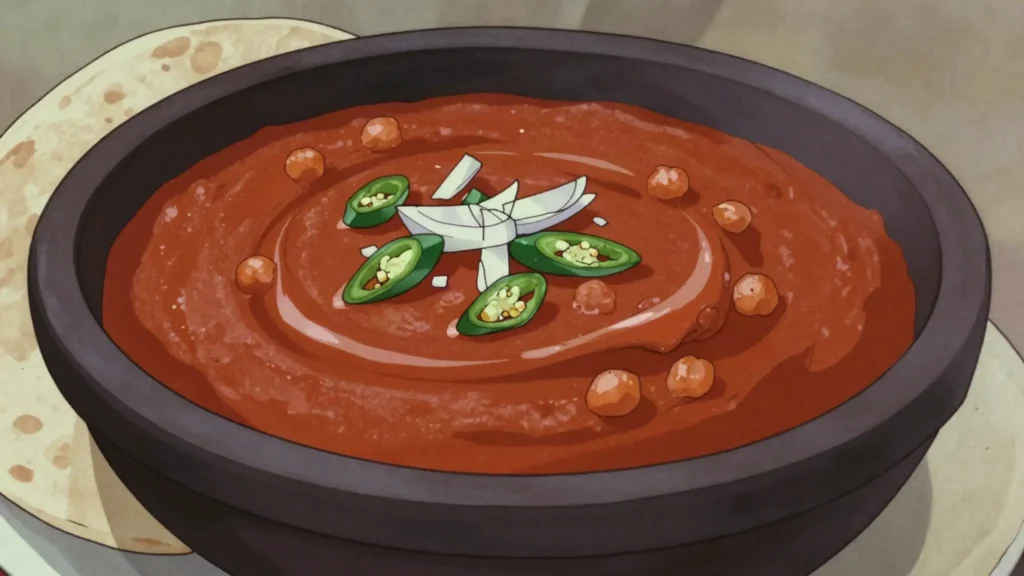
- Add hot water if it has gone too thick. Taste it and adjust the salt and berbere. It should be clearly spiced and moderately hot. Pour a little oil over the surface. Scatter chopped green chilli and raw onion over it. Serve it on injera, spooned into the centre.
Technique
- Add the hot water a ladleful at a time, whisking, since all at once guarantees lumps.
- Cook the finely chopped onions dry first, which concentrates their flavour.
- Use oil rather than niter kibbeh during fasting periods.
Substitutions
- Gram flour with added berbere in place of ready-made shiro powder.
- Niter kibbeh outside fasting periods, which is richer.
Variations
- Bozena shiro, with minced meat cooked in.
- Made thinner, as a soup.
- With a whole egg cracked into the pot at the end.
History
A thick stew made from ground, roasted chickpea or broad bean flour, simmered with berbere spice and onion into a smooth, hearty paste, closely tied historically to Ethiopian and Eritrean Orthodox Christian fasting periods, during which meat, dairy and eggs are traditionally avoided for extended stretches of the religious calendar, making a filling, protein-rich, entirely plant-based dish like shiro especially important as an everyday fasting-season staple rather than an occasional dish. Its relatively long shelf life as a dry, ground flour before cooking also made it a practical food to store and prepare quickly, requiring comparatively little fresh produce on hand. Shiro remains one of the most commonly eaten dishes across Eritrean and Ethiopian households specifically because of how often religious fasting periods recur through the year.
Frequently asked questions
What is Shiro?
Shiro is a soup & stew from Eritrea: smooth spiced chickpea-flour stew, everyday and fasting staple. A thick stew made from ground, roasted chickpea or broad bean flour, simmered with berbere spice and onion into a smooth, hearty paste, closely tied historically to Ethiopian and Eritrean Orthodox Christian fasting periods, during which meat, dairy and eggs are traditionally avoided for extended stretches of the religious calendar, making a filling, protein-rich, entirely plant-based dish like shiro especially important as an everyday fasting-season staple rather than an occasional dish. Its relatively long shelf life as a dry, ground flour before cooking also made it a practical food to store and prepare quickly, requiring comparatively little fresh produce on hand. Shiro remains one of the most commonly eaten dishes across Eritrean and Ethiopian households specifically because of how often religious fasting periods recur through the year.
How long does Shiro take to make?
Shiro takes 10 min of preparation and 35 min of cooking. The recipe makes 6 servings. It is rated easy to make.
What can I substitute in Shiro?
Yes, within limits. Gram flour with added berbere in place of ready-made shiro powder. Niter kibbeh outside fasting periods, which is richer.
What is the most important thing to get right in Shiro?
Return the pan to a very low heat. Add the hot water a ladleful at a time. Whisk hard after each addition until completely smooth. Keep adding until you have the consistency you want. The whisking is what makes shiro smooth rather than grainy.