
Ingredients
Pudding
- 150 gshort grain rice, rinsed until the water runs clear
- 300 mlwater
- 1.5 litreswhole milk
- 150 gsugar
- ½ tspground green cardamom
- 1small pinch fine salt
- 1 tbsprosewater
To serve
- 2 tbspslivered pistachios
- 1 tbspslivered almonds
- ground cinnamon or cardamom, for dusting
- runny honey or grape molasses, optional
Directions
- Simmer the rinsed rice in the water with the salt in a heavy pan, uncovered, for 10 minutes, until the water is almost gone and the grains have begun to swell and split.
- Pour in the milk, bring to a bare simmer and drop the heat as low as it will go.
- Cook uncovered for 45 to 55 minutes, stirring every few minutes and scraping the base, until the grains have collapsed and the milk has thickened to loose pouring cream.
- Stir in the sugar only now, and cook a further 5 minutes; added early, sugar keeps the starch from swelling and the rice stays chalky.
- Add the cardamom and rosewater, take off the heat and beat hard with a wooden spoon for a minute to break down a few more grains and gloss the surface.
- Pour into individual shallow bowls while still fluid; it sets noticeably firmer as it cools.
- Cool to room temperature uncovered, then chill for at least 2 hours until cold and set to a soft spoonable cream.
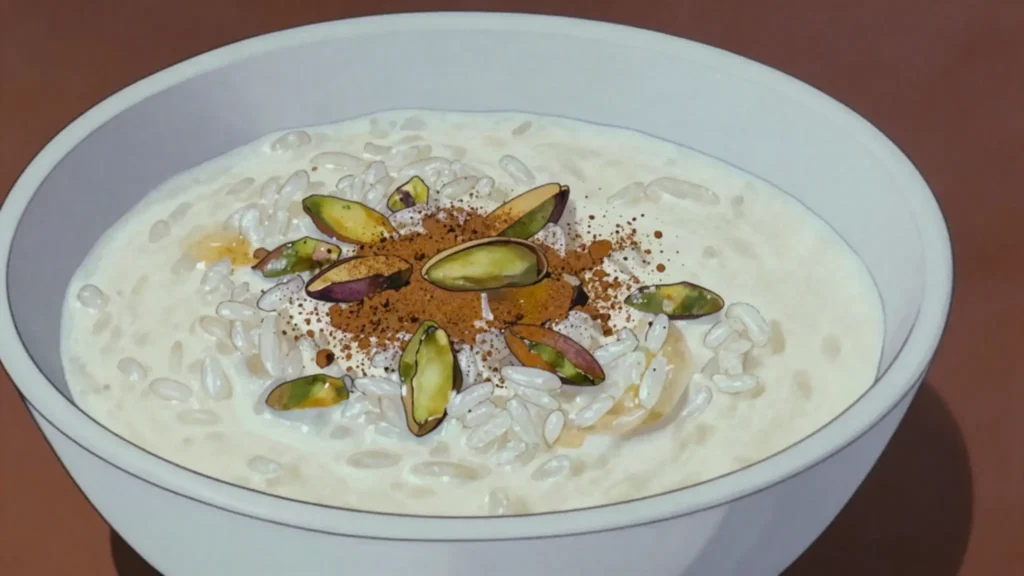
- Scatter with pistachio and almond, dust with cinnamon or cardamom, and trickle over honey at the table if you like it sweeter.
Technique
- Afghan shir berenj is eaten cool, not hot, and is deliberately less sweet than Iranian or Turkish rice puddings. It is a breakfast and a Ramadan sweet as much as a dessert.
- It thickens a lot on cooling because the starch retrogrades. Take it off the heat when it still looks too loose or you will be eating rice paste.
- A heavy pan and constant low heat matter more than anything else. Milk scorches at the base within seconds on thin steel and the burnt note taints the whole pot.
Substitutions
- No short grain rice: use basmati broken by pulsing briefly in a grinder, which releases enough starch to thicken, though the texture is finer.
- Rosewater can be replaced with a 3 cm strip of orange zest simmered in the milk and lifted out at the end.
Variations
- Shir berenj-e-zafarani steeps a pinch of saffron in a spoon of hot milk and swirls it through at the end for colour and scent.
- In Herat it is set firm in a shallow tray, chilled and cut into diamonds to eat in the hand.
History
Milk-rice puddings spread through Afghanistan with Persian court cooking and are eaten across the wider Persian-speaking world.
Frequently asked questions
What is Shir Berenj?
Shir Berenj is a dessert from Afghanistan: slow-simmered milk and rice pudding scented with cardamom, eaten cool. Milk-rice puddings spread through Afghanistan with Persian court cooking and are eaten across the wider Persian-speaking world.
How long does Shir Berenj take to make?
Shir Berenj takes 10 min of preparation and 1 hr plus chilling of cooking. The recipe makes 6 bowls. It is rated easy to make.
What can I substitute in Shir Berenj?
Yes, within limits. No short grain rice: use basmati broken by pulsing briefly in a grinder, which releases enough starch to thicken, though the texture is finer. Rosewater can be replaced with a 3 cm strip of orange zest simmered in the milk and lifted out at the end.
What is the most important thing to get right in Shir Berenj?
A heavy pan and constant low heat matter more than anything else. Milk scorches at the base within seconds on thin steel and the burnt note taints the whole pot.