Ingredients
Dough
- 500 gplain flour
- 2 tbspfine semolina
- 80 mlsunflower oil
- 1egg
- 2 tbspwhite vinegar
- 1 tspbaking powder
- 1 pinchsalt
- 1 tbsporange-flower water
- About 200 ml warm water
To fry and finish
- 1.5 litressunflower oil for deep frying
- 500 ghoney
- 3 tbsporange-flower water
- 100 gtoasted sesame seeds
- 1 pinchsaffron or a little yellow food colouring (optional)
Directions
- Mix the flour, semolina, baking powder and salt, then rub in the oil until the mixture is crumbly and evenly coated.
- Beat the egg with the vinegar, orange-flower water and warm water, add to the flour and knead for 10 minutes to a smooth, quite firm dough; the vinegar is what makes the finished pastry shatter rather than bend.
- Cover with a damp cloth and rest for 30 minutes at room temperature.
- Roll the dough very thin, about 2 mm, in batches, on a lightly floured surface or through a pasta machine.
- Cut rectangles roughly 10 by 6 cm, then make four or five parallel slits down the middle of each, leaving both short ends intact.
- Thread alternate strips back through the slits and twist the rectangle to form the characteristic openwork ribbon knot, pinching gently so it does not unravel.
- Heat the frying oil to 160°C (325°F), which is lower than for most fritters, and fry the knots four or five at a time for 2 to 3 minutes, turning, until pale gold and crisp all the way through.
- Drain briefly, then plunge the hot griwech straight into honey warmed with the orange-flower water to about 60°C (140°F), leave for 1 minute so it drinks the syrup, and lift out with a slotted spoon.
- Drain on a rack for a minute, then roll in toasted sesame seeds while still tacky and cool completely; they keep two weeks in a sealed tin.
Technique
- Fry low and slow. At high heat the ribbons brown before the interior dries out, and the pastry goes soft an hour later instead of staying brittle.
- The honey must be warm and the pastry hot, or the syrup will not penetrate and will simply glue the sesame on.
- Griwech, chebakia in Morocco, is Ramadan food across the Maghreb, eaten with the soup rather than after it. Algerian versions are less spiced than Moroccan ones, which carry anise and cinnamon.
Substitutions
- Honey can be stretched with a syrup of 300 g sugar and 150 ml water boiled to a light thread, then blended with 200 g honey, which is what many households do.
- No orange-flower water: a strip of orange zest infused in the warm honey gives a related lift.
Variations
- Some Algiers cooks add a pinch of saffron to the dough for a deeper gold colour.
- A simpler ring shape, twisted into a figure of eight, is common when time is short.
- In the west the knots are finished with crushed toasted almonds rather than sesame.
History
A Ramadan sweet cut with a fluted wheel and knotted before frying, then plunged into honey and rolled in sesame while still hot.
Frequently asked questions
What is Griwech?
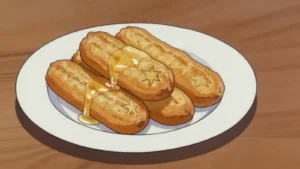
Griwech is a dessert from Algeria: ribboned sesame pastry knots fried and dipped in honey. A Ramadan sweet cut with a fluted wheel and knotted before frying, then plunged into honey and rolled in sesame while still hot.
How long does Griwech take to make?
Griwech takes 45 min of preparation and 30 min of cooking. The recipe makes about 30 pieces. It is rated hard to make.
What can I substitute in Griwech?
Yes, within limits. Honey can be stretched with a syrup of 300 g sugar and 150 ml water boiled to a light thread, then blended with 200 g honey, which is what many households do. No orange-flower water: a strip of orange zest infused in the warm honey gives a related lift.
What is the most important thing to get right in Griwech?
Beat the egg with the vinegar, orange-flower water and warm water, add to the flour and knead for 10 minutes to a smooth, quite firm dough; the vinegar is what makes the finished pastry shatter rather than bend.