
Ingredients
Dough
- 250 gplain flour
- 1egg
- 2 tbspcaster sugar
- 2 tbspvegetable oil
- ½ tspground cardamom
- 1 pinchsalt
- 70 mlwarm milk
To fry
- 800 mlvegetable oil
To finish
- 100 gicing sugar
- ½ tspground cardamom
- 40 gpistachios, very finely ground
Directions
- Beat the egg with the sugar, oil, cardamom, salt and warm milk, then work in the flour to a soft, smooth dough; knead 8 minutes until it is silky and no longer sticky.
- Wrap and rest for 30 minutes so it rolls out without springing back.
- Divide into walnut-sized balls, keeping them covered, and roll each one out as thin as you possibly can, under 1 mm, until you can see the board through it. Thin dough is the difference between a crisp gosh-e fil and a doughy biscuit.
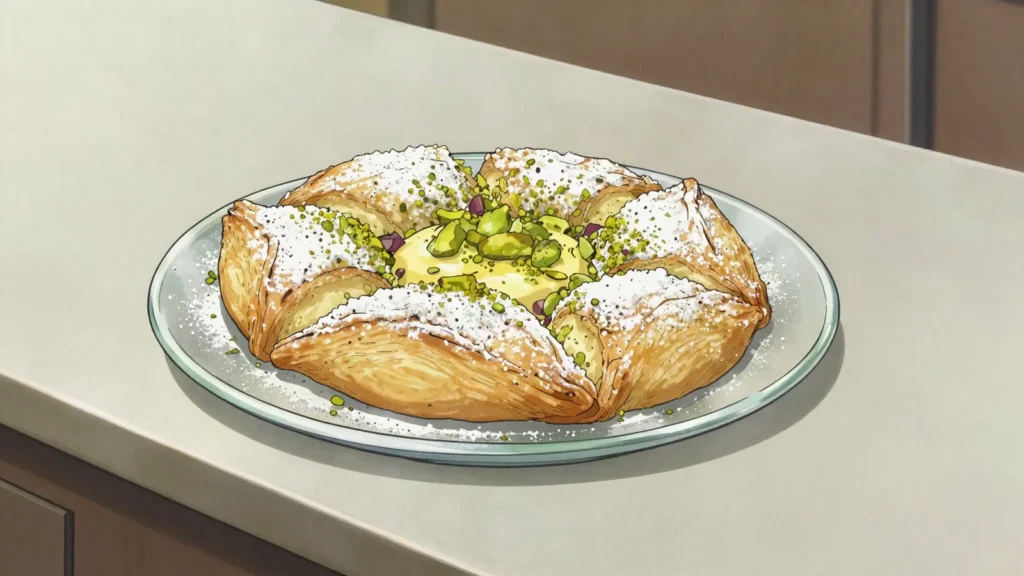
- Pinch the centre of each disc firmly between finger and thumb, gathering it into a pleated point so the pastry opens out like an elephant’s ear, the shape the name describes.
- Heat the oil to 165°C (325°F); a scrap of dough should float up straight away and bubble gently rather than brown instantly.
- Fry two or three at a time for about 45 seconds, holding the pinched point down with a fork or a skewer so the ear opens out flat in the oil.
- Turn them once, another 30 to 45 seconds, until they are pale gold with a faint blush at the frilled edge; take them out before they colour properly, since they darken as they drain.
- Drain on a rack and let them cool completely, at which point they turn brittle and shatter when you snap one.
- Sift the icing sugar with the cardamom over the cooled pastries in a thick snowfall, then scatter the finely ground pistachio over the top so it sticks to the sugar.
- Store in a tin in a single layer; they lose their crackle within a day in humid weather.
Technique
- Fry cool and short. High heat gives a brown, hard pastry; the correct gosh-e fil is barely coloured, almost white, and dissolves rather than crunches.
- The pinch has to be firm and central, or the pastry unfurls in the oil and you get a flat crisp instead of a pleated ear.
- This is a Nowruz and Eid pastry, made in large batches and piled on trays for visiting guests alongside green tea and sugared almonds.
Substitutions
- No pistachios: use ground walnuts, which are common in northern Afghanistan and cheaper. A pasta machine on its thinnest setting rolls the dough far thinner than a rolling pin.
Variations
- Some cooks add a spoonful of yoghurt to the dough for a shorter, more crumbly texture.
- In Herat the pastries are drizzled with warm sugar syrup instead of dusted, giving a sticky version closer to jalebi.
History
‘Elephant’s ear’ fried pastry dusted with pistachio and cardamom, made in quantity for Nowruz and Eid.
Frequently asked questions
What is Gosh-e Fil?
Gosh-e Fil is a dessert from Afghanistan: crisp elephant-ear pastry dusted with powdered sugar and ground pistachio. ‘Elephant’s ear’ fried pastry dusted with pistachio and cardamom, made in quantity for Nowruz and Eid.
How long does Gosh-e Fil take to make?
Gosh-e Fil takes 40 min plus 30 min resting of preparation and 25 min of cooking. The recipe makes about 24 pastries. It is rated medium to make.
What can I substitute in Gosh-e Fil?
Yes, within limits. No pistachios: use ground walnuts, which are common in northern Afghanistan and cheaper. A pasta machine on its thinnest setting rolls the dough far thinner than a rolling pin.
What is the most important thing to get right in Gosh-e Fil?
Divide into walnut-sized balls, keeping them covered, and roll each one out as thin as you possibly can, under 1 mm, until you can see the board through it. Thin dough is the difference between a crisp gosh-e fil and a doughy biscuit.