
Ingredients
The shark
- 800 gshark flesh
- very fresh, see the notes
- or any firm white fish
- as a substitute
The souring
- 10bilimbi
- or juice of 4 limes
- plus 2 tablespoons vinegar
- see the notes
The rest
- 2onions, very finely chopped
- 3hot chillies, chopped
- 4 tablespoonsoil
- juice of 2 limes
- salt and black pepper
To serve
- plain rice
- lime wedges
- with a Creole meal
Directions
- Check the local rules and advice. Any firm white fish works in this dish. Discard it if it smells at all off. Do not take any chances with it. Rinse the shark thoroughly in cold water.
- Rinse away any blood entirely. Rinse it under cold running water. Soak the fish in acidulated water. Add lime juice or vinegar to water. Give it about thirty full minutes. Discard that rather than treating it. Put the fish in a pot of water. Add plenty of salt to the water.
- Bring it to a simmer and cook it. Give it about twenty full minutes. Keep it at a gentle simmer only. It should barely bubble at the surface. Drain all of the fish thoroughly. Let it drain out in a colander. Give it about ten full minutes.
- Let it cool enough to handle it. Squeeze the fish out genuinely hard. Take handfuls and squeeze them in your fist. Squeeze until the water stops running. Wrap it in a clean cloth instead. Twist the cloth to press it out. The fish should feel almost dry. Check the fish thoroughly for bones. Pull out any pieces that you find. Check it even more carefully then.
- Mash the squeezed fish with a fork. Work it until the fibres separate. It should not be a paste at all. Keep some genuinely real texture in it. Chop the onion very finely indeed. Chop it as fine as you possibly can. Rinse the chopped onion in cold water. Drain and dry it thoroughly after. Crush the bilimbi and strain the juice. They are soft and genuinely very juicy.
- Crush them in a bowl with a fork. Strain out the pulp and seeds. Put the mashed fish in a bowl. Add the onion, chilli and oil. Oil enriches the dry squeezed fish. Use a genuinely good amount of it. The fish is very dry without it.
- Add the bilimbi juice and the lime. It should be genuinely quite sour. Add it in and taste as you go. Taste it and then season it well. Taste before adding much more. Add plenty of black pepper to it.
- Work everything through thoroughly. Use your clean hands or a fork. Work it until evenly combined. The fish takes up the dressing. Let it stand for twenty minutes. Serving it is done cool or cold. Serve it alongside plain rice. It keeps one day refrigerated.
Technique
- Shark spoils genuinely fast for a chemical reason: sharks carry urea in their flesh to balance sea water, and urea breaks down into ammonia quickly after death. Shark that smells of ammonia has spoiled, that smell cannot be washed or cooked out, and it must be discarded rather than treated. Smell the flesh before buying — it should smell clean and of the sea. Soaking in acidulated water reduces a faint note in fresh shark but rescues nothing.
- Shark accumulates mercury, being a long-lived predatory fish, which is well documented; health authorities advise limiting it, and pregnant people and young children are advised to avoid it in many places. Many shark populations have also declined sharply, though status varies enormously by species and region and changes over time — the atlas does not name a status here, so check local rules and advice. Any firm white fish works in the dish and avoids both concerns.
- Squeeze the boiled fish genuinely hard, in a cloth twisted to press it out rather than by hand, until the water stops running — far more comes out than expected. Wet fish gives a watery chutney and stays bland inside, where squeezed fish absorbs the lime and chilli, and that absorption is the whole point.
Substitutions
- Lime juice with a little vinegar approximates bilimbi, a small intensely sour tropical fruit used as a souring agent; bilimbi is sharper and more complex and genuinely hard to find abroad.
- Shark has cartilage rather than bone, tough and inedible, so pull out any pieces you find; a white fish substitute has real bones instead, so check even more carefully, running fingers through every flake in good light.
Variations
- Simmer the fish gently for about twenty minutes rather than boiling hard, which breaks it apart; it should be opaque throughout and flake easily.
- Mash it with a fork until the fibres separate into a coarse fluffy texture rather than a smooth paste — traditionally it is pounded in a mortar, which separates them more thoroughly, and both work well.
- Use a good amount of oil, since the squeezed fish is genuinely dry without it and the oil carries the flavours through; the dressing should be quite sour, which is the point and cuts the richness of the fish.
History
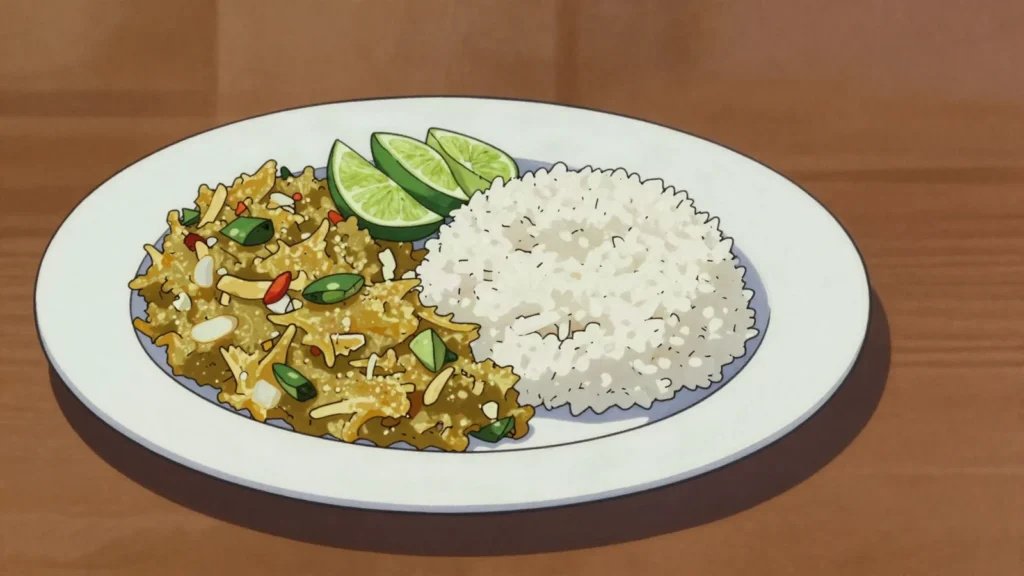
Boiled shark flesh squeezed dry, mashed with bilimbi juice, lime and chili; a Creole way of using a catch that spoils quickly.
Frequently asked questions
What is Satini reken?
Satini reken is a salad & side from Seychelles: boiled shark mashed with bilimbi and lime, served with rice. Boiled shark flesh squeezed dry, mashed with bilimbi juice, lime and chili; a Creole way of using a catch that spoils quickly.
How long does Satini reken take to make?
Satini reken takes 30 minutes of preparation and 30 minutes of cooking. The recipe makes serves 6. It is rated medium to make.
What can I substitute in Satini reken?
Yes, within limits. Lime juice with a little vinegar approximates bilimbi, a small intensely sour tropical fruit used as a souring agent; bilimbi is sharper and more complex and genuinely hard to find abroad. Shark has cartilage rather than bone, tough and inedible, so pull out any pieces you find; a white fish substitute has real bones instead, so check even more carefully, running fingers through every flake in good light.
What is the most important thing to get right in Satini reken?
Check the local rules and advice. Any firm white fish works in this dish. Discard it if it smells at all off. Do not take any chances with it. Rinse the shark thoroughly in cold water.