
Ingredients
Broth
- 1whole chicken, about 1.5 kg, jointed (or 1 rabbit, jointed, for the classic Egyptian version)
- 2 Lwater
- 1onion, halved
- 2bay leaves
- 4cardamom pods
- 1cinnamon stick
- 6black peppercorns
- 2 tspsalt
- 1 tbspwhite vinegar, for washing the meat
Molokhia
- 800 gfresh molokhia (jute mallow) leaves, stripped from the stalks, or 400 g frozen minced molokhia
- 1 tspground coriander
- salt
Ta’leya (the garlic sizzle)
- 4 tbspghee
- 10garlic cloves, crushed to a paste
- 2 tbspground coriander
- 1 tspchilli flakes
To serve
- Egyptian rice or rice with vermicelli
- 1red onion, finely chopped in 3 tbsp vinegar
- baladi bread
Directions
- Wash the chicken pieces with vinegar and water, then brown them in a dry heavy pot until the skin colours, which gives the broth depth.
- Add the water, onion, bay, cardamom, cinnamon and peppercorns, bring to the boil, skim thoroughly, and simmer 45 minutes until the meat is tender. Strain and keep 1.5 L of clear broth; keep the meat warm.
- If you are using fresh leaves, wash and dry them completely, then chop them to a fine green pulp. The traditional tool is the makhrata, a two-handled curved blade rocked over the leaves on a board, and Egyptians will tell you the sound of it is the sound of a family lunch being made.
- Bring the strained broth to a simmer, season it, and stir in the chopped molokhia with the ground coriander.
- Cook for 4 to 6 minutes only, at the barest simmer with bubbles just breaking the surface. This is the critical step: a hard boil splits molokhia and the leaves sink into a watery layer with green scum on top, which cannot be fixed.
- Make the ta’leya while it simmers: fry the garlic paste in ghee over medium heat until it is a nutty gold, then add the ground coriander and chilli and fry 20 seconds until intensely fragrant.
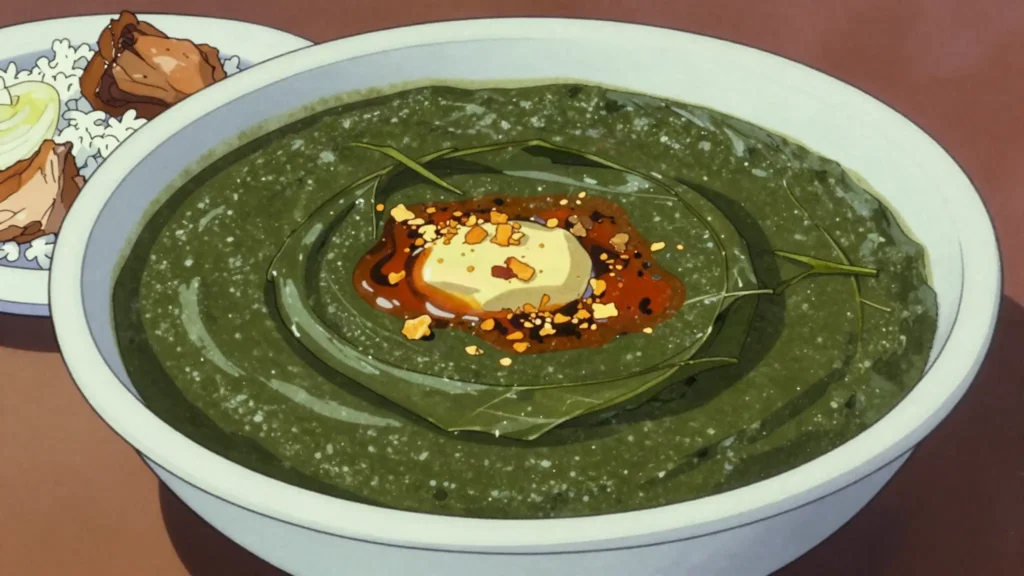
- Pour the sizzling ta’leya straight into the pot of molokhia. It should hiss loudly, the shahka, and Egyptian cooks say a silent shahka means the fat was not hot enough.
- Cover and take off the heat at once. Serve within minutes, ladled over rice, with the chicken or rabbit alongside and vinegared onion to cut the richness.
Technique
- Molokhia’s viscosity comes from mucilage in the jute leaves. That slipperiness is the point of the dish, and gently suspending it, rather than boiling it out, is the whole skill.
- Egyptians chop the leaves very fine; Levantine and Tunisian cooks treat the same plant completely differently, leaving leaves whole or drying and powdering them into a dark stew. All three are called molokhia and none is a version of the others.
- The dish is bound up with Egyptian identity: the Fatimid caliph al-Hakim is said to have banned it in the 11th century, which is remembered chiefly as evidence of how much people wanted it.
Substitutions
- No fresh molokhia: frozen minced molokhia is what most Egyptian kitchens now use and it is excellent. Dried molokhia needs rehydrating and gives a thinner, less slippery soup.
Variations
- Molokhia bil-arnab, with rabbit, considered the finest version in the Delta.
- Molokhia with shrimp or with grilled meat, common on the Mediterranean coast.
- A meat-free version made on a vegetable broth for fasting days.
History
A soup made from the leaves of Corchorus olitorius, a leafy green plant known as jute mallow or Jew’s mallow, finely chopped and simmered into a thick, slightly slippery green broth, documented in Egyptian cooking since at least the medieval Fatimid period, around the 900s to 1100s, and possibly considerably older, given references to a similar plant-based dish in ancient Egyptian sources, though continuous documentation across that full span does not survive. A widely repeated but unverified legend claims molokhia was banned under one Fatimid caliph for supposed health or moral reasons before being restored to favor by a later ruler, though historians treat this story with skepticism. It remains one of Egypt’s most closely identified national dishes, typically served over rice with garlic and coriander stirred in at the end of cooking.
Frequently asked questions
What is Molokhia?
Molokhia is a soup & stew from Egypt: velvety jute-leaf soup with fried garlic-coriander, over rice or with rabbit. A soup made from the leaves of Corchorus olitorius, a leafy green plant known as jute mallow or Jew’s mallow, finely chopped and simmered into a thick, slightly slippery green broth, documented in Egyptian cooking since at least the medieval Fatimid period, around the 900s to 1100s, and possibly considerably older, given references to a similar plant-based dish in ancient Egyptian sources, though continuous documentation across that full span does not survive. A widely repeated but unverified legend claims molokhia was banned under one Fatimid caliph for supposed health or moral reasons before being restored to favor by a later ruler, though historians treat this story with skepticism. It remains one of Egypt’s most closely identified national dishes, typically served over rice with garlic and coriander stirred in at the end of cooking.
How long does Molokhia take to make?
Molokhia takes 25 min of preparation and 1 hr 15 min of cooking. The recipe makes 6 servings. It is rated medium to make.
What can I substitute in Molokhia?
Yes, within limits. No fresh molokhia: frozen minced molokhia is what most Egyptian kitchens now use and it is excellent. Dried molokhia needs rehydrating and gives a thinner, less slippery soup.
What is the most important thing to get right in Molokhia?
Molokhia’s viscosity comes from mucilage in the jute leaves. That slipperiness is the point of the dish, and gently suspending it, rather than boiling it out, is the whole skill.