
Ingredients
Birds
- 4young pigeons, cleaned, livers reserved
Stuffing
- 200 gfreekeh
- 1onion, finely chopped
- the pigeon livers, chopped
- 2 tbspsamna or butter
- 1 tspground cinnamon
- ½ tspallspice
- ½ tspblack pepper
- salt
- 150 mlstock
Poaching
- 1onion
- 2cardamom pods
- 1bay leaf
- 1cinnamon stick
- water
To finish
- butter, for brushing
To serve
- bread
- the poaching broth
Directions
- Ask the butcher for young pigeons, squab, and for the livers to be kept for you.
- Young birds only. An old pigeon is tough beyond rescuing, and the whole dish assumes a bird a few weeks old.
- Rinse the birds inside and out, rub them with a little salt and flour, then rinse again, which is the Egyptian way of cleaning them.
- Soak the freekeh for 20 minutes and drain it.
- Fry the onion in the samna until golden, add the chopped livers for 2 minutes, then the freekeh and the spices.
- Add the stock and cook for 5 minutes only, so the grain is half done and still firm.
- Half-cook the stuffing. It swells a great deal inside the bird as it finishes, and fully cooked stuffing turns to paste.
- Fill each pigeon loosely, about two thirds full, and close the cavity with a cocktail stick or a stitch.
- Two thirds and loosely, for the same reason. An overfilled bird splits its skin as the grain expands.
- Sit the birds in a pot with the onion, cardamom, bay and cinnamon and add water to come halfway up them.
- Cover and poach very gently for 45 minutes to an hour, until tender.
- Poach first and roast second. Pigeon roasted from raw dries out long before the stuffing is cooked, and this two-stage method is exactly why Egyptian pigeon is moist.
- Lift the birds out and pat them dry.
- Brush them all over with butter.
- Roast at 220°C (430°F) for 15 to 20 minutes, or grill over charcoal, until the skin is deep brown and crisp.
- Serve one bird per person with a bowl of the poaching broth and bread.
- Mud pigeon towers have stood along the Nile Delta since antiquity, built for meat and for manure, and stuffed pigeon is wedding and feast food.
Technique
- Freekeh, green wheat roasted while still young, gives a smoky flavour that rice cannot, and it is the older stuffing.
- It is eaten with the fingers and the small bones are worked at properly rather than politely.
- The poaching broth is served alongside as a soup rather than thrown away.
Substitutions
- Short-grain rice in place of freekeh.
- Poussin or quail if pigeon is unavailable, with the roasting time shortened.
Variations
- Stuffed with rice rather than freekeh, which is equally common in Cairo.
- Grilled whole over charcoal instead of roasted.
- With a little of the broth spooned over at the table.
History
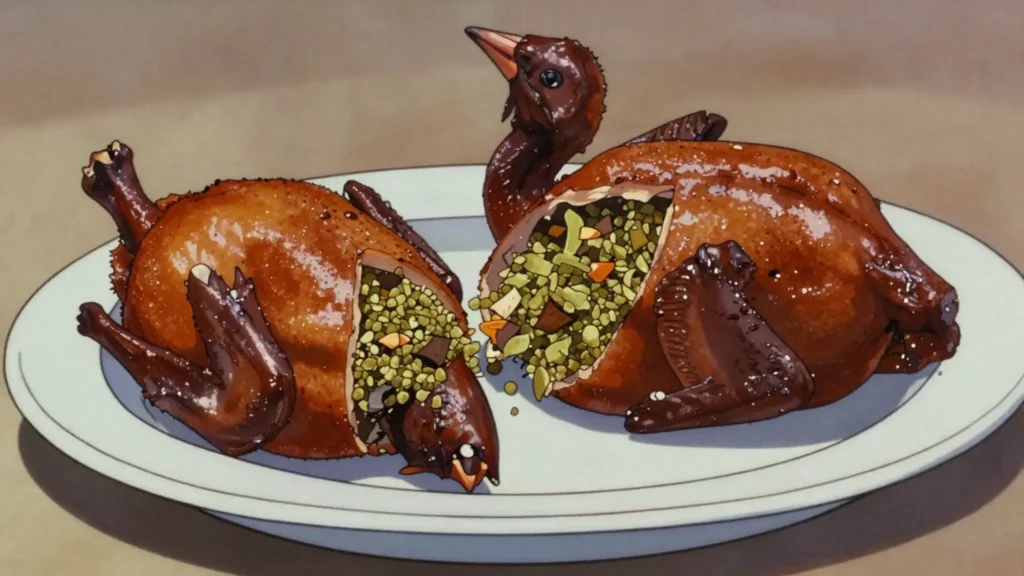
Whole pigeon, stuffed with a filling of seasoned rice, cracked wheat called freekeh, or ground meat, then grilled or roasted, documented across Egypt for many centuries as a dish specifically associated with celebration and hospitality, since pigeon has historically been considered a more prized and costly ingredient than more commonly available poultry. Egypt maintains a particularly long tradition of pigeon raising specifically for food, with distinctive pigeon towers, or dovecotes, historically built across Egyptian rural landscapes to house and breed pigeons for this exact culinary purpose. Hamam mahshi remains a dish specifically associated with special occasions and guest hospitality across Egypt, considered a mark of a particularly generous or celebratory meal.
Frequently asked questions
What is Hamam mahshi?
Hamam mahshi is a main from Egypt: pigeon stuffed with freekeh or rice, then roasted; Cairo delicacy. Whole pigeon, stuffed with a filling of seasoned rice, cracked wheat called freekeh, or ground meat, then grilled or roasted, documented across Egypt for many centuries as a dish specifically associated with celebration and hospitality, since pigeon has historically been considered a more prized and costly ingredient than more commonly available poultry. Egypt maintains a particularly long tradition of pigeon raising specifically for food, with distinctive pigeon towers, or dovecotes, historically built across Egyptian rural landscapes to house and breed pigeons for this exact culinary purpose. Hamam mahshi remains a dish specifically associated with special occasions and guest hospitality across Egypt, considered a mark of a particularly generous or celebratory meal.
How long does Hamam mahshi take to make?
Hamam mahshi takes 30 min of preparation and 1 hr 20 min of cooking. The recipe makes 4 servings. It is rated medium to make.
What can I substitute in Hamam mahshi?
Yes, within limits. Short-grain rice in place of freekeh. Poussin or quail if pigeon is unavailable, with the roasting time shortened.
What is the most important thing to get right in Hamam mahshi?
Young birds only. An old pigeon is tough beyond rescuing, and the whole dish assumes a bird a few weeks old.