
Ingredients
Chicken
- 700 gboneless chicken thigh, in 3 cm pieces
Marinade
- 3 tbspsoy sauce
- 2 tbsprice wine
- 4 clovesgarlic, minced
- 1 tbspgrated ginger
- 1 tspfive spice powder
- 1 tspwhite pepper
- 1 tspsugar
- 1egg
Coating
- 200 gcoarse sweet potato starch
- or tapioca starch, as a substitute
To finish
- 2large handfuls Thai basil leaves, dry
- 1 tspfive spice powder
- 1 tspground white pepper
- 1 tspchilli powder
- 1 tspsalt
To fry
- oil, for deep frying
To serve
- hot, in a paper bag, from a night market stall
Directions
- Use boneless thigh rather than breast, cut into pieces of about three centimetres. Thigh has enough fat to stay juicy through deep frying, where breast dries out in seconds once it passes the point.
- Cut the pieces evenly so they cook at the same rate. Mix the soy, rice wine, garlic, ginger, five spice, white pepper and sugar and rub it into the chicken. Add the egg last, which helps the starch adhere to the surface. Marinate for at least an hour, and overnight is better.
- Use considerably more than you would think reasonable, both in the marinade and in the final dusting. Lift each piece out of the marinade, letting the excess drip off, and press it into the starch.
- Press the starch on firmly rather than tossing lightly, working it into every surface. Now let the coated pieces sit for five to ten minutes before frying. Heat the oil to about 160°C for the first frying. Fry the pieces in batches for three to four minutes until pale golden and cooked through.
- Lift them out and rest them for at least five minutes. Resting between fryings lets the interior moisture redistribute and the surface dry, which is what makes the second fry crisp. Fry them again for forty-five seconds to a minute until deep golden and audibly crisp. The second fry drives off the surface moisture and sets the crust, and skipping it gives soft chicken.
- Take two large handfuls of Thai basil leaves and make sure they are completely dry. Wet basil leaves cause the oil to spit violently, which is genuinely dangerous, so dry them thoroughly. Drop them into the hot oil for ten to fifteen seconds only. Stand back, use a lid as a shield, and be ready for a sudden burst of noise and steam.
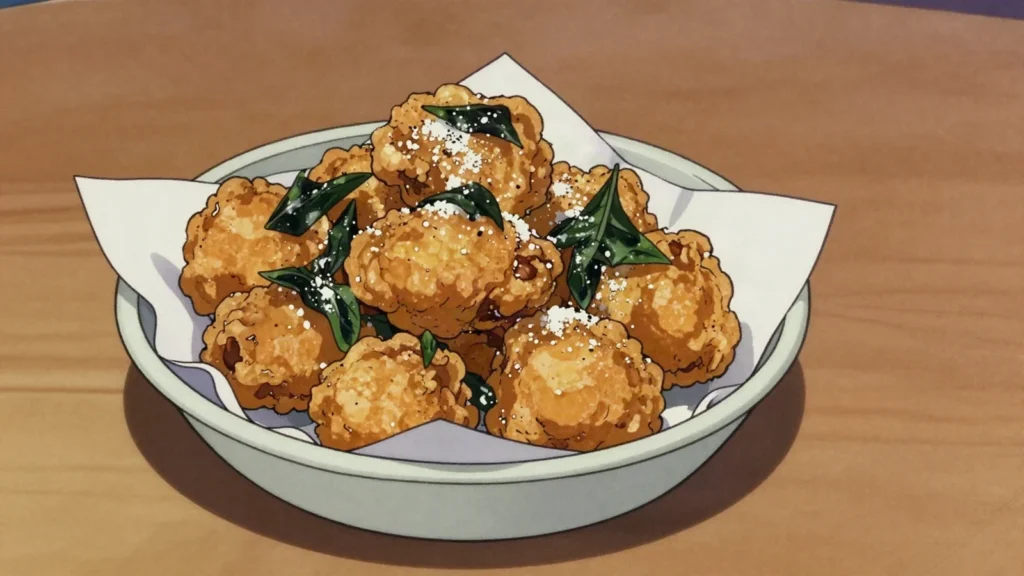
- Lift them out immediately with a spider. Now the tossing, which happens while everything is hot. Put the hot chicken in a large bowl, add the fried basil, and dust with five spice, white pepper, chilli powder and salt.
- Toss it immediately while it is still glistening, since the seasoning adheres to hot oil and slides off cold chicken. Taste and add more white pepper, which is almost always the answer. Serve it at once in a paper bag or bowl with a wooden pick. It is at its best in the first few minutes and it is meant to be eaten walking.
Technique
- Coarse sweet potato starch is what gives the craggy crust.
- White pepper is the defining seasoning and is used generously.
- The basil must be completely dry before it goes into hot oil.
Substitutions
- Tapioca starch in place of sweet potato starch.
- Regular basil if Thai basil is unavailable, though the aroma differs.
Variations
- Made with mushrooms or tofu instead of chicken.
- With extra chilli powder, for a hotter version.
- Made with squid, which is equally common at night markets.
History
Small pieces of Taiwanese-style fried chicken, marinated in soy sauce, garlic and five-spice before being coated in sweet potato starch and deep-fried, then tossed with fried basil leaves, developed as a Taiwanese night market specialty distinct from Western popcorn chicken despite the shared English name. Its distinctive light, crackly crust, achieved through sweet potato starch rather than wheat flour breading, and its characteristic five-spice marinade reflect specifically Taiwanese seasoning tradition rather than any direct Western influence. Popcorn chicken remains one of the most popular and widely recognized Taiwanese night market foods, commonly cited as a defining example of Taiwan’s distinctive street food culture.
Frequently asked questions
What is Popcorn Chicken?
Popcorn Chicken is a street food from Taiwan: bite-size fried chicken tossed with fried basil and white pepper. Small pieces of Taiwanese-style fried chicken, marinated in soy sauce, garlic and five-spice before being coated in sweet potato starch and deep-fried, then tossed with fried basil leaves, developed as a Taiwanese night market specialty distinct from Western popcorn chicken despite the shared English name. Its distinctive light, crackly crust, achieved through sweet potato starch rather than wheat flour breading, and its characteristic five-spice marinade reflect specifically Taiwanese seasoning tradition rather than any direct Western influence. Popcorn chicken remains one of the most popular and widely recognized Taiwanese night market foods, commonly cited as a defining example of Taiwan’s distinctive street food culture.
How long does Popcorn Chicken take to make?
Popcorn Chicken takes 25 min plus 1 hr marinating of preparation and 20 min of cooking. The recipe makes 4 servings. It is rated medium to make.
What can I substitute in Popcorn Chicken?
Yes, within limits. Tapioca starch in place of sweet potato starch. Regular basil if Thai basil is unavailable, though the aroma differs.
What is the most important thing to get right in Popcorn Chicken?
Use boneless thigh rather than breast, cut into pieces of about three centimetres. Thigh has enough fat to stay juicy through deep frying, where breast dries out in seconds once it passes the point.